


Planning a trip to Armenia? You’re in for a rewarding experience. This small country on Europe’s far eastern edge blends very old history, bold mountain scenery, and a proud culture. Travel here can feel a bit rough at times-some roads are bumpy and transport can be confusing-but the discoveries you make more than make up for it. Expect striking monuments, huge views, and locals who are warm and welcoming.
Armenia is more than a quick stop. It’s a place where every corner has a story, every meal feels like a celebration, and every new friend leaves a mark. Whether you love history, hiking, or you’re curious about places many people skip, Armenia will stay with you. Here are clear, practical tips to help you get the best out of your trip.

Armenia at a glance: key facts for travelers
What makes Armenia unique as a destination?
Armenia, known as the Land of Apricots and home to Yerevan, the “Pink City,” is full of color and strong identity. It was the first country to adopt Christianity, which you’ll see in its churches and the many monasteries set in wild landscapes. From Mount Ararat on the horizon to the green Debed Canyon and the deep-blue Lake Sevan, the scenery is memorable.
Beyond the views, Armenia’s long and complicated past has shaped a nation with real strength of spirit. People come for the sights but stay for the hospitality. You can visit a Soviet-era space observatory, walk past 19th-century buildings made from volcanic stone, and share a khorovats (barbecue) with locals over a glass of Armenian wine. The mix of history, daily life, and food makes travel here feel personal and real.
What languages are spoken in Armenia?
Armenian is the official language. Russian is also widely understood, especially by older people and in cities like Yerevan. If you don’t speak Armenian or Russian, communication can take a little effort.
Don’t worry too much, though. People often use gestures and smiles to help. You’ll find some English speakers in Yerevan, especially in restaurants, hotels, and tourist spots. A few simple Armenian words go a long way: “barev dzez” (hello), “ayo/ha” (yes), “voch/che” (no), “khuntrem” (please), and “merci” (thank you). Using these will likely bring smiles and friendlier chats.
Currency, power plugs, and time zone
The currency is the dram (AMD). You can exchange major currencies easily in Yerevan or withdraw cash from ATMs with low fees. Cards are common in the capital but much less so in smaller towns-carry cash outside Yerevan.
Power: Type C and Type F plugs (European two-pin), 230V, 50Hz. Bring a universal adapter and a voltage converter if your devices aren’t dual-voltage. Time zone: Armenia Time (AMT), UTC+4.
| Item | Details |
|---|---|
| Currency | Armenian dram (AMD) |
| Plugs | Type C, Type F |
| Voltage/Frequency | 230V / 50Hz |
| Time zone | UTC+4 (AMT) |
When is the best time to visit Armenia?
Seasonal weather patterns and climate
The best months for most travelers are spring (April-June) and autumn (September-October). Weather is mild, great for cafes in Yerevan, day trips to monasteries, and mountain walks.
In May and June, Yerevan usually sits between 10°C (50°F) and 30°C (86°F), and hills burst with wildflowers. May can be rainy with frequent storms-pack a light rain jacket. September and October are also comfortable and less busy, with harvest events across the countryside.
July and August can be very hot, with Yerevan often hitting 40°C (104°F). Evenings are cooler, and Lake Sevan is a good escape. Summer works well for high-altitude hikes. Winter (November-March) is long and cold, dropping below -20°C (-4°F) up north. Many tourist services pause. If you visit in winter, base yourself in Yerevan for museums and wine bars, or head to Tsaghkadzor for snow sports.
| Season | Months | What to expect |
|---|---|---|
| Spring | Apr-Jun | Mild temps, wildflowers, some rain (especially May) |
| Summer | Jul-Aug | Very hot in Yerevan; cooler in mountains and at Lake Sevan |
| Autumn | Sep-Oct | Pleasant weather, harvest season, fewer crowds |
| Winter | Nov-Mar | Cold, snow in north; skiing in Tsaghkadzor |

Festivals and events throughout the year
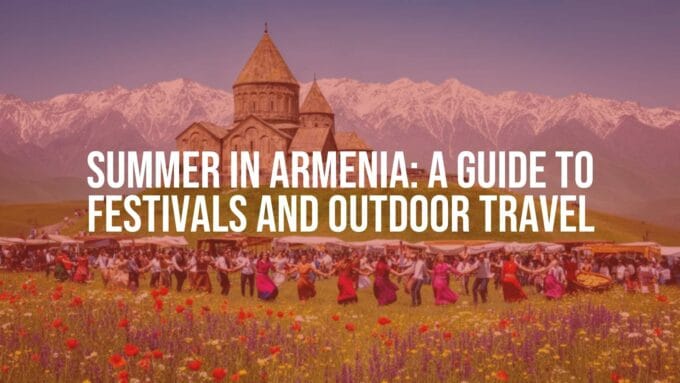
Plan your trip around local events to add depth to your visit. Vardavar (usually July) is a citywide water fight-great fun and a cool break from the heat.
Other highlights: Golden Apricot International Film Festival (summer), Yerevan Jazz Fest (September-October), and harvest and wine festivals in regions like Areni. April 24th is Armenian Genocide Remembrance Day, a solemn day that matters deeply to locals.
Visa requirements and entry regulations
Who needs a visa to enter Armenia?
Many nationalities can enter visa-free for up to 180 days, including citizens of the US, EU countries, the UK, Switzerland, Australia, and New Zealand. Rules can change, so check before you go.
Citizens of countries such as Canada, Israel, and South Africa generally need a visa. Armenia’s e-visa system makes this simple. Check the Armenian Ministry of Foreign Affairs website for current rules.
How to apply for an Armenian visa
If you need one, apply online for an e-visa. Options include stays up to 21 days (about AMD 2685/US$7) and up to 120 days (about AMD 13,000/US$34). Processing usually takes around three days.
You’ll fill out a form, upload a passport scan and photo, and pay the fee. Apply early in case of delays. When approved, print your e-visa and carry it with you. Double-check all details before you submit.
| E-visa type | Length of stay | Approx. fee |
|---|---|---|
| Short stay | Up to 21 days | AMD 2685 (~US$7) |
| Long stay | Up to 120 days | AMD 13,000 (~US$34) |
Border restrictions with neighboring countries
Armenia borders Georgia, Iran, Azerbaijan, and Türkiye. Crossings with Georgia and Iran are generally open. Borders with Azerbaijan and Türkiye have major limits due to politics and security. If you plan to visit Iran, check visa rules carefully for your nationality.
Can you visit Azerbaijan or Türkiye from Armenia?
Direct land or air travel between Armenia and Azerbaijan is not possible. If you want to visit both, route through a third country-Georgia is the usual choice. An Armenian stamp usually isn’t a problem for entry to Azerbaijan, but expect questions.
Travel to Türkiye is restricted over land. Flights exist, but the land border is usually closed to Armenian and Turkish passport holders. Other nationalities should check the latest border and visa rules before planning an overland trip.
Nagorno-Karabakh and sensitive border areas
Nagorno-Karabakh (Artsakh) has seen conflict for decades and has been under Azerbaijani control since September 2023. The area’s history is painful and complicated, with war, displacement, and claims of ethnic cleansing.
Stay well away from the Armenia-Azerbaijan border areas and from Nagorno-Karabakh. Watch local news and official advisories. Near borders, be very careful. Ask before taking photos-or better yet, keep your camera away in sensitive places.
Staying safe and healthy while traveling in Armenia
Is Armenia safe for travelers?
Armenia is generally very safe, including for solo and solo female travelers. Violent crime is rare, and people are friendly. Still, use normal common sense.
Pickpocketing is uncommon but can happen in crowds and on transit. Keep valuables secure. Some taxi drivers may overcharge; agree on the price before the ride. Avoid the border zones with Azerbaijan and skip protests or rallies. Check local news during your stay.
Travel insurance: what’s recommended?
Buy good travel insurance for medical needs, evacuation, lost bags, and trip changes. Some “Europe” policies don’t include Armenia, so read the terms. Most insurers won’t cover travel close to the borders with Iran and Azerbaijan.
SafetyWing is a popular option for long-term travelers and digital nomads, with flexible monthly plans. Keep copies of your passport and key documents, and share your itinerary with someone back home.
Health concerns and medical facilities
Make sure your routine vaccines are up to date. Ask your doctor for an international vaccination record if you want one. EU citizens may have some access to public care under agreements, but travel insurance gives wider access, including private clinics.
In Yerevan, pulpulaks (street fountains) provide clean water. Outside the capital, tap water may not be filtered. Many travelers buy bottled water or use purification tablets or a filter bottle. Be careful with street food hygiene. Teach children to avoid unknown dogs and other mammals due to rabies risk. Take extra care near sheepdogs in rural areas-they protect flocks and can be aggressive.
Important local laws and customs
Respect for religion and tradition runs deep. Dress modestly at churches and monasteries. Women may want to carry a scarf in case head coverings are expected. Shorts are uncommon outside Yerevan.
Public toilets can be scarce and may lack paper. Carry your own. Don’t flush toilet paper-use the small bin provided. Toilets with attendants are usually cleaner than unattended ones. Avoid entering seemingly empty buildings; some house displaced families.
LGBTQI+ issues and traveler awareness
Homosexuality is legal, but many people hold conservative views. Same-sex marriages are recognized only if performed abroad. LGBTQI+ travelers who keep a low profile usually have no issues.
Since 2022, an influx of younger Russians has slightly increased visibility, especially in Yerevan, and some attitudes are changing. Even so, discretion is wise for comfort and safety.
Budgeting and costs: how much money do you need for Armenia?
Average daily expenses: food, transport, and accommodation
Armenia is affordable compared with Western Europe, though a bit pricier than parts of Central Asia. A mid-range budget of US$35-50 per person per day covers a standard hotel, local meals, day trips, and entry fees. Backpackers can aim for about 17,500 AMD (~US$45) per day. High-end trips can run 77,000 AMD (US$200) and up.
Typical prices:
– Hostel dorm: 3,000-7,500 AMD (US$8-20)
– Private hostel room: 10,000-15,000 AMD (US$25-40)
– Budget hotel: from 8,000-9,850 AMD (US$20-25)
– Simple double: from 30,000 AMD (US$80)
– Apartments/Airbnb: from 20,000 AMD (US$50)
– Street food: ~1,000 AMD (US$2.50)
– Local sit-down meal: 1,250-2,750 AMD (US$3-7)
– Western-style meal: 6,000-8,500 AMD (US$15-22)
– Yerevan public transport: ~100 AMD (US$0.25) one-way
Money-saving tips for travelers
Use the outdoors: parks, trails, and viewpoints are free. Wild camping is legal and can save a lot, especially near Lake Sevan. Hitchhiking is common for short trips between towns.
Eat where locals eat and try street food. Cook your own meals if your place has a kitchen. Join free walking tours in Yerevan (tip the guide). Couchsurfing can cut costs and connect you with locals.
Payment methods: cash or card?
Carry both, but cash is king outside Yerevan. In the capital, cards work in hotels, big restaurants, and shops. In smaller towns, markets, and marshrutkas, pay in cash.
ATMs and exchange offices are easy to find in Yerevan and bigger towns. Keep small notes for fares and small purchases. Bring a backup card from another bank and tell your bank you’re traveling.
Getting around Armenia: transportation tips
Public transport: marshrutkas, trains, and buses
Public transport can be basic but feels real and local. Marshrutkas (shared minibuses) connect most towns and villages. Comfort varies. Many leave when full, so waits are common. To save a seat, leave something on it. Wave to stop one. Say “kangnek” (stop) to get off.
Yerevan has buses, trolleybuses, and a one-line metro. A single ride is about 100 AMD. The city center is very walkable. Trains link Yerevan with Gyumri, Yeraskh, and Ararat. Older trains are slow; express trains are quicker and more comfortable but run less often and cost more. In summer, trains run to Lake Sevan via Hrazdan. Buy tickets at Railway.am.

Taxis and ride-hailing apps
Taxis are common. Agree on the price before you go, as some drivers may overcharge. From Zvartnots Airport to Yerevan center, expect around 3,000 AMD with Aerotaxi if you negotiate.
In Yerevan, GG and Yandex apps are cheap and easy to use. Uber doesn’t operate here. Apps show prices upfront and make moving around the city simple without speaking Armenian or Russian.
Driving and car rental in Armenia
If you want freedom to stop and explore, renting a car is often the best way to see the country, including remote monasteries and trailheads. Armenia is smaller than Belgium, so a loop in one to two weeks is very doable.
Rent at the airport or in Yerevan. Prices start around 12,000 AMD per day and drop for longer rentals. Bring an International Driving Permit. Roads vary-mountain and rural routes can be rough. Drive carefully and watch local habits.
Where to stay: hotels, guesthouses, and homestays
Types of accommodation in Armenia
Choices range from modern city hotels to quiet rural stays. Yerevan has international chains and many boutique hotels. Local brands like Tufenkian Heritage Hotels mix traditional style with modern comfort.
Outside Yerevan, family-run guesthouses and homestays give more contact with local life, often with home-cooked meals and hands-on activities like making gata (cake). Hostels exist mainly in Yerevan and Tsaghkadzor, some with private rooms. Road-trippers can try campgrounds like Crossway Camping (sleep in a retro bus) and Camping 3 Gs with big views.
Staying in Yerevan vs rural areas
Yerevan offers the widest choice of hotels, cafes, museums, and nightlife, and it’s a handy base for day trips. You’ll find more English speakers and easy services here.
Rural stays feel calmer and closer to nature. Guesthouses and homestays are simple but welcoming, with mountain or lakeside settings. Dilijan and Lake Sevan areas suit hikers and nature lovers. These stays connect you with local food and village life.
Booking in advance or on arrival
Armenia rarely feels crowded, but book ahead for spring, autumn, and festival dates, or if you want a special place. Booking.com has lots of budget options. Hostelworld is good for hostels.
For small guesthouses and boutique spots outside the city, reserve in advance for better choice and prices. On short-term rental apps, pick individual hosts over big operators if you can. You might find last-minute rooms off-season, but having a booking lets you relax on arrival.
What to pack for Armenia: clothing, gear, and essentials
Cultural dress code: what’s appropriate to wear?
Religion and tradition shape dress expectations. Yerevan is getting more fashion-forward, but modest clothing is still the norm at religious sites. Shorts are uncommon outside the capital.
At churches and monasteries, avoid short skirts and bare shoulders. Women may want a scarf for head covering if asked. Loose pants or long skirts and tops that cover shoulders work well. You’ll fit in and feel comfortable in most places with simple, modest clothes.
Toilet paper, adapters, and other must-haves
Carry toilet paper, as public toilets are rare and often don’t have supplies. Use the bin instead of flushing paper. Hand sanitizer is helpful.
Bring a universal adapter for Type C/F plugs and a voltage converter if your devices aren’t dual-voltage. A reusable bottle with a filter (e.g., LifeStraw) helps cut plastic and keeps you safe outside Yerevan. Keep paper and digital copies of your passport and key documents.
Seasonal packing recommendations
Spring/Autumn: Pack layers-light jacket, sweater, long sleeves. Evenings can be cool. Comfortable walking shoes, and hiking boots if you plan to hit the trails. A rain jacket or small umbrella is handy in spring.
Summer: Choose light, breathable fabrics like cotton or linen. Bring a hat, sunglasses, and high-SPF sunscreen. Pack swimwear for Lake Sevan.
Winter: Bring a warm coat, thermals, gloves, a hat, and waterproof boots-especially for the north. Indoor shoes are nice for cafes and museums in Yerevan.
How to interact respectfully with Armenian culture
Key phrases to know in Armenian and Russian
Even a few words make a big difference. Try these:
- Armenian: “barev dzez” (hello), “ayo/ha” (yes), “voch/che” (no), “khuntrem” (please), “merci” (thank you), “joor” (water), “vonc ek?” (how are you?), “inchqan eh?” (how much?).
- Russian: “Zdravstvuyte” (hello), “Da” (yes), “Net” (no), “Pozhaluysta” (please), “Spasibo” (thank you), “Kak dela?” (how are you?).
Etiquette, greetings, and dos and don’ts
People are warm, and tradition matters. Handshakes are common, and eye contact shows sincerity. Respect elders.
If invited home, bring a small gift (flowers, sweets, or wine). Take off your shoes. Hosts offer lots of food and drink; accept at least a little. Toasting is a big part of gatherings. Avoid sensitive politics unless your host brings it up. Dress modestly at religious sites.
Food, water, and dining in Armenia
Typical Armenian dishes and must-try meals
Armenian food is hearty and full of flavor. Don’t miss khorovats (barbecue)-usually pork or lamb, marinated and grilled, often shared with wine and friends.
Try dolma (grape leaves or vegetables stuffed with meat, rice, and herbs) and lavash, the famous flatbread listed by UNESCO. Watch lavash being made at the GUM Market in Yerevan. For sweets, look for ponchik (filled doughnut) and gata. Yerevan’s food scene also reflects the diaspora, so you’ll find many styles and flavors.

Drinking water: fountains, bottled, and safety
In central Yerevan, you’ll see many pulpulaks-public fountains with clean, cold water. Locals sometimes cover part of the spout with a thumb to shoot the water up without touching the metal.
Outside Yerevan, tap water may not be filtered. Many travelers buy bottled water or use a filter bottle. If you’re unsure, choose bottled or filtered water.
Vegetarian and dietary considerations
Armenian meals often include meat, but fresh produce is abundant. You’ll find salads, lentil and bean dishes, and vegetable stews.
On fasting days at religious sites, more meat-free dishes appear. In Yerevan, more places now cater to vegetarian and vegan diets. Learn a couple of phrases: “es bejeterakan em” (I am vegetarian) and “arants mis” (without meat). People will usually try to help.
Top places to visit and things to do in Armenia
Exploring Yerevan: top attractions and experiences
Yerevan, built with rose-colored stone, mixes old and new with ease. Start at the Cascade, a giant stairway with the Cafesjian Center for the Arts and a sculpture garden. The view over the city and Mount Ararat on clear days is fantastic.
Stroll wide boulevards and lively squares and enjoy the cafe scene. Visit art spaces, including museums for Sergei Parajanov. Shop at Vernissage, the open-air market for crafts, carpets, and antiques. See Tsitsernakaberd, the national Genocide Memorial and Museum. At night, try wine bars like In Vino, jazz at Ulikhanyan Jazz Club, or a show at the National Opera and Ballet Theatre.
Must-see sites outside the capital
The country shines outside Yerevan. Armenia’s monasteries often sit on cliffs or in deep valleys. Khor Virap offers a classic view of Mount Ararat and a link to Surp Gregory the Illuminator. Noravank glows gold at sunset against red rock walls.
Geghard Monastery (UNESCO) is partly carved into the mountain and has a sacred spring in the 13th-century Avazan Chapel. Tatev Monastery is reached by the world’s longest reversible cable car, crossing a huge gorge to a medieval complex. Echmiadzin Cathedral is often said to be the oldest cathedral in the world. In Gyumri, the second city, find fine architecture, house museums, and the Aslamazyan Museum. Lake Sevan, the “Armenian Sea,” offers cool air, views, swimming, and lakeside monasteries.
Local experiences you shouldn’t miss
Share a khorovats meal with locals and enjoy Armenian wine. Armenia and Georgia are early centers of winemaking, and tastings in Areni (home to the world’s oldest winery) are a must. Try the Areni grape at spots like Momik Wine Cube among the vines.
Pick up fresh apricots at Yerevan’s GUM Market. For a special souvenir, shop for a carpet at Vernissage. Homestays offer chances to learn recipes and traditions from families. These moments with people-along with the food-are often the highlights of a trip.
Outdoor adventures: hiking, skiing, and nature
Armenia has jagged peaks, deep gorges, and green forests-great for hiking. Dilijan National Park, sometimes called “Armenian Switzerland,” has top trails, including parts of the Transcaucasian Trail, plus quiet paths to places like Parz Lake.
For a bigger challenge, climb Mt Aragats, the country’s highest mountain. The Geghama range is also excellent for trekking, biking, and off-road routes. In winter, Armenia becomes a snow sports spot-Tsaghkadzor is the main ski resort with groomed runs and lifts. Nature lovers should also check Shikahogh State Reserve for wildlife and old sites reached by mountain trails.
Family and group travel tips for Armenia
Is Armenia family-friendly?
Yes-families are central to life here, and kids get lots of attention. Locals are kind and patient with children, which makes travel smoother for parents.
Older kids enjoy castles, monasteries, and legends, and everyone can enjoy the parks, open spaces, and simple train rides like the Children’s Railway in Yerevan. The country’s general safety helps families feel relaxed.
Traveling with children: what to expect
Expect smiles and small acts of kindness from strangers. Marshrutkas can feel tight for families, so apps and taxis are often easier for longer trips within cities.
Keep children’s vaccinations current. Teach them to avoid unknown animals. Be extra cautious near sheepdogs in rural areas. Family guesthouses often have the most helpful hosts. Eating out is easy, with plenty of simple dishes kids can try. Pack snacks, entertainment, and any medicines you might need for longer journeys.
Important travel tips and final recommendations
Avoiding common pitfalls and scams
The main hassle you might face is taxi overcharging. Agree on a fare before riding or use GG or Yandex in Yerevan. Ask your hotel what a fair price is if unsure.
Keep valuables out of sight in crowds or on buses. Don’t enter abandoned buildings, as some house displaced people. Stay away from protests and the Azerbaijan border areas, and follow local updates.
Staying connected: SIM cards and internet
Buy a local SIM from Viva-MTS, Ucom, or Beeline at the airport or around town. Data plans are cheap and will help with maps and ride apps.
Wi-Fi is common in hotels, cafes, and restaurants in cities and towns. Coverage can drop in remote areas. A local SIM keeps you connected on the move.
Resources for up-to-date travel information
Check the Armenian Ministry of Foreign Affairs for visa and entry rules. For trip planning and ideas, try Lonely Planet and Nomadic Matt.
For hiking, the HIKEArmenia app is handy. Use Skyscanner for flights; Booking.com and Hostelworld for rooms; The Man in Seat 61 for train details; and Rome2Rio for route planning. These tools help you plan a smooth and well-informed trip to Armenia.














Leave a comment