
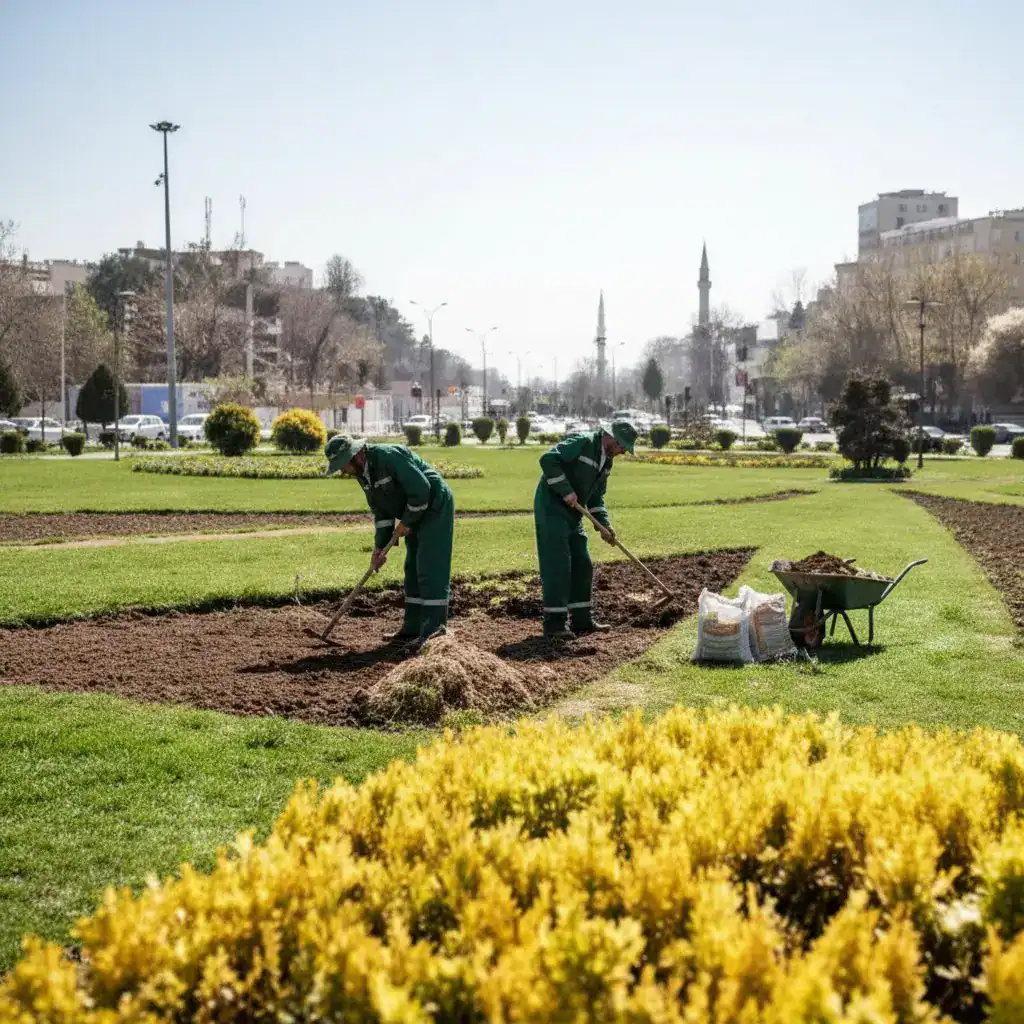
Yerevan, December 22 – The addition of new green spaces in Yerevan this year totals 13.5 hectares, bringing the city’s green areas, in locations that were never previously landscaped, to an approximate increase of 60 hectares over the past three years. This announcement was made today, December 22, during a press conference by Armen Begoyan, director of the “Greening and Environmental Protection” non-commercial state organization. He clarified that this figure does not include green spaces added within existing parks.
Yerevan Reaches Soviet-Era Green Fund Levels
Begoyan highlighted a significant fact: “The public green spaces for public use in Yerevan, excluding courtyards, previously amounted to 850 hectares. By adding these 60 hectares from the last three years, we now have 910 hectares. We can confidently say that we have reached the level of the Soviet Union’s green fund.” He further elaborated that, according to their data, the green fund of Yerevan city during the best period of the Soviet Union was 908 hectares. “If we rely on previous data and add these newly created 60 hectares, we get 910 hectares,” Begoyan stated.
Focus on New and Previously Un-greened Areas
Begoyan addressed potential public concerns, noting, “Now our citizens might think, ‘But look, there was a green area here, and you haven’t restored it.’ However, we have restored areas where there have never been green spaces before.” He cited examples such as the slopes adjacent to Yerablur, Ashtarak highway, and the slopes adjacent to Davit Bek Street and the church, all of which were previously devoid of green areas. “These are the areas that compensate for those irrevocably lost during the Soviet Union, meaning they were built upon or became private property,” Begoyan explained.
He also mentioned efforts to restore existing parks, such as those in Nork-Marash. “There were 20 hectares there, but these were previously sold for construction. What remained under the municipality’s ownership, those seven hectares, we have restored,” Begoyan confirmed.
Significant Environmental Impact and Future Prospects
The director emphasized the importance of these new green initiatives, particularly in light of historical losses. By focusing on creating green spaces in areas that were never greened before, the city aims to balance out the irreversible loss of green zones due to past construction and privatization. This strategic approach ensures a more equitable distribution of green infrastructure across the city.
The expansion of green spaces is expected to have a positive impact on the city’s microclimate, air quality, and overall aesthetic appeal. It also contributes to the well-being of residents by providing more recreational areas and promoting biodiversity within the urban environment. The city’s commitment to increasing its green fund underscores a broader vision for sustainable urban development and an improved quality of life for its citizens.
The “Greening and Environmental Protection” non-commercial state organization continues its efforts to identify and develop new opportunities for urban greening, with a focus on both restoring degraded areas and creating entirely new ecological zones. This ongoing work is crucial for maintaining Yerevan’s environmental health and enhancing its status as a livable city.
Source: news.am