

A New Dawn in the South Caucasus: From Confrontation to Cooperation
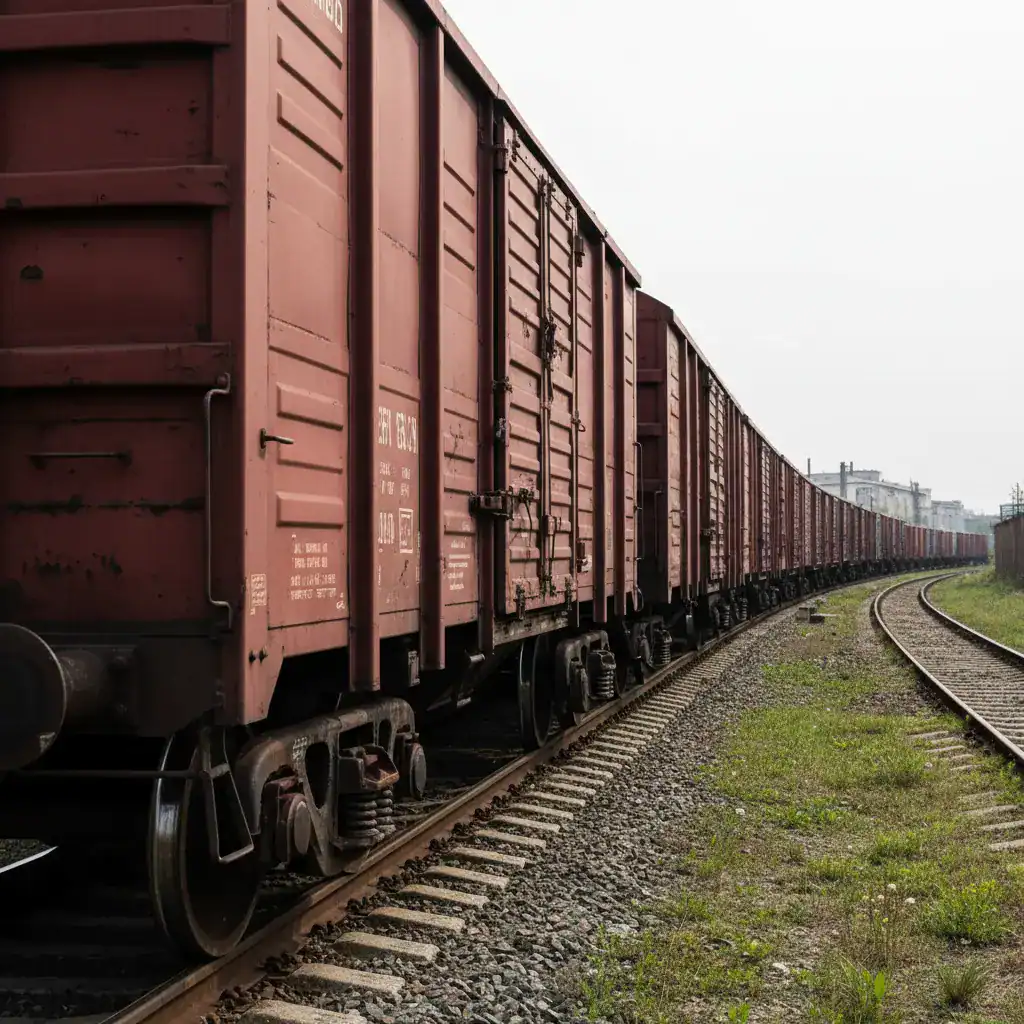
The delivery of Azerbaijani petroleum products to Armenia by rail has emerged as one of the most compelling and concrete indicators that the normalization process between Baku and Yerevan is transcending mere political rhetoric, entering the realm of practical, everyday implementation. This was not simply a commercial transaction or a technical logistical operation. It was a monumental step that, until very recently, would have been deemed almost unimaginable after decades of entrenched confrontation, closed borders, and profound mistrust between the two societies.
The very method of delivery-rail transport-carries substantial symbolic and practical weight. Rail logistics are never solely about economics. They necessitate coordinated political decisions, robust security guarantees, intricate transit arrangements, and, crucially, the willingness of multiple actors to cooperate in a predictable and transparent manner. A train cannot operate on goodwill alone; it requires permits, functional infrastructure, and, above all, a political environment conducive to such movement. In this sense, the train carrying Azerbaijani fuel to Armenia became a quiet yet potent testament to both sides’ readiness to test the waters of peace not through declarations, but through decisive action.
According to publicly available data, the inaugural shipment comprised 22 rail tank cars loaded with high-octane gasoline, totaling over 1,200 tons. For Armenia, traditionally heavily reliant on fuel imports from a limited number of suppliers, this delivery represents a pivotal move towards diversification and enhanced energy flexibility. Until recently, over half of Armenia’s gasoline and diesel fuel imports originated from a single source, rendering the country susceptible to price volatility, logistical disruptions, and geopolitical risks. The emergence of an alternative supply route, even on a commercial footing, fundamentally alters this equation.
Yerevan’s Affirmation: Acknowledging a Shift in the Political Climate
What makes this episode particularly noteworthy is the unequivocal reaction from Yerevan. Armenian Prime Minister Nikol Pashinyan publicly welcomed the arrival of the Azerbaijani fuel shipment, explicitly linking it to the broader peace process. He underscored that such trade had become feasible precisely because the political atmosphere between the two nations had undergone a significant transformation. In a region where gestures are often meticulously scrutinized for latent meanings, the fact that this acknowledgment was made openly and without ambiguity holds immense significance.
Even more impactful was the context in which this gratitude was conveyed. During a meeting of leaders from the Commonwealth of Independent States, Pashinyan directly extended his thanks to Azerbaijani President Ilham Aliyev for decisions that facilitated the unblocking of trade and transit routes. This was not a technical comment from a mid-level official, but a public declaration by a head of government at an international forum. In diplomatic parlance, such moments are rarely accidental. They signal a clear recognition that concrete steps taken by one party have been acknowledged and are being framed as genuine contributions to stability rather than mere tactical maneuvers.
Baku’s Vision: Economic Interdependence as a Cornerstone of Peace
For Azerbaijan, the importance of this step extends beyond its commercial dimension, aligning with the broader logic of regional integration. Over recent years, Baku has consistently advocated that sustainable peace in the South Caucasus must be underpinned by open communications, robust trade, and economic interdependence. The fuel shipment fits perfectly into this strategic vision. It unequivocally demonstrates Azerbaijan’s preparedness to transition from theoretical discussions about regional connectivity to tangible, functioning examples that can be quantified in tons, schedules, and contracts.
The wider regional context further amplifies the significance of this development. The South Caucasus has long been hampered by fragmented transport networks and artificially severed economic ties. Railways that once seamlessly connected cities and markets across borders lay dormant for decades. Reactivating even one of these routes sends a powerful message that the region is gradually reverting to a more natural state of interconnectedness, where geography fosters cooperation rather than isolation.
This underlying logic is already evident beyond Azerbaijani-Armenian relations. On March 11, 2026, a regular air route between Istanbul and Yerevan is slated to commence, marking another crucial step in the gradual normalization between Armenia and Türkiye. The launch of this flight is not merely a matter of aviation schedules; it reflects a deliberate political decision to restore direct human, business, and cultural connections that had been frozen for years.
The synchronicity of these developments is hardly coincidental. Improved relations between Armenia and Azerbaijan inherently cultivate a more conducive environment for Yerevan’s dialogue with Ankara. In the South Caucasus and its immediate vicinity, bilateral relationships do not exist in isolation. Progress on one track frequently unlocks opportunities on another. When tensions abate and predictability increases, regional actors gain greater latitude to pursue pragmatic policies that serve their economic and social interests.
The inauguration of the Istanbul-Yerevan flight is therefore widely perceived as a practical illustration of this dynamic. It showcases how normalization yields tangible outcomes that directly impact people’s lives. Business travelers gain swifter access to markets, families separated by borders find it easier to maintain contact, and tourism flows begin to recover. These are the types of changes that progressively reshape public perceptions and contribute to a more enduring peace.
Building an Infrastructure of Trust: The Psychological and Economic Impact
Against this backdrop, the Azerbaijani fuel shipment acquires even greater significance. It suggests that the region is entering a phase where economic rationale is beginning to supersede confrontation. Trade, transit, and energy cooperation forge shared interests that render a return to conflict increasingly costly for all involved parties. Every operational route, every executed contract, and every successful delivery adds another layer to what analysts frequently term the “infrastructure of trust.”
Numbers underscore this point. Even a single shipment of over 1,200 tons of fuel represents thousands of vehicle refuelings, reduced logistical risks, and heightened market competition. If such deliveries become a regular occurrence, their cumulative effect could be substantial. Over time, this could translate into lower prices, more stable supplies, and increased confidence among investors and businesses contemplating cross-border projects.
Equally vital is the psychological dimension. For decades, interaction between Azerbaijan and Armenia was almost exclusively associated with security concerns and conflict narratives. The image of a train traversing borders with fuel rather than military cargo carries immense symbolic weight. It redefines the relationship in practical, civilian terms and helps normalize the concept that cooperation is not only feasible but mutually beneficial.
This does not imply that all political issues have been resolved or that the path ahead will be devoid of challenges. Peace processes are rarely linear. They advance through incremental steps, periods of pause, and occasional setbacks. However, historical patterns demonstrate that once economic and logistical ties begin to function, they develop their own inherent momentum. Businesses adapt, institutions learn to cooperate, and societies gradually adjust to a new reality.
In this regard, the fuel shipment should be viewed not as an isolated incident, but as an integral part of a broader transformation unfolding in the region. It complements diplomatic negotiations, confidence-building measures, and discussions on formal peace agreements. While documents and signatures are indispensable, they acquire true meaning only when supported by everyday practices that embody their spirit.
Sustainable peace is ultimately measured not by speeches, but by whether people can travel, trade, and cooperate without fear or obstruction. Today, a train carrying Azerbaijani petroleum products to Armenia and the opening of the Istanbul-Yerevan air route remain individual pieces of a larger puzzle. Yet, they already point towards a distinctly different future. Once a comprehensive peace agreement between Baku and Yerevan is finalized and enshrined not only in words but on paper, it would be logical to anticipate even more ambitious steps. Among these, the opening of a direct Baku-Yerevan flight would stand out as a powerful symbol of reconciliation, transforming peace from a diplomatic concept into a daily, lived reality for the entire region.
Source: https://news.az/news/-azerbaijan-sends-fuel-to-armenia-marking-a-real-step-toward-peace