

Pashinyan’s Alleged Church Offensive: A Pre-Election Power Play?
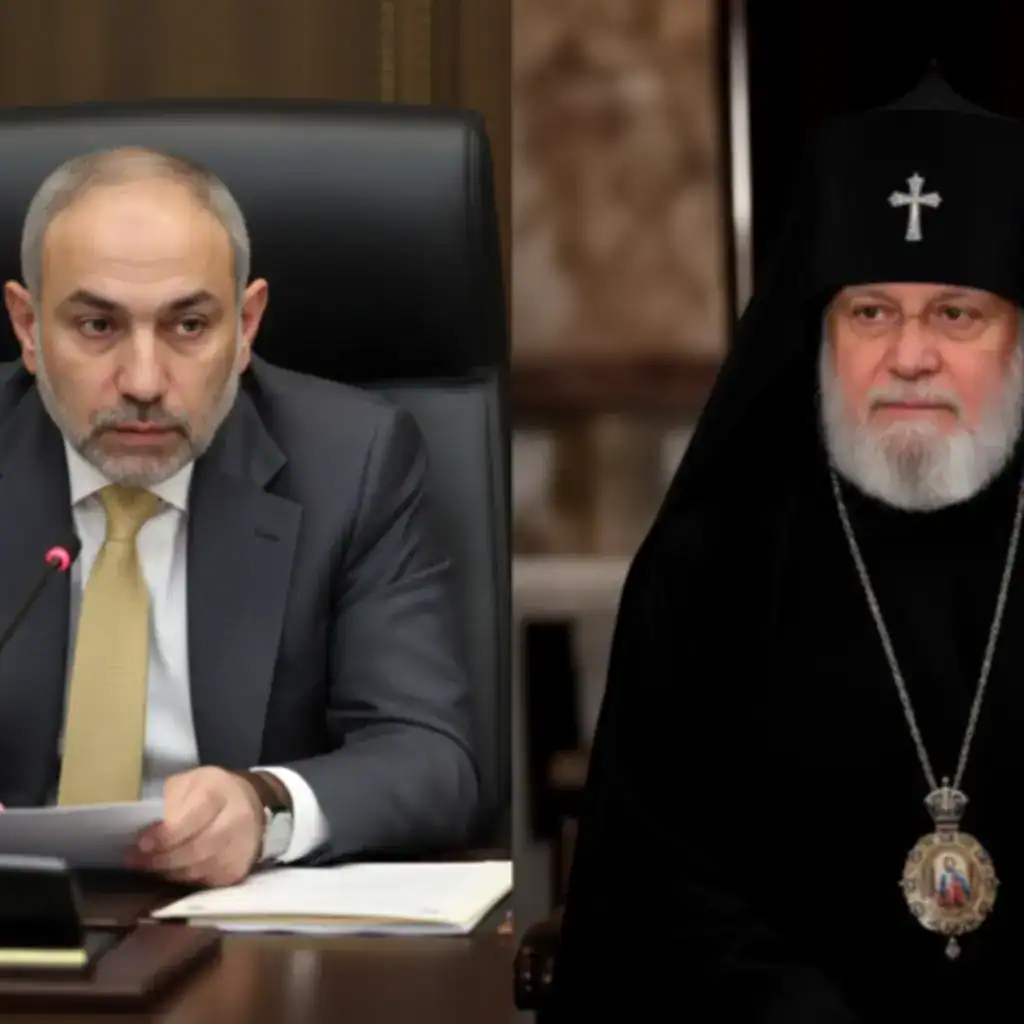
YEREVAN, ARMENIA – A storm is brewing in Armenia, with explosive reports suggesting Prime Minister Nikol Pashinyan is preparing a forceful intervention against the Armenian Apostolic Church and its leader, Catholicos Karekin II. According to the Hraparak daily, Pashinyan is determined to “resolve the issues concerning the Church and the Catholicos at all costs” before the parliamentary elections slated for next June, even if it means resorting to arrests and coercion.
The allegations paint a grim picture of a calculated move to neutralize a perceived obstacle to Pashinyan’s political agenda. The report claims the Prime Minister intends to “enter the Mother Cathedral [of Etchmiadzin] together with renegade bishops, his mob, and before that, through the security forces, to ‘cleanse’ the church of clergy, if necessary also arresting other close associates of the Catholicos so that he kneels.”
The Strategy: Coercion and Public Apathy
Sources cited by Hraparak suggest Pashinyan believes that if this plan succeeds, it will not only satisfy “demands from external forces” but also significantly increase “public apathy.” This, in turn, would make winning the upcoming elections a less arduous task, as a disillusioned populace might be less inclined to actively oppose his rule.
The alleged strategy aims to create a scenario where “the ordinary citizen will begin to hate not only Pashinyan, who brought the church to its knees, but also the incapable opposition that failed to prevent all this.” Such a narrative would effectively discredit both the current government’s critics and the spiritual leadership, leaving the public with a sense of helplessness.
Testing the Waters: The ‘Renegade Bishops’ Maneuver
The report claims that just last week, Pashinyan conducted a “test” through “10 renegades” – presumably referring to dissenting clergy members – to assess the strength of the opposition and those defending the Veharan, the official residence and workplace of the Catholicos. This maneuver was allegedly designed to “gauge the resources… [to understand] how many people would stand against him and how many troops need to be involved to seize the Veharan.”
This suggests a meticulous planning phase, where the Prime Minister’s team is attempting to anticipate and counter any resistance to their alleged actions. The mention of “security forces” and potential arrests underscores the seriousness of the reported intentions.
Uncertainty Surrounds Upcoming Liturgy
Adding to the tension, the ruling Civil Contract Party (CC) and its parliamentary faction stated yesterday that they had not been officially informed about participation in the liturgy at the Mother See of Holy Etchmiadzin on December 28. Pashinyan’s spokesperson further fueled speculation by stating that the location of the upcoming liturgy is “not yet known.” This lack of clarity around a significant religious event only amplifies concerns about potential disruptions and interventions.
A Nation on Edge: The Implications for Armenia
If these allegations prove true, Pashinyan’s reported actions could have profound implications for Armenia’s political and religious landscape. The Armenian Apostolic Church holds immense cultural and historical significance for the nation, and any forceful intervention could ignite widespread public outcry and further destabilize an already fragile political environment.
The unfolding situation raises critical questions about the separation of church and state, the rule of law, and the future of democratic processes in Armenia. As the country approaches its parliamentary elections, the alleged confrontation between the government and the church will undoubtedly be a focal point of national and international attention.
This developing story will require close monitoring, with particular attention to official statements from the Prime Minister’s office, the Armenian Apostolic Church, and any actions taken by law enforcement in the coming days and weeks.
The Hraparak daily’s report, if accurate, suggests a highly contentious period ahead for Armenia, where political ambitions and religious authority are set to clash with potentially far-reaching consequences for the nation and its people.