

Police deployed to Masis Church amid PM Pashinyan’s visit and public criticism
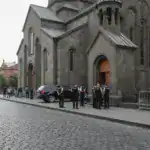
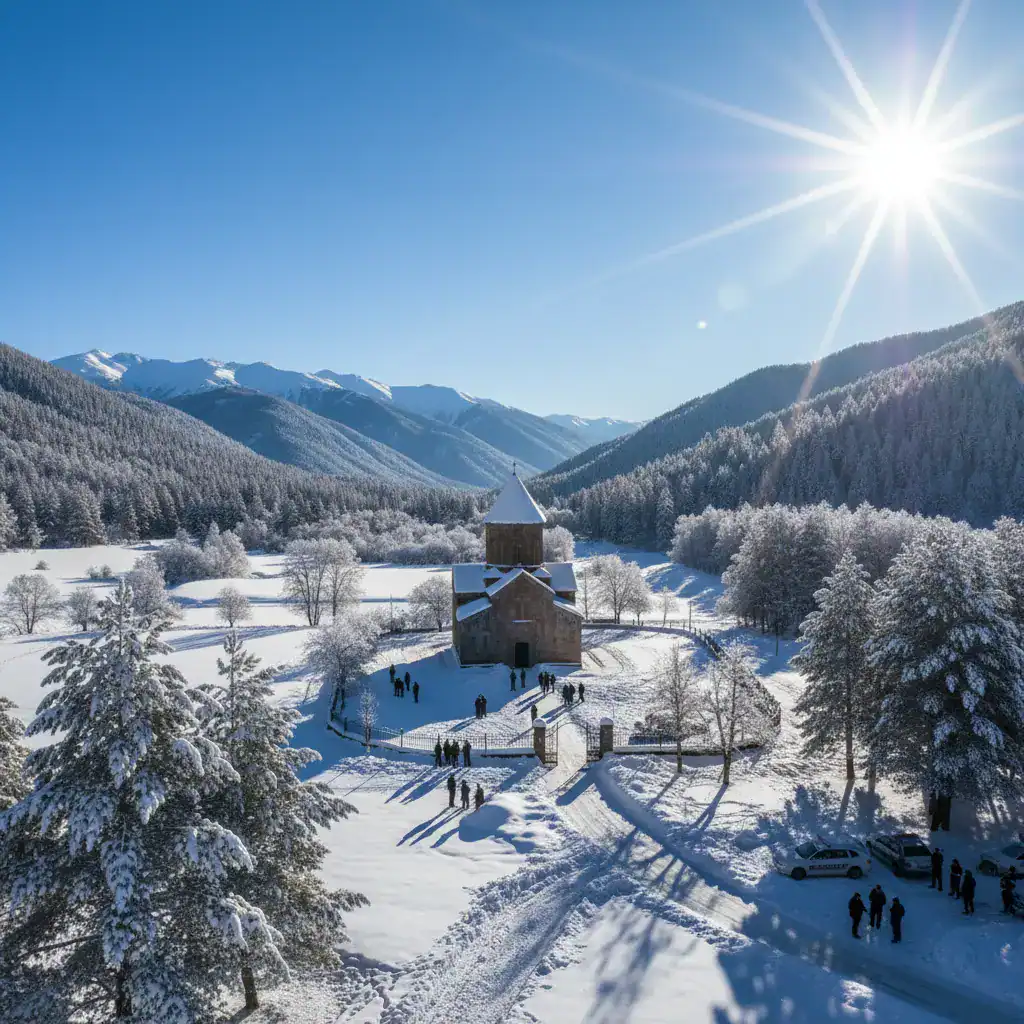
Yerevan, January 11 – Police forces have been carrying out surveillance in the area of Masis Church since early morning today, January 11, 2026. This deployment comes ahead of Prime Minister Nikol Pashinyan’s announced participation in a liturgy at the church, a visit that has ignited significant public discussion and opposition.
Tensions surrounding the Prime Minister’s visit
The Prime Minister’s intention to attend the liturgy at Masis’s St. Thaddeus Church, alongside Bishop Gevorg Saroyan, was announced late on January 10. This announcement immediately drew criticism from various public figures and civil society representatives. Suzi Badoyan, a prominent figure, claimed that the ‘applause for Nikol at Masis Church today will be provided by the teaching staff of Artashat, JO staff, and kindergarten workers,’ suggesting an orchestrated welcome rather than genuine public support.
David Ananyan, another commentator, stated that ‘Nikol Pashinyan will deepen the process against the Church – methodically and consistently.’ Karen Vrtanesyan added that ‘for the ‘believers’ accompanying Nikol, all this is ‘Halloween’,’ implying a superficial and perhaps disrespectful approach to religious institutions.
Allegations of pressure on clergy and opposition
Reports have emerged of alleged pressure being exerted on clergy members. Suzi Badoyan claimed that ‘the National Security Service, going house to house, is hunting priests.’ The ‘Initiative of Five Human Rights Defenders’ also raised alarms, stating, ‘We are receiving alerts that police officers are visiting the priests of the Masyatsotn Diocese.’
Varduhi Sargsyan accused the Ministry of Internal Affairs of being ‘the number one responsible body hindering the normal activities of the Armenian Apostolic Church.’ These claims suggest a broader campaign against the church and opposition figures.
In response to the growing tensions, police forces were also concentrated in front of the Masyatsotn Diocese headquarters, with live connections showing the situation. Suzi Badoyan reported that ‘the police in Masis have surrounded the Mother See church.’
Government response and broader context
The Public Relations and Information Center of the Prime Minister’s Office of the Republic of Armenia issued a refutation regarding some of the published information, though specific details of the refutation were not provided in the source data. This indicates the government’s awareness of the public discourse and its efforts to manage the narrative.
The current situation in Masis is not isolated. Robert Amsterdam, a legal expert, commented that ‘the behavior of the Prime Minister of the Republic of Armenia has no legal or moral justification.’ Ara Zohrabyan urged, ‘Do not become an accomplice to Pashinyan, who is leading the process of desecrating churches.’
The Academy of Sciences of the Russian Federation also published a report questioning ‘Why Pashinyan is pressuring the Apostolic Church and the opposition,’ suggesting international attention to the domestic situation in Armenia.
Calls for unity and an end to political persecution
Amidst these developments, there are strong calls for unity and an end to perceived political persecution. Taron Simonyan noted that ‘few people have had the virtue and courage to realize the causes of their defeat.’ Varazdat Harutyunyan highlighted Narek Samsonyan’s hunger strike as ‘a warning bell, saying: unite!’
David Manukyan emphasized that ‘the authorities’ campaign against the Church has one resolution: their removal.’ Astghik Matevosyan demanded ‘to stop attacks on freedom of speech and political persecutions.’
The events at Masis Church underscore a period of significant political and social tension in Armenia, with the relationship between the state and the church, as well as freedom of expression, being central to the ongoing debates.