
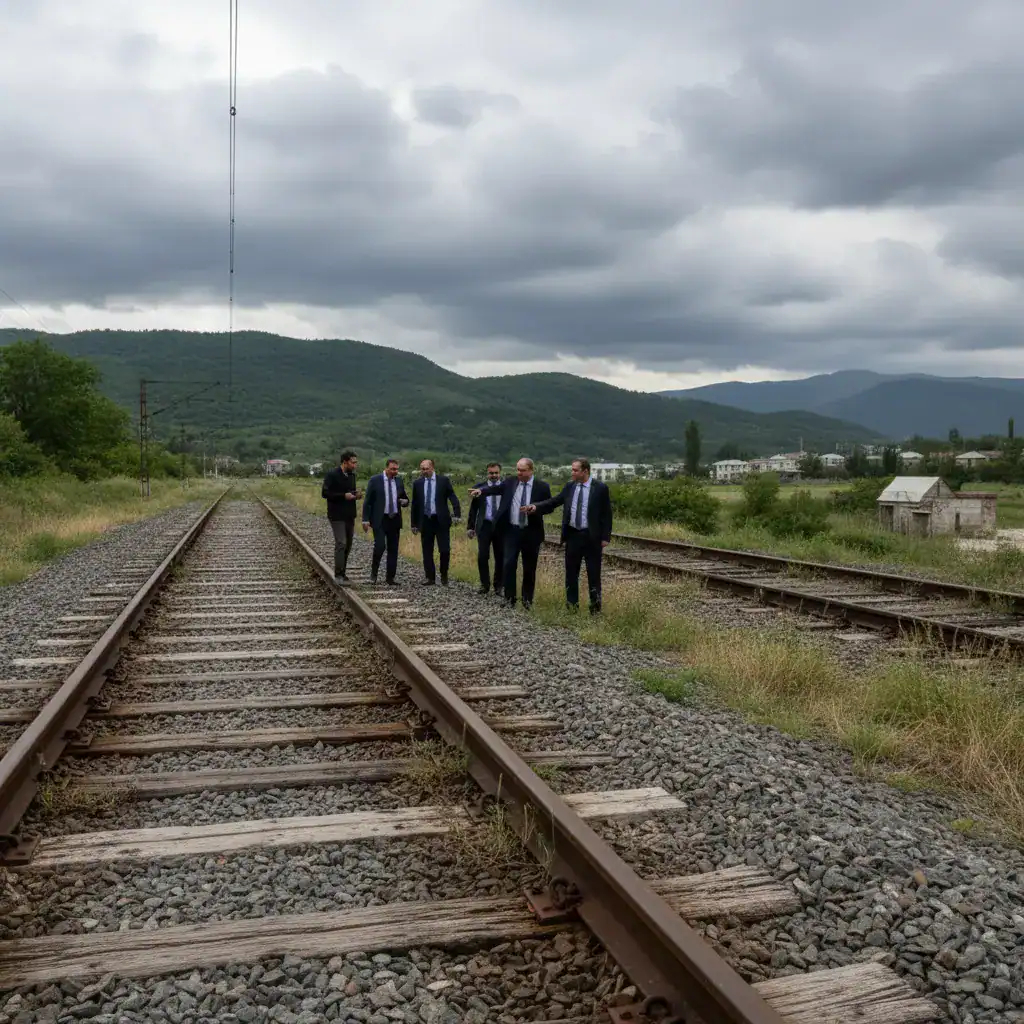
Yerevan, January 15 – Representatives from Armenia and Azerbaijan today carried out a joint inspection of the Yeraskh-Sadarak railway section’s infrastructure. This was confirmed by the press service of the Ministry of Territorial Administration and Infrastructure of the Republic of Armenia.
Joint Inspection Aims to Restore Vital Railway Links
The primary objective of the inspection was to assess the technical feasibility of the railway section for the movement of specialized railway construction equipment. This assessment is a crucial step towards implementing comprehensive restoration measures for the infrastructure.
Following the inspection, both parties exchanged views on evaluating the technical condition of the railway infrastructure in the specified section.
Prime Minister Pashinyan’s Call for Urgent Restoration
Earlier today, Armenian Prime Minister Nikol Pashinyan stated in a briefing with journalists that the Armenian government expects Russia to respond promptly to the urgent restoration of several railway sections leading to Azerbaijan and Turkey.
These sections include Ijevan, Yeraskh, and Akhurik, which historically connected Armenia with Azerbaijan, Nakhichevan, and Turkey. These railway lines, built during the Soviet era, have been out of operation since the late 1980s.
It is worth recalling that during a press briefing on December 18, 2025, Pashinyan announced that he had approached Russia regarding the urgent restoration of several railway sections towards Azerbaijan and Turkey.
On December 22, he also raised this issue during a meeting with President Putin in St. Petersburg. Days later, in a conversation with journalists, he further stated that the Armenian government is prepared to take back the railway sections from Russian concessionary management and repair them using its own resources.
Broader Context of Regional Connectivity
The restoration of these railway lines is a significant development in the broader context of regional connectivity and could potentially open new economic and transport corridors. The joint inspection underscores a collaborative effort between Armenia and Azerbaijan towards achieving these goals.
The Armenian government’s proactive stance, including its willingness to fund the repairs, highlights the strategic importance placed on these railway links for the country’s future economic development and regional integration.
The discussions between Armenian and Azerbaijani representatives are expected to continue as both sides work towards finalizing the plans and timelines for the restoration of the Yeraskh-Sadarak railway section and other critical links.
This initiative could pave the way for improved trade relations and enhanced regional stability, demonstrating a commitment to resolving long-standing infrastructure challenges through dialogue and cooperation.
The international community will be closely watching the progress of these restoration efforts, as successful implementation could serve as a model for future collaborative projects in the South Caucasus region.
Further details regarding the technical assessments and proposed restoration timelines are anticipated to be released in the coming weeks as the parties advance their discussions and planning.