

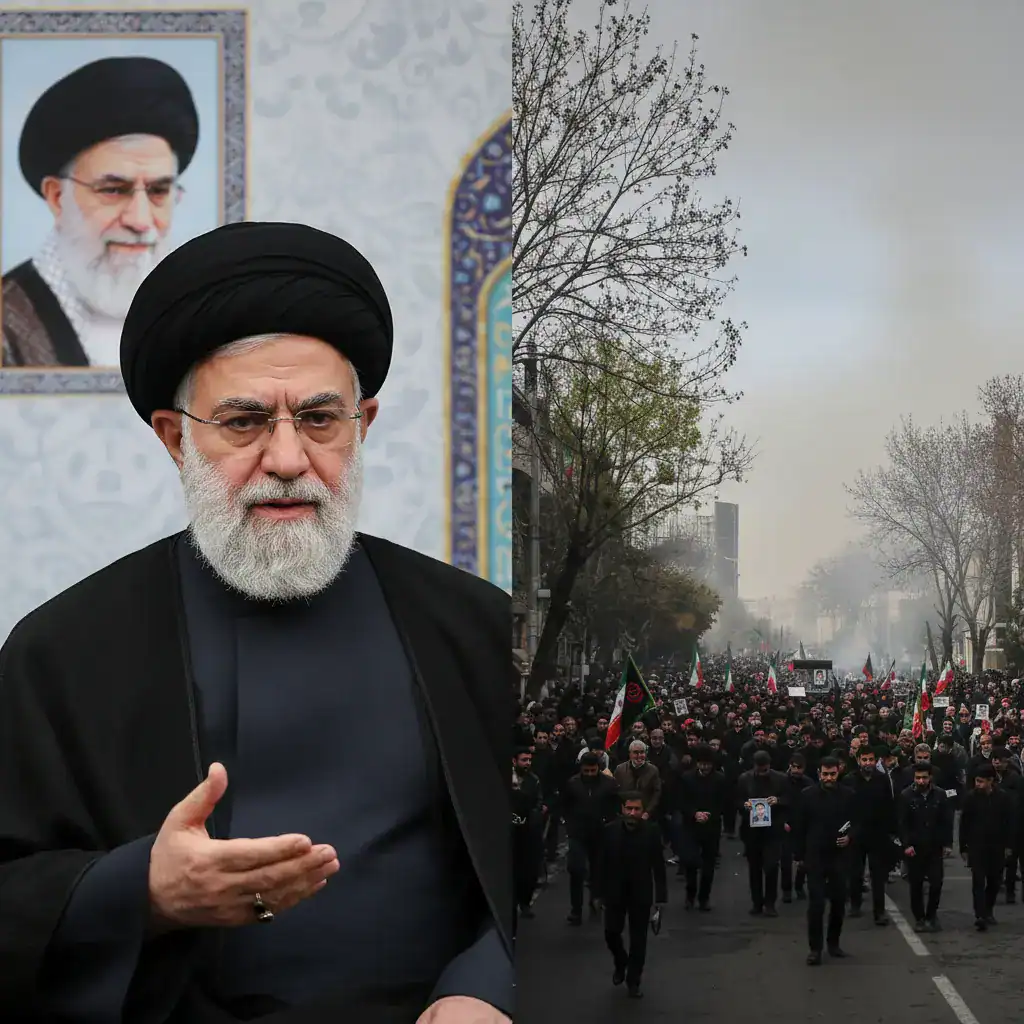
Iran Declares 40-Day Mourning Following Supreme Leader Khamenei’s Death Amid Regional Turmoil
Yerevan, Armenia, March 1, 2026 – Iran has officially declared a 40-day period of national mourning following the reported death of its Supreme Leader, Ali Khamenei. The announcement comes amidst a highly volatile situation in the Middle East, characterized by recent strikes and escalating rhetoric.
Reports from various sources indicate that Ali Khamenei has been killed, with his body reportedly recovered from rubble. This development has triggered widespread speculation and concern across the region and beyond.
Regional Implications and International Reactions
The death of the Supreme Leader is expected to have significant repercussions for Iran’s internal politics and its foreign relations. Political analyst Ara Poghosyan suggested that the United States and Israel might attempt to create a situation to reformat Iran into a secular state. David Ananyan emphasized that the events unfolding in Iran cannot be considered ‘external’ for Armenia, highlighting the interconnectedness of regional stability.
The Armenian Security Council (SC) has convened to discuss the ongoing events in and around the Islamic Republic of Iran and the broader Middle East. Prime Minister Nikol Pashinyan noted that the discussions focused on the implications of these developments for Armenia.
Escalation of Conflict and Military Actions
The declaration of mourning follows a period of intense military activity. Israel has reportedly launched what it considers its largest air strike in the history of its air force against Iran. Axios reported that the United States and Israel are expected to bomb Iran for at least five days. Former US President Donald Trump stated that if Iran had not been attacked, it would have already possessed nuclear weapons.
In response to the strikes from the US and Israel, Iran has launched hypersonic missiles, according to ISNA. Iran also attacked US military bases in seven countries and bombed Bahrain. An Iranian missile strike reportedly caused a fire near the Fairmont The Palm hotel in Dubai. Qatar’s American radars were destroyed, and Iran has closed the Strait of Hormuz, as reported by Reuters. Artillery strikes have targeted 768 locations in Iran, resulting in over 200 casualties, including 85 fatalities at a girls’ school.
Humanitarian Concerns and Regional Instability
The escalating conflict raises serious humanitarian concerns. Political scientist Artur Khachikyan warned of several risks for Armenia, including a potential influx of refugees from Iran. He also highlighted the possibility of refugees flowing into Azerbaijan, which could lead to renewed demands from Aliyev for the return of 300,000 Azerbaijanis to Armenia, or even an organized infiltration into Syunik, potentially leading to the establishment of a ‘security zone’ under Azerbaijani or Turkish military control.
Khachikyan outlined several scenarios for the conflict’s progression, ranging from short-term bombing campaigns leading to negotiations or regime change (Yugoslav scenario) to more prolonged bombardments inciting ethnic and civil conflicts (Libyan scenario) or even the establishment of ‘security zones’ and the fragmentation of Iran (Syrian scenario). He stressed that this is a large-scale regional war, and the escalation is likely to continue, demonstrating a world where international law is absent and brute force dictates outcomes.
International Responses and Travel Disruptions
The unfolding crisis has also led to travel disruptions. Italy’s Minister of Defense is reportedly unable to return home from Dubai due to the situation. Two flights from Yerevan to the UAE have been canceled. The Armenian Embassy in Kuwait has issued a statement regarding the situation.
The international community is closely monitoring the situation, with many nations urging de-escalation and a peaceful resolution to the growing crisis.
Source: Artur Khachikyan, Mamul.am