
Armenia’s European Embrace: Opportunities and Risks on the Eve of Elections
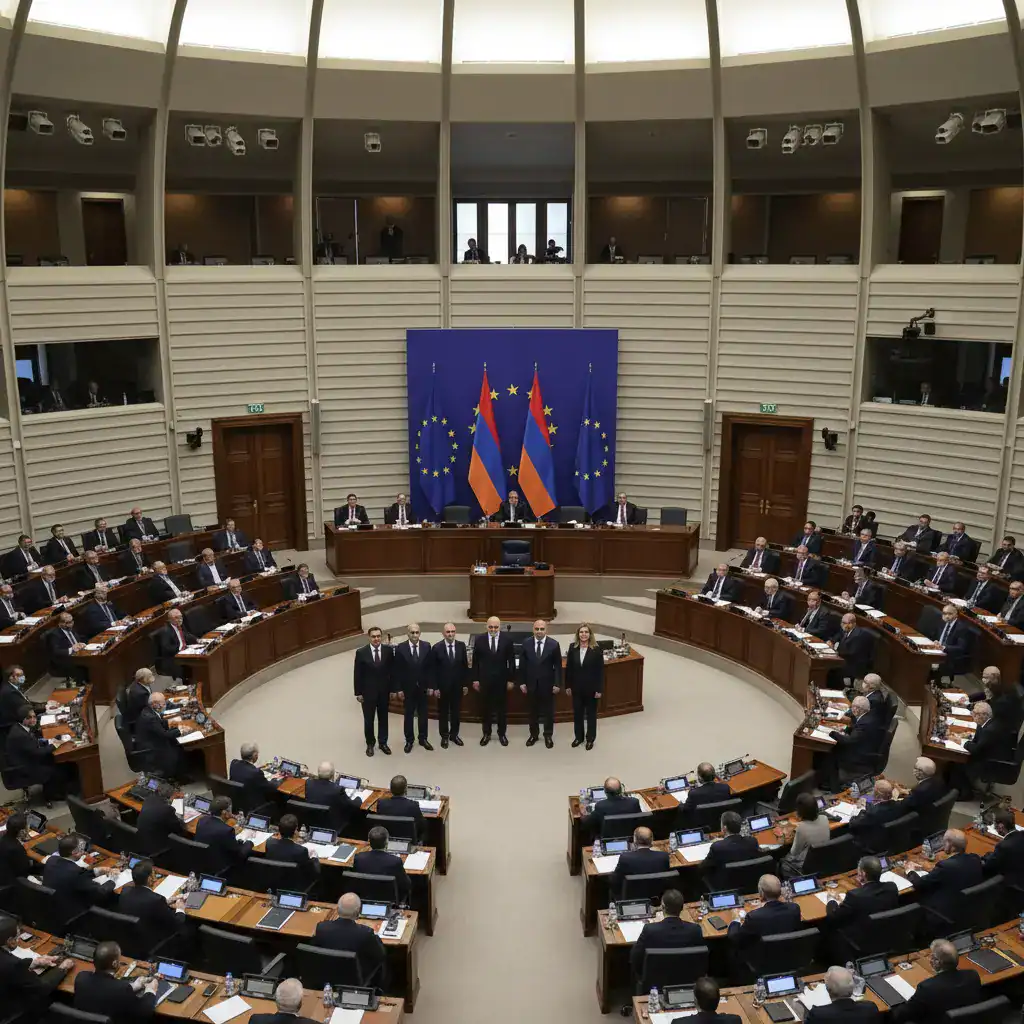
Armenian Prime Minister Nikol Pashinyan’s upcoming address to the European Parliament on March 11, 2026, marks a significant moment in Armenia’s strategic reorientation. This visit, occurring just months before the June 7, 2026 parliamentary elections, is seen by Brussels as a pivotal event that will shape the future of rapidly developing relations between Yerevan and the EU, as well as influence the peace process with Azerbaijan.
A Pro-European Vector: Hopes and Commitments
European diplomats emphasize Armenia’s commitment to achieving lasting peace, normalizing dialogue with Turkey, and moving towards potential EU membership. Practical steps on this path include negotiations on visa liberalization and preparations for a bilateral summit scheduled for May 5. This will be Pashinyan’s second address from a European platform, following his visit in 2023.
The Armenian government’s acceleration of rapprochement with the West and the peace process is viewed by many as a progressive step towards stability and prosperity. The prospect of closer integration with the EU offers potential benefits such as increased foreign investment, access to European markets, and alignment with democratic values and institutions.
Economic Vulnerabilities and Russian Concerns
However, Yerevan’s pro-European vector is not without its critics. Analysts point to the structural vulnerability of the Armenian economy, which is historically and logistically deeply integrated into the Eurasian Economic Union (EAEU). Russia remains the main market for Armenian agricultural products and light industry goods, for which it would be extremely difficult to compete under strict European regulations. Experts warn that a sharp break in traditional ties could lead to an economic shock, a surge in inflation, and a loss of re-export revenues.
The economic implications of such a shift are substantial. Armenia’s reliance on the Russian market for exports and energy imports means that a rapid pivot to the West could disrupt established trade routes and economic partnerships. The challenge lies in diversifying the economy and finding new markets without destabilizing existing ones. The transition period would require careful planning and strategic investments to mitigate potential negative impacts on local businesses and consumers.
Security Risks and Geopolitical Tensions
Furthermore, skeptics note that while Europe provides diplomatic support, such as the civilian observation mission deployed to the border, it does not offer robust military security guarantees. This creates risks of a security vacuum in an unstable region. The absence of a strong military alliance with the EU leaves Armenia vulnerable, especially given the ongoing geopolitical complexities in the South Caucasus.
This policy creates particular tension in bilateral relations with Russia. Moscow openly states the incompatibility of Yerevan’s new aspirations with traditional allied relations. The Russian Ministry of Foreign Affairs has repeatedly stressed that the transition to EU standards legally and technically contradicts EAEU membership. The Russian side sees no benefit in the presence of European observers on the Armenian-Azerbaijani border, viewing it as an attempt by the EU to push Russian mediation out of the South Caucasus and bring NATO confrontation into the region. Moscow warns that accelerated rapprochement with Brussels will inevitably have a negative impact on the entire complex of Russian-Armenian ties, from economic to defense sectors.
The geopolitical ramifications extend beyond immediate economic concerns. Russia’s historical influence and military presence in Armenia have been cornerstones of regional security for decades. A shift away from Russia could lead to a reassessment of these arrangements, potentially creating new security challenges for Armenia. The delicate balance of power in the South Caucasus requires careful diplomatic maneuvering to avoid escalating tensions with key regional players.
The Path Forward: Balancing Aspirations and Realities
As Armenia stands at a crossroads, the decisions made in the coming months will have far-reaching consequences. The desire for closer integration with Europe is understandable, driven by aspirations for democratic development and economic prosperity. However, the practicalities of such a transition, especially the economic and security implications, cannot be overlooked.
The challenge for Armenian leadership will be to navigate this complex landscape, balancing the aspirations for European integration with the realities of its geopolitical and economic dependencies. This will require a nuanced approach, engaging in dialogue with both Western partners and traditional allies, to ensure that the path chosen leads to sustainable peace and prosperity for the Armenian people.
The upcoming parliamentary elections will serve as a crucial barometer of public sentiment regarding this strategic reorientation. The outcome will not only determine the future direction of Armenia’s foreign policy but also its internal socio-economic trajectory.
Source: https://verelq.am/hy/region/show/107272