

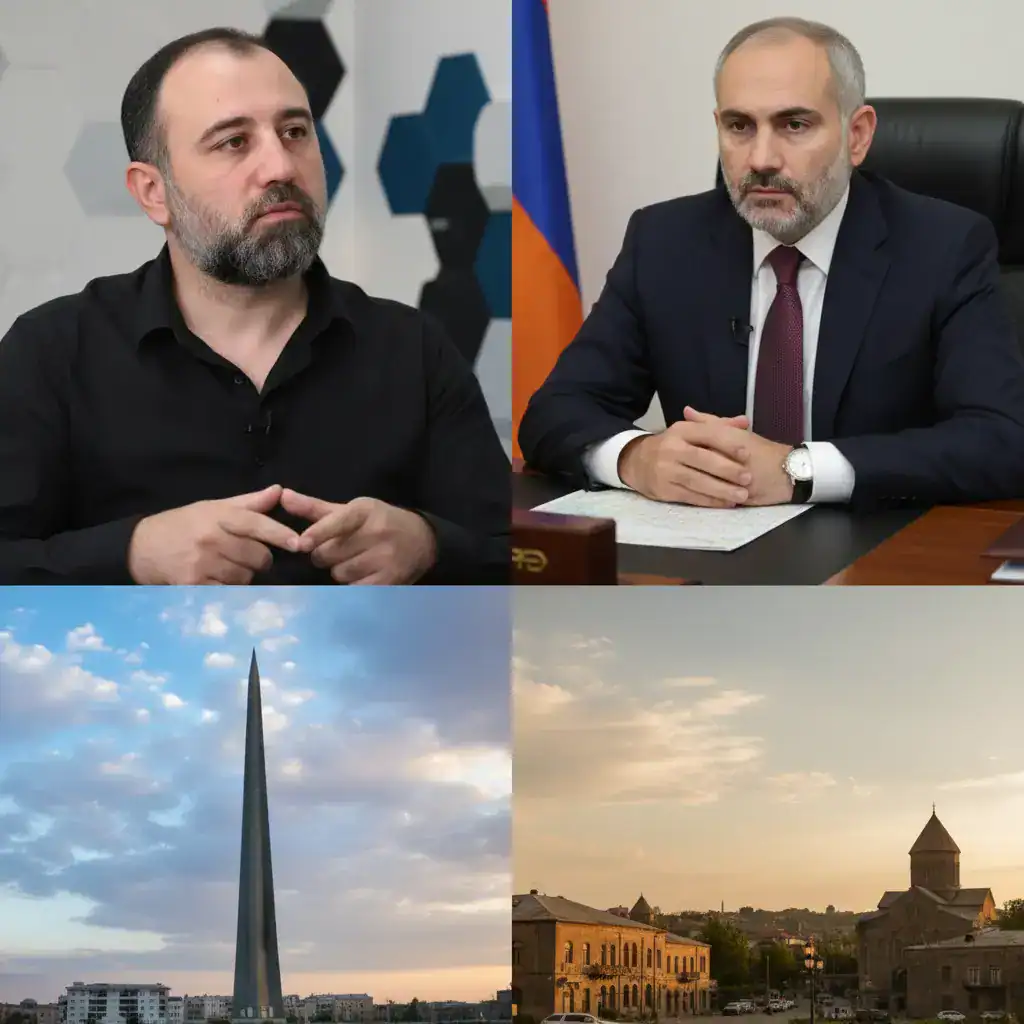
Gyumri, March 14 – Ruben Mkhitaryan, a member of the Gyumri City Council, has made a notable statement on his Facebook page, suggesting that Prime Minister Nikol Pashinyan might choose to attend the Gallipoli ceremonies in Turkey this year instead of visiting Cicernakaberd, the Armenian Genocide Memorial Complex.
Mkhitaryan’s Statement Raises Questions
Mkhitaryan’s post, made on Friday, March 13, 2026, at 12:42 PM, reads: “Don’t be surprised if this year, instead of visiting Cicernakaberd, he personally goes to Turkey and participates in the Gallipoli ceremonies.” This comment has sparked discussions and raised questions regarding the Prime Minister’s priorities and potential foreign policy shifts.
Context of the Statement
The statement comes amidst a period of complex regional dynamics and ongoing debates within Armenia concerning national identity, historical memory, and foreign relations. Cicernakaberd is a sacred site for Armenians, commemorating the victims of the Armenian Genocide, while the Gallipoli Campaign is a significant historical event for Turkey.
Public and Political Reactions
While the immediate reactions to Mkhitaryan’s statement are not fully detailed in the provided data, such a declaration from a local official is likely to provoke strong responses from various segments of Armenian society, including political figures, historians, and the general public. The comparison between visiting a genocide memorial and attending ceremonies in a country with which Armenia has a historically fraught relationship is particularly sensitive.
Implications for Armenian-Turkish Relations
A potential visit by the Armenian Prime Minister to Gallipoli, as speculated by Mkhitaryan, could be interpreted in multiple ways. Some might see it as a gesture towards reconciliation and normalization of relations with Turkey, while others might view it as a betrayal of national memory and a disregard for the historical injustices suffered by Armenians.
Broader Political Landscape
The statement also reflects the broader political climate in Armenia, where public figures often use social media to express strong opinions and engage in political discourse. Mkhitaryan’s previous posts, which number 175, indicate an active presence in public commentary. The news feed also shows a range of other political and social discussions, including criticisms directed at Nikol Pashinyan and debates on various domestic and international issues.
The coming weeks will likely reveal whether Mkhitaryan’s speculation holds any truth and how the Armenian government will respond to such suggestions. The choice of where the Prime Minister spends his time during significant commemorative periods holds considerable symbolic weight and can influence public perception and international relations.
The issue of national memory and the pursuit of justice for the Armenian Genocide remains a cornerstone of Armenian foreign policy and national identity. Any perceived deviation from this stance by the leadership is subject to intense scrutiny and debate.
Source: Ruben Mkhitaryan’s Facebook page