


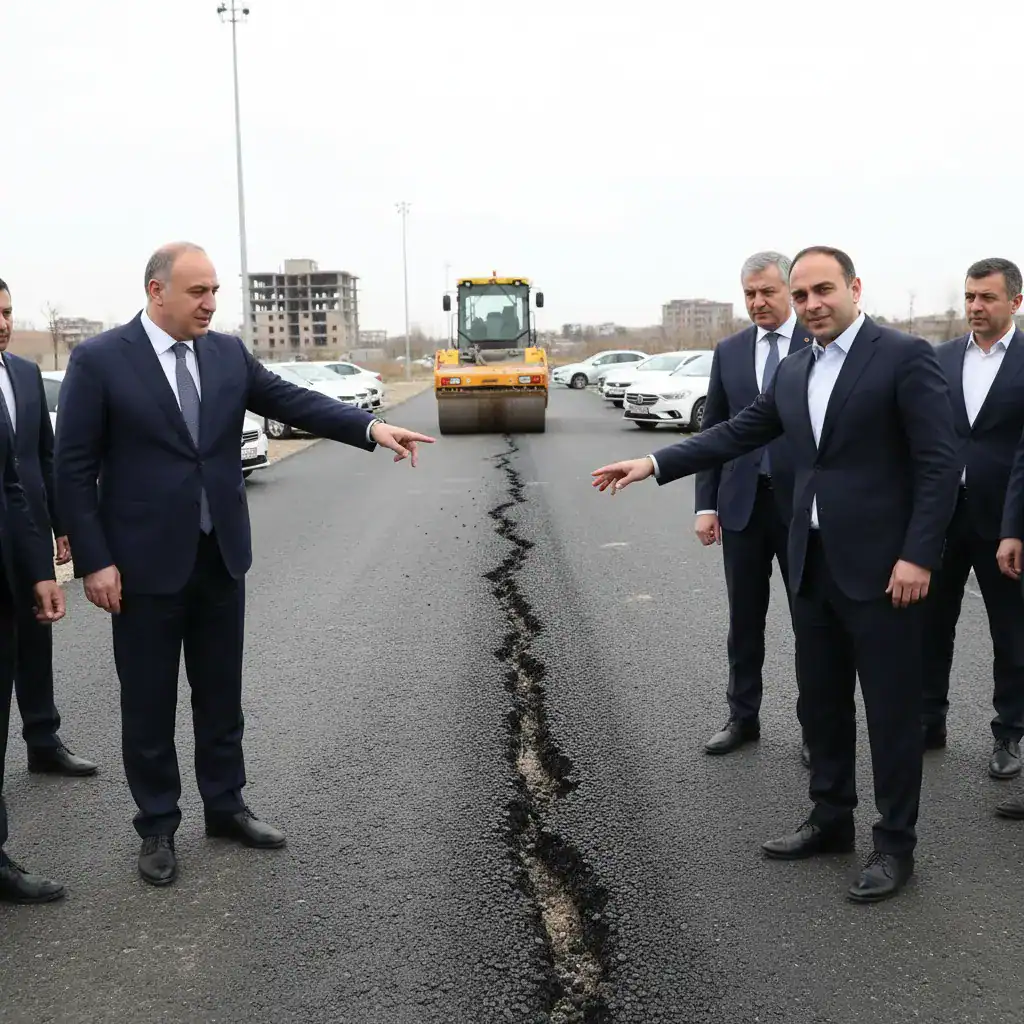
Yerevan, Armenia – Recent investigations have cast a shadow over the quality of road construction in Yerevan, despite significant state funding. Reports indicate that millions of drams have been allocated for asphalt projects, yet the quality of the work remains consistently poor, leading to public outcry and calls for accountability.
Millions Spent, Poor Quality Persists
The issue of substandard asphalt in Yerevan’s road construction has been a recurring problem, with citizens frequently complaining about the condition of the streets. Despite these concerns, large sums of money continue to be disbursed from the state budget for these projects. For instance, on March 16, 2026, it was reported that billions of drams were being spent on asphalt, with questions arising about the primary beneficiaries of these lucrative road construction tenders in Yerevan.
Further scrutiny on March 17, 2026, revealed that the Araks community administration spent a considerable amount on cakes, drinks, and car oils for its own needs, raising eyebrows about the allocation of public funds. Additionally, on the same day, 7.5 million drams from the state budget were allocated for the repair of vehicles belonging to Prime Minister Pashinyan’s staff, and Suren Papikyan reportedly received another gift, the details of which remain unclear.
Public Outcry and Calls for Investigation
The continuous allocation of substantial funds for road construction, coupled with the persistent poor quality of the asphalt, has fueled public dissatisfaction. Many residents and experts are questioning the transparency and efficiency of these projects, demanding thorough investigations into how state money is being spent and who benefits from these tenders.
Photographs circulating since February 13, 2026, have visually exposed the “quality” asphalt praised by Nikol Pashinyan’s government, showcasing the deplorable state of Yerevan’s streets. These images serve as concrete evidence of the issues at hand, further intensifying the debate surrounding the city’s infrastructure development.
Allegations of Corruption and Beneficiary Concerns
The ongoing situation has led to allegations of corruption, with many suspecting that certain individuals or entities are unfairly profiting from these projects at the expense of public funds and infrastructure quality. The names of the primary beneficiaries of these tenders remain a key point of contention and a subject of ongoing investigation.
As the public continues to demand answers, the authorities are under increasing pressure to address these concerns, ensure accountability, and implement measures to guarantee the quality and transparency of future road construction projects in Yerevan.
The issue highlights a broader challenge in public procurement and oversight, where the effective use of taxpayer money is paramount for sustainable urban development and public trust.