

Yerevan City Council Member Raises Alarm Over Mass Tree Felling in Yerevan
Yerevan, April 24 – Kristina Vardanyan, a member of the ‘National Progress’ faction of the Yerevan City Council, has addressed an open letter to Armenian Prime Minister Nikol Pashinyan, highlighting critical environmental concerns in the capital. Vardanyan, a physician and scientist specializing in landscaping, warns that the mass felling of thousands of mature trees and their replacement with decorative, non-native species poses a significant threat to public health and biodiversity.
Unsuitable Replacements and Health Risks
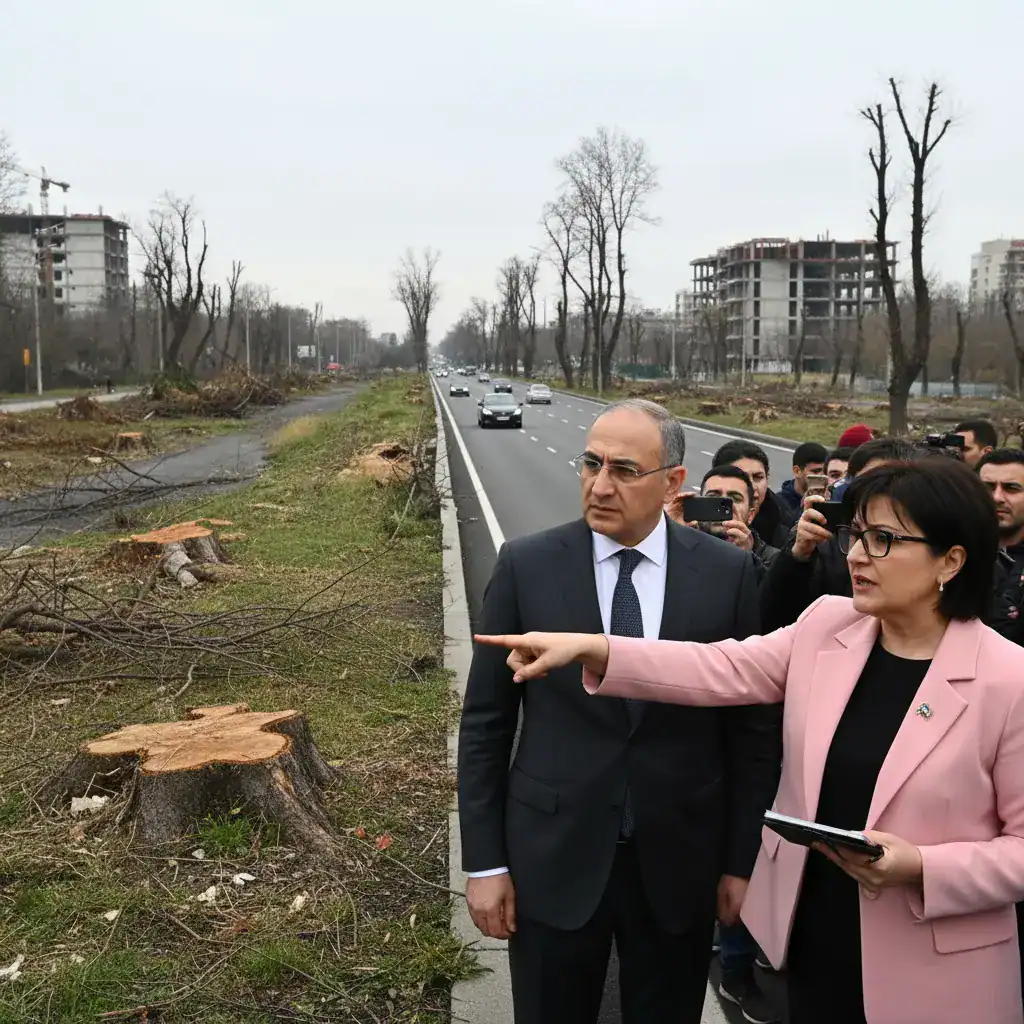
Vardanyan asserts that for three consecutive years, Yerevan has been systematically deprived of thousands of local, mature trees that possess high sanitary value. These are being replaced with species such as Albizia, Catalpa, and Judas trees, which are not adapted to the city’s climate and are typically intended for park and garden areas, lacking the essential sanitary functions required for urban greening.
“Greenery is about health; it is a branch of communal hygiene, and therefore, work cannot be carried out without considering the provisions of this science,” Vardanyan stated in her letter. She emphasized that globally, in the face of climate change, the focus is on the importance and preservation of mature and local tree species. However, Yerevan is pursuing the opposite approach: mass tree felling, severe pruning that disfigures trees, and the planting of alien species, often with dwarf canopies, in streetscapes.
Expert Warnings and Legal Concerns
As a Yerevan City Council member, physician, scientist, and landscaping specialist with decades of experience in the scientific and practical aspects of urban greening, Vardanyan urged the Prime Minister to intervene. She called for a comprehensive scientific analysis of the tree replacement program, which she believes carries severe consequences for public health.
Vardanyan highlighted that after the revolution, from 2019-2022, while an opposition council member, she collaborated with the ‘My Step’ faction on Yerevan’s environmental program. Later, as part of the current Greening NGO team, they fought for every tree, initiated mass tree treatment, and prohibited severe pruning. “The methodology currently being applied, to put it mildly, is not correct,” she stated, adding that scientific evidence indicates this process will lead to a decline in the quality of life and an increase in morbidity and mortality rates among the population.
“This is not a matter of political speculation when the life of a newborn Yerevan resident is at risk,” Vardanyan stressed.
Affected Areas and Lack of Expertise
According to Vardanyan, mature trees have already been removed from the following streets:
- Moskovyan
- Sayat-Nova
- Amiryan (partially)
- Tumanyan
- Melik-Adamyan
- Aleq Manukyan
- Paronyan
- Proshyan
- Ulnetsi
- Bagratunyats
She argued that such widespread tree replacements in a hot city like Yerevan, plagued by severe environmental issues, should be carried out in strict phases, adhering rigorously to international scientific experience, standards, and with the involvement of a team of independent experts and scientists. Vardanyan also noted that Yerevan does not even have a Chief Dendrologist, who would be officially responsible for the city’s trees.
Legislative Changes and International Conventions
Vardanyan also pointed out that for unclear reasons, on May 3, 2023, amendments were made to the RA Law on Environmental Impact Assessment (EIA), effectively making tree felling on streets a process that does not require EIA expertise. “This is a strange thing (we have a court decision on this matter). It turns out that the felling of thousands of trees on the streets does not have an impact on the environment?” she questioned. She further noted that these actions contradict the Aarhus Convention (UN Economic Commission for Europe Convention on Access to Information, Public Participation in Decision-making and Access to Justice in Environmental Matters).
International Support for Preservation
Vardanyan revealed that in response to her letters, numerous international experts from France, Great Britain, Russia, Kazakhstan, and Uzbekistan unanimously stated: “Do not deprive streets of mature trees; the restoration of the city’s damaged green framework will be terribly difficult, requiring decades to recover what has been lost.” Michel Pena, former president of the French Federation of Landscape, and a member of UNESCO’s Scientific Council, wrote: “Preserve mature trees, learn from our mistakes.”