
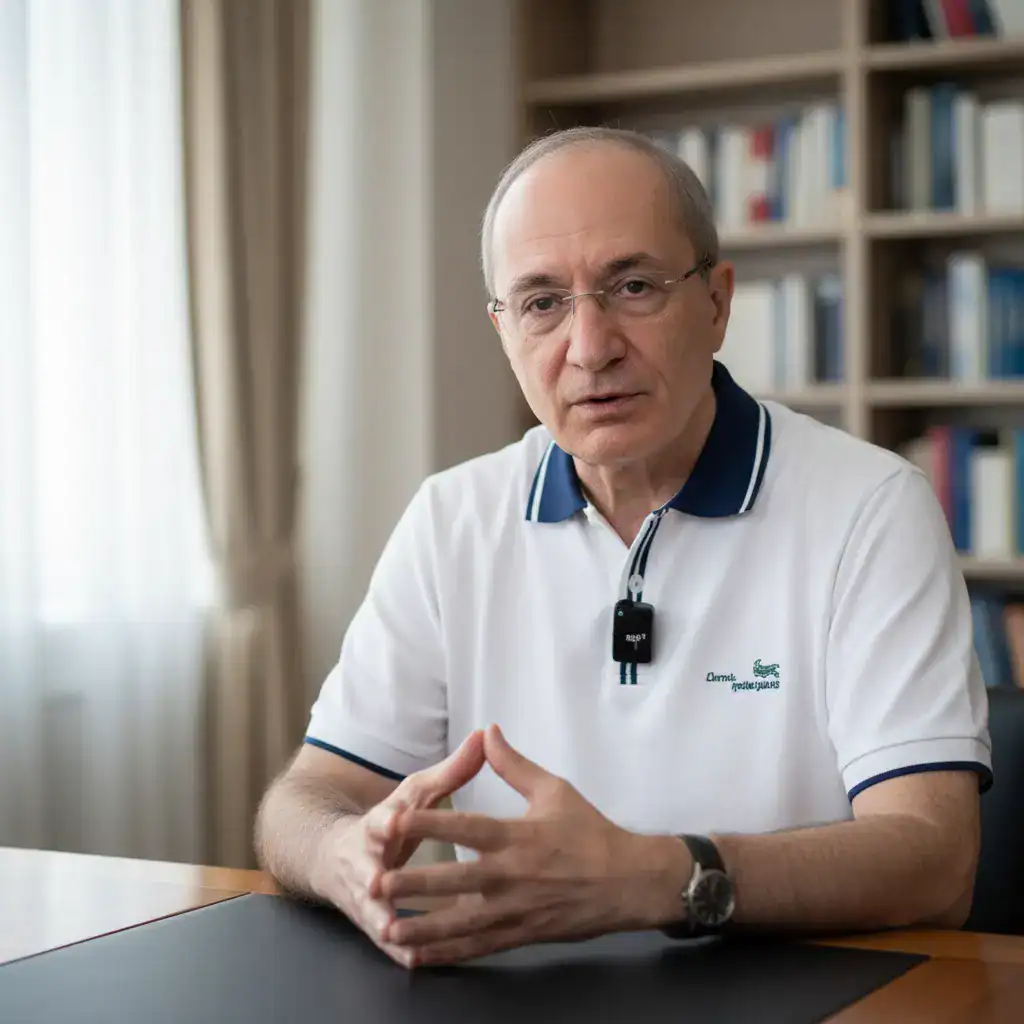
YEREVAN – Dr. Armen Ayvazyan, a prominent political scientist and historian, has ignited a fierce debate with his recent Facebook post, asserting that the organization of a “noisy bacchanalia” in Yerevan immediately following the commemoration of the Armenian Genocide was a “Turkish order.” This statement, made on April 25, 2026, has resonated deeply within Armenian society, drawing sharp criticism of current government policies.
Ayvazyan’s Strong Condemnation of Post-Genocide Day Events
In his impassioned social media entry, Dr. Ayvazyan characterized the event as an “unprecedented attack against Armenian memory, dignity, values, statehood, and Armenian identity in general.” He emphasized the gravity of holding such a celebratory gathering so soon after a day of national mourning and remembrance for the victims of the Armenian Genocide.
He further elaborated on his concerns, stating, “It must be realized that from now on, Pashinyan and the Civil Contract party will only intensify their pro-Turkish anti-Armenian actions, and if they are re-elected in the upcoming ‘elections’ in June, they will proceed with unrestrained and widespread steps to turn Armenia entirely into a Turkish-Azerbaijani colony.”
Warnings of a Critical Year for Armenia
Dr. Ayvazyan did not mince words about the potential consequences, warning that “everything Armenian is endangered in Armenia.” He added, “Those who do not understand this are not only politically immature but also psychologically weak-willed.”
His post concluded with a stark prediction: “Difficult times await us all. 2026 could become a fateful year.” However, he also offered a glimmer of hope, quoting Romans 8:31: “If God is for us, who can be against us?”
Context: A Nation in Mourning and Political Turmoil
The remarks come at a sensitive time for Armenia. April 24th marks Armenian Genocide Remembrance Day, a solemn occasion recognized globally by many nations, where Armenians worldwide honor the 1.5 million victims of the 1915 atrocities. The contrast between this day of remembrance and the subsequent “bacchanalia” has fueled public anger and political discourse.
The accusation of a “Turkish order” highlights deep-seated anxieties within Armenian society regarding perceived threats to national identity and sovereignty, particularly in the wake of recent geopolitical shifts and ongoing tensions with neighboring countries.
Public Reaction and Broader Implications
Dr. Ayvazyan’s post quickly garnered significant attention, with many sharing and commenting on his strong assertions. The sentiment expressed by Ayvazyan reflects a growing segment of the population that is critical of the current government’s foreign policy and its approach to national security.
The upcoming June elections, mentioned by Ayvazyan, are anticipated to be highly contentious, with the future direction of Armenia’s geopolitical alignment and domestic policies at stake. The debate surrounding events like the “bacchanalia” and their interpretation underscores the deep divisions and existential questions facing the Armenian nation.
This incident serves as a potent reminder of the ongoing struggle to preserve historical memory and national identity in Armenia, as well as the intense political climate surrounding these issues.