
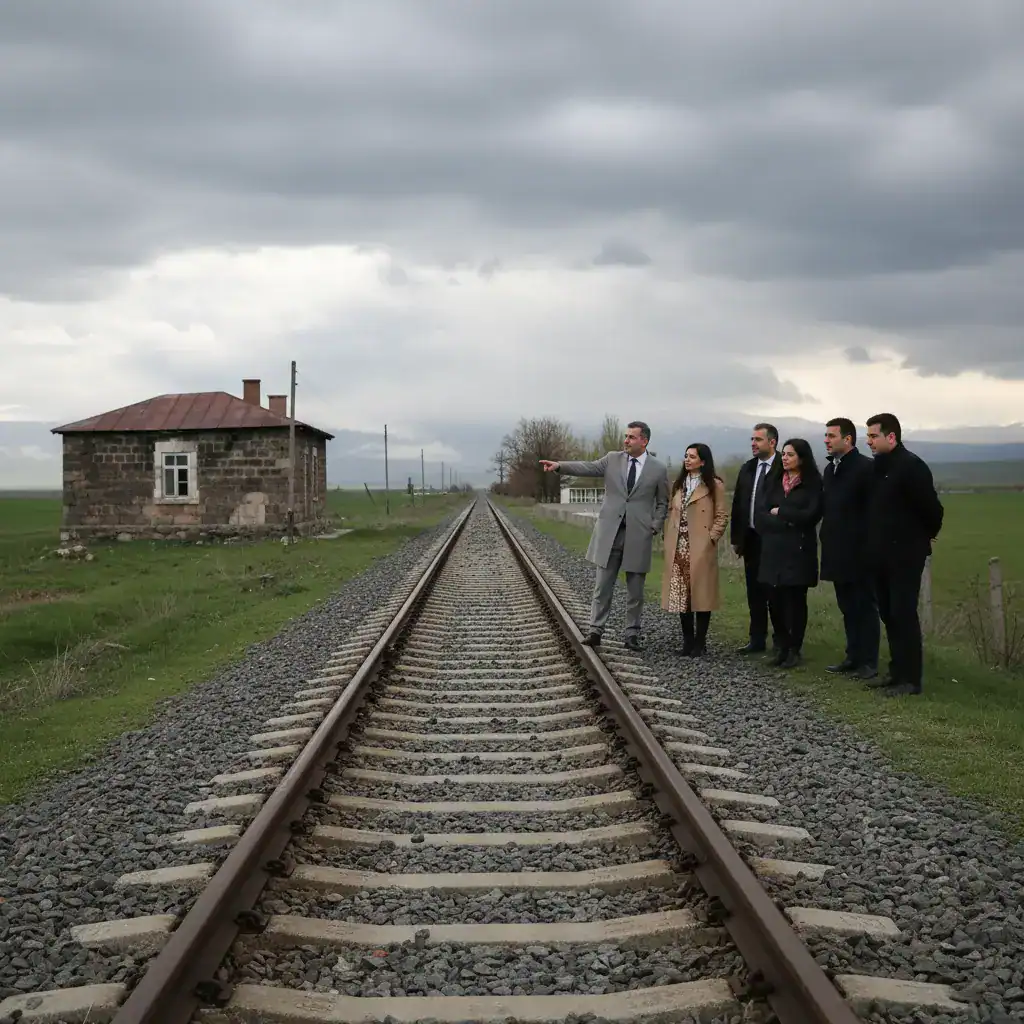
Gyumri, May 11 – A delegation of Turkish journalists visited Gyumri, Armenia, to explore the potential reopening of the Gyumri-Kars railway and the broader implications of opening the Armenia-Turkey border checkpoint. This visit followed their participation in the 8th European Political Community Summit and the Yerevan Dialogue, both held in Yerevan on May 4.
Focus on Gyumri-Kars Railway and Border Crossing
The journalists specifically toured the area of the Gyumri-Kars railway, engaging in discussions about the prospects for its reactivation. They emphasized the critical importance of establishing an operational border checkpoint between Armenia and Turkey. The Gyumri-Kars railway, a historically significant route, has been non-operational for decades, and its potential reopening is a key topic in discussions surrounding normalization of relations between the two countries.
During their visit, the Turkish media representatives had the opportunity to observe the existing infrastructure and gain a firsthand understanding of the logistical and economic benefits that could arise from improved cross-border connectivity. Local officials and experts provided insights into the technical aspects of railway restoration and the broader socio-economic impact of opening the border.
Background of the Visit: European Political Community Summit
The visit to Gyumri by the Turkish journalists was a direct follow-up to their engagement in high-level diplomatic events in the Armenian capital. The 8th European Political Community Summit, held in Yerevan on May 4, gathered heads of state and government from nearly all European countries. This summit served as a platform for discussions on regional stability, cooperation, and various geopolitical issues affecting Europe and its neighbors.
The Yerevan Dialogue, which coincided with the summit, provided an additional forum for exchange among political figures, experts, and media representatives, fostering an environment for open communication and exploration of new initiatives. The presence of Turkish journalists at these events and their subsequent visit to the border region underscore a growing interest in understanding and potentially contributing to the normalization processes between Armenia and Turkey.
Potential Economic and Regional Benefits
The reopening of the Gyumri-Kars railway and the establishment of an open border checkpoint are seen as crucial steps towards enhancing regional trade, economic cooperation, and people-to-people contacts. Proponents argue that such measures could significantly boost economic activity in border regions, facilitate the movement of goods and services, and contribute to overall stability in the South Caucasus.
The railway, once a vital link for trade and transportation, holds the promise of connecting markets and fostering economic interdependence. The discussions held in Gyumri highlighted that beyond economic advantages, an open border could also pave the way for increased cultural exchange and mutual understanding between the Armenian and Turkish societies.
Next Steps and Future Outlook
While the visit by Turkish journalists is an exploratory step, it signifies a continued interest in the dialogue surrounding Armenia-Turkey relations. The insights gathered during their tour of the Gyumri-Kars railway area and the discussions on border opening contribute to the broader public discourse on these critical issues. Future developments will likely depend on ongoing diplomatic efforts and the political will to implement concrete measures for normalization.
The Armenian side has consistently expressed its readiness for unconditional normalization with Turkey, including the opening of borders. International actors have also encouraged such steps, viewing them as beneficial for regional peace and prosperity. The recent visit by Turkish media representatives adds another layer to these complex and evolving dynamics.