


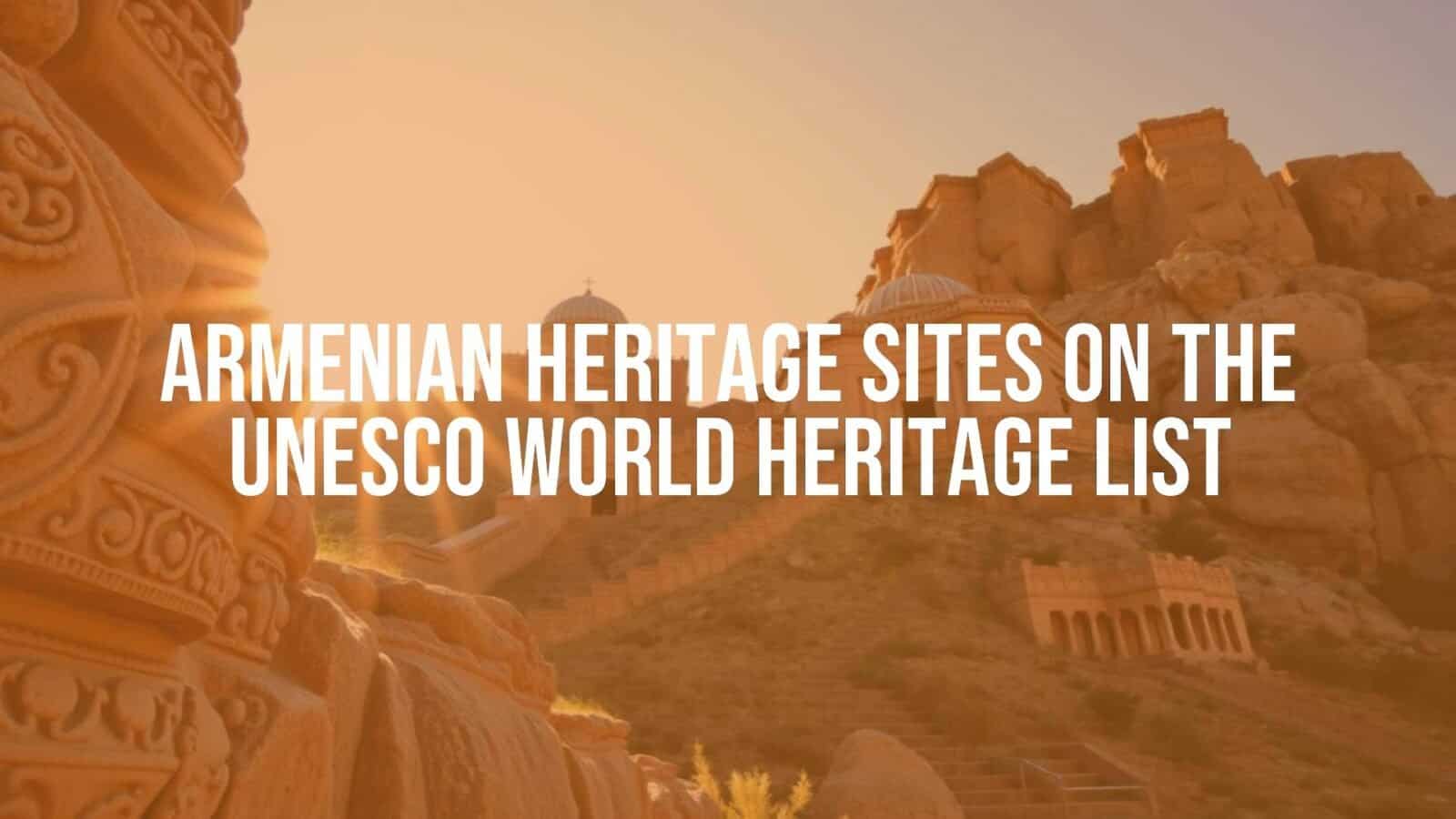
Armenia, a country with a long and rich history, holds an important place on the UNESCO World Heritage List. Armenian heritage sites matter to UNESCO because of their strong historical and cultural value, especially their role in the birth and growth of Christianity. Armenia was the first country to adopt Christianity as a state religion in 301 AD, and this early choice is reflected in its old monasteries, churches, and archaeological sites. These places are not just old stones; they are clear records of many centuries of spiritual life, building traditions, and learning, combining local customs with wider cultural influences in a way that fits UNESCO’s goal of protecting heritage with value for all humanity.
UNESCO’s recognition of these Armenian sites shows how unique and irreplaceable they are. Each listed site tells a story of creativity, faith, and strength, showing buildings that pushed architectural limits and religious centers that supported education and thought. From rock-cut churches to grand cathedrals, these locations give a direct, physical link to a civilization that, despite its small size, has had a strong impact on global culture. UNESCO selects sites that show a special mix of cultural and historical forces, and Armenia’s entries stand out for their long-lasting influence.

What Makes Armenian Heritage Sites Significant to UNESCO?
How Armenian Sites Reflect Unique Cultural and Historical Values
Armenian heritage sites are more than old monuments; they act like history books written in stone, showing how a civilization has changed and adapted over time. They matter to UNESCO because they clearly show unique cultural and historical values, especially Armenia’s key role in the early growth and spread of Christianity. With Christianity made the state religion in 301 AD, Armenian churches and monasteries became some of the earliest and most important examples of Christian buildings and religious life anywhere in the world. This early leadership is visible in their building styles, art, and the long, continuous use of these holy places.
These sites also worked as important centers of learning, writing, and art. Monasteries such as Haghpat and Sanahin were places of worship and at the same time respected schools where calligraphy developed, theology was studied, and philosophy was discussed. This combined role as both spiritual and educational centers shows a broad view of culture, where belief and knowledge supported each other. The detailed carvings, wall paintings, and special construction methods found here show a clear Armenian building style, often mixing Byzantine elements with local Caucasian traditions to form a look that is both easy to recognize and historically deep.
UNESCO World Heritage Criteria and Armenia’s Contributions
To be added to the UNESCO World Heritage List, a site has to meet at least one of ten strict criteria and show value that matters to all people, not just locally. Armenia’s listed sites almost all meet the cultural criteria (i to vi). They show great examples of human creativity, important exchanges of ideas between cultures, and strong evidence of cultural traditions and civilizations. The Monasteries of Haghpat and Sanahin are praised for their mix of Byzantine and local architecture and for their work as major centers of education, fitting criteria that deal with architectural groups and key periods in human history.
The Cathedral and Churches of Echmiatsin and the Archaeological Site of Zvartnots clearly show the growth of Armenian church architecture, with new artistic ideas and the strong spiritual life of the Armenian Church. The Monastery of Geghard and the Upper Azat Valley are another major example of medieval Armenian building, with churches and tombs cut into solid rock. They show impressive human skill and smart use of the natural setting. Together, these sites give rare insight into a civilization that has added to global culture through its religious life, building traditions, and love of learning.
Which Armenian Heritage Sites Are Inscribed by UNESCO?
Armenia, with its ancient past and deep Christian heritage, currently has three properties on the UNESCO World Heritage List. All three are cultural sites and give a strong picture of Armenia’s history, especially its role in shaping Christian church architecture and monastic life. Each listed site shows a mix of artistic talent, historical weight, and religious meaning, bringing visitors and researchers from many countries to see these lasting examples of human achievement.
These three sites are not single buildings, but wide complexes that show centuries of building change and cultural importance. They include groups of monasteries, cathedrals, and archaeological remains, each adding its own story to Armenia’s heritage. Inscribed between 1996 and 2000, they reflect Armenia’s ongoing work to protect its important cultural places for future generations and to share their value with the rest of the world.
Monasteries of Haghpat and Sanahin
Placed in the scenic Lori Province, the Monasteries of Haghpat and Sanahin are major examples of medieval Armenian church architecture. They were added to the World Heritage List in 1996, and the listing expanded in 2000 to include Sanahin. These complexes were founded in the second half of the 10th century under Queen Khosrovanush, wife of King Ashot III, and new buildings were added until the 13th century, showing a long period of building activity.
Haghpat and Sanahin are well known for the way they combine Byzantine church design with local Caucasian building traditions. This mix created structures that are both impressive and well-suited to their natural surroundings. Beyond their architecture, they were key centers of thought and religion. Their libraries held many manuscripts, and they served as major schools where subjects such as calligraphy, theology, philosophy, medicine, rhetoric, and music were taught. Sanahin was especially important as a school, while Haghpat was known for its large library, though only a small part of its books remain today. The St. Nshan church at Haghpat (built between 976 and 991) shows a new direction in medieval Armenian architecture, and Sanahin’s oldest surviving church dates from the mid-10th century.

Cathedral of Etchmiadzin and Churches of Echmiatsin
In Armavir Province, the Cathedral and Churches of Echmiatsin, together with the Archaeological Site of Zvartnots, were listed by UNESCO in 2000 as a single property. This site clearly shows the start and growth of Christianity in Armenia and traces the development of Armenian church architecture from its earliest forms. The complex in Echmiadzin (modern Vagharshapat) is centered on the Etchmiadzin Cathedral, founded in 301 AD. It is one of the oldest cathedrals in the world and is the main church of the Armenian Apostolic Church, serving as the seat of the Armenian Patriarch.
Alongside the Mother Cathedral, the site includes other important churches: Saint Gayane Church (630), Saint Hripsime Church (618), and Shoghakat Church (1694, built on a 4th-century chapel). Together they offer a timeline of Armenian architectural change. Tradition says the Cathedral stands where Saint Gregory the Illuminator saw a vision of Christ coming down. Archaeologists have also found remains of pagan temples beneath the Christian altars, showing that this place was holy even before Christianity. This gives the site several layers of religious and historical meaning.
Zvartnots Archaeological Site
Near the Echmiadzin complex lies the archaeological site of Zvartnots, which is part of the same UNESCO listing. The Zvartnots Church, also called Saint Gregory Cathedral, was a striking circular structure built in the 7th century (641-661 AD) by Catholicos Nerses III. It had three stories, with each upper level smaller than the one below, and was richly decorated with carvings of grapevines and statues of 32 saints, of which nine have survived.
The church collapsed in the 10th century, most likely because of an earthquake, and today only parts of its structure and base remain. Archaeologists uncovered the site in the 20th century, and even in ruins it provides key information about early medieval Armenian building and its influence on later church designs. Research also points to the earlier presence of a pagan temple to the god Tir on the same spot, again showing long-term religious use. An on-site archaeological museum helps keep and explain the finds discovered there.

Geghard Monastery and the Upper Azat Valley
The Monastery of Geghard and the Upper Azat Valley, listed in 2000, offer a striking example of a monastery set closely into a dramatic natural setting. Located in Kotayk Province, part of this old monastery is carved directly into the rock walls of the Azat River gorge, which is why it was once known as Airivank, or “monastery in the rocks.” Tradition links its founding to Saint Gregory the Illuminator in the 4th century, around the time when Armenia became Christian.
The main buildings of Geghard date mostly from the 13th century and include rock-cut churches, tombs, living quarters, and many khachkars (Armenian cross-stones). In the 14th century it took the name Geghard, meaning “spear,” because it kept the Holy Lance that pierced Christ’s side for over 500 years before this relic was moved to Echmiadzin. The main church, Katoghike, completed in 1215, is built on the plan of an equal-armed cross set inside a square. Geghard was also a major cultural and educational site, with a school and a large manuscript collection. The Upper Azat Valley around it, with its steep cliffs, ancient churches, tombs, and cross stones, forms a powerful cultural landscape.
What Armenian Heritage Sites Are on the UNESCO Tentative List?
Besides its already listed World Heritage Sites, Armenia keeps an official Tentative List, which is a record of properties the country plans to put forward later for World Heritage status. This list is a key step in the process, since UNESCO only accepts nominations for sites that are already on a country’s tentative list. Armenia’s Tentative List shows its ongoing effort to find and protect a wide range of cultural and natural heritage, from old archaeological sites to medieval monasteries and special natural areas.
At the moment, Armenia has seven sites on this list. Each has features that might qualify it for future global recognition. Together they cover many time periods and cultural forms, from the Urartian kingdom to the Middle Ages, and some also include important natural landscapes. Their place on the Tentative List shows Armenia&rsquos belief in their value for all humanity and its readiness to prepare detailed nomination files for them in the coming years.
Notable Sites Proposed for Future World Heritage Status
Several important places from Armenia’s past have been selected as strong candidates for UNESCO listing. Some of the earliest entries on the Tentative List, added in 1995, are major archaeological and monastic sites. The archaeological site of the city of Dvin in Ararat Province was once a busy capital of Armenia and the seat of the Catholicos. Founded in the 4th century by King Khosrov III, Dvin played a key role during the Sasanian period and later under the Caliphate, before the Mongols destroyed it in the 13th century. Its ruins still clearly show its former political and religious importance. The basilica and archaeological site of Yererouk in Shirak Province, also listed in 1995, contain one of Armenia’s earliest Christian buildings, a 4th-century basilica that, though now in ruins, still reflects early Christian building methods.
Also added in 1995 were the monastery of Noravank and the upper Amaghou Valley in Vayots Dzor Province. Noravank is a 13th-century monastic complex known for its fine architecture, including the work of the master builder and sculptor Momik, set in a dramatic red rock gorge. The monasteries of Tatev and Tatevi Anapat, along with the nearby parts of the Vorotan Valley in Syunik Province, also date from this time. Tatev Monastery (9th-13th centuries) stands on a high cliff above the Vorotan gorge, while Tatevi Anapat, a 17th-century monastery, lies deep in the same gorge. Together they create a strong mix of natural beauty and religious architecture.

Recent Additions and Ongoing Nominations
Armenia’s wish to add more sites to the UNESCO list is clear from the newer entries on its Tentative List, which show steady work to identify and prepare places of wide importance. In 2024, the Vishaps and the Cultural Landscape of Tirinkatar in Aragatsotn Province were added. This site holds prehistoric vishap stones (“dragon stones”) – large carved stelae found in the Armenian highlands. The main area at Tirinkatar shows signs of seasonal occupation as early as the 6th millennium BCE, pointing to a major cult center. The vishaps, in bull, fish, and mixed forms, offer rare clues to old belief systems and early art.
For 2025, two more sites are planned for nomination. The Archaeological Complex of Garni and the “Basalt Organ” Columnar Joint in Kotayk Province form a mixed cultural and natural site. Garni began as a Bronze Age settlement, became an important Urartian center, and later tied into the Greco-Roman world, most clearly shown by the 1st-century Hellenistic Temple of Garni. The Garni Gorge, with its striking basalt column formations known as the “Basalt Organ” and rich plant life, adds natural beauty to the archaeological interest. The Urartian Heritage of Yerevan, also entered in 2025, includes several Urartian sites inside today’s capital. These date from the 8th to 6th centuries BCE and include the Erebuni Fortress, Karmir Blur, and the Biainian Tomb, which together give key evidence about the strong Urartian kingdom under King Argishti I.
How Has Armenia Collaborated with UNESCO to Protect Heritage Sites?
Armenia’s work to protect its cultural heritage goes beyond getting places listed; it also works closely with UNESCO to protect, repair, and manage them in a sustainable way. This cooperation began when Armenia joined UNESCO in 1992 and ratified the World Heritage Convention on 5 September 1993. The partnership helps guard these old sites from both natural decay and modern pressures. It includes hands-on conservation projects, training programs, and educational efforts that aim to build deeper understanding and care for these sites inside the country and abroad.
This cooperation is active and shared. UNESCO gives expert advice, international rules, and financial help, while Armenia brings local knowledge, institutions, and strong commitment. Working together like this helps build conservation plans that are technically sound, respectful of local traditions, and lasting in the long term, so that these sites remain safe for future generations.
Cultural Preservation and Restoration Projects
A major part of Armenia’s work with UNESCO focuses on real preservation and restoration on the ground. Because old structures face special risks, a World Heritage Centre Advisory mission visited all Armenian World Heritage sites in 2016. This mission produced recommendations to strengthen how these sites are managed and cared for. Following this visit, a project with a budget of US$50,000 and a planned length of 1.5 years was set up to improve how the World Heritage Convention is put into practice in Armenia.
The main goal of this project is to help Armenian authorities prepare a single, clear conservation strategy for all three World Heritage properties: the Monasteries of Haghpat and Sanahin; the Cathedral and Churches of Echmiatsin and the Archaeological Site of Zvartnots; and the Monastery of Geghard and the Upper Azat Valley. UNESCO’s role is to bring in expert knowledge, share good examples from other countries, give guidance on methods, and carry out detailed studies and reviews. The idea is not for UNESCO to write the whole strategy, but to support the Ministry of Culture of the Republic of Armenia and the Armenian Church (which owns these sites) in creating strong conservation plans themselves. Main tasks include checking the state of conservation, studying structural safety, reviewing ongoing projects, and preparing clear reasons and rules for future work, with a focus on each individual site rather than on broad, sector-based programs.
Educational Initiatives and Community Involvement
Beyond work on the buildings, Armenia and UNESCO also place strong focus on education and local involvement. The goal is to build local skills and knowledge so that experts inside Armenia can manage heritage sites well over the long term. This includes on-site training, workshops, and data review sessions, involving a wide group of people such as members of the Apostolic Church, staff from the Ministry of Culture, local officials, and heritage specialists.
The long-term plan is for the creation and use of the conservation strategy to act as a training process in itself. Lessons learned and methods developed at the three World Heritage Sites can then be used at many other heritage sites across Armenia. By involving local communities and including educational activities, this cooperation helps create a sense of shared responsibility. People living near the sites are encouraged to see them as part of their own identity. This helps protect not only the stones and walls, but also the living traditions linked to them, such as old crafts, building techniques, and the spiritual meaning these places hold for Armenians.
What Are the Tourism and Community Benefits of Armenian UNESCO World Heritage Sites?
Listing Armenian sites on the UNESCO World Heritage List brings many benefits that go far beyond international recognition. These sites attract visitors from around the world, including both tourists and pilgrims. This higher visibility supports the country’s economy through tourism, supports sustainable local development, and strengthens Armenia’s cultural identity at home and abroad. The recognition serves as a strong sign of Armenia’s long history and cultural role, encouraging more people to visit and learn about its heritage.
Careful protection and planning linked to UNESCO status often lead to better roads, improved visitor services, and stronger local involvement around these heritage areas. As protection and presentation improve, more visitors come, which in turn brings more funds for maintenance and community projects. This creates a positive cycle that supports both the sites themselves and the people who live near them.

Promoting Responsible Tourism and Sustainable Development
UNESCO listing has made Armenia better known as a cultural travel destination. The Monasteries of Haghpat and Sanahin, the Cathedral and Churches of Echmiatsin and the Archaeological Site of Zvartnots, and the Monastery of Geghard and the Upper Azat Valley now receive steady numbers of visitors who want to see their history and architecture. This rise in tourism is managed carefully to keep it responsible and sustainable.
Money from tourism helps pay for ongoing maintenance, conservation, and restoration, helping these old sites last longer. It also supports local economies by creating jobs in hotels, guesthouses, food services, guiding, and other related fields near the sites. UNESCO’s role often leads to management plans that balance visitor access with protection needs, limit damage to the environment, and make sure local communities benefit directly. One example is technical support to institutions such as the Shirak Museum, which helps build local skills and improve how regional heritage is shown to visitors, supporting the wider tourism network.
Fostering National Identity and International Recognition
Besides economic gains, UNESCO World Heritage status strongly supports national identity and Armenia’s image abroad. These places are not simple historical remains; they are central to the Armenian story, showing the country’s spiritual path, artistic work, and survival through difficult times. For Armenians, they are powerful symbols that link them to their ancestors and shared memories. Armenia’s early adoption of Christianity in 301 AD is clearly reflected in these sites, making them central landmarks in the country’s sense of self.
At the international level, UNESCO listing raises Armenia’s profile by showing its special contributions to world culture. It places Armenian heritage among other major sites worldwide and encourages cultural exchange and understanding. With coverage through UNESCO’s website and publications such as the World Heritage Review, these sites reach a global audience of researchers, culture lovers, and investors. Armenia’s active role in UNESCO, including its seat on the World Heritage Committee for 2025-2029, also shows its strong commitment to caring for heritage worldwide and strengthens its reputation as a responsible guardian of cultural treasures.
Frequently Asked Questions about Armenian Heritage Sites and UNESCO
As people learn more about Armenia’s cultural heritage, questions often arise about its UNESCO-listed sites. Visitors, scholars, and interested readers want to know how many sites exist, how easy they are to visit, and what process is needed to gain UNESCO status. Clear answers help people better understand Armenia’s efforts to protect its heritage and the wider value these places carry.
The questions below offer short, clear explanations about visiting the sites and about the UNESCO listing process, from first nomination to long-term protection. They highlight the care and work that stand behind each listed property.
How Many UNESCO Sites Does Armenia Have?
Armenia has three properties on the UNESCO World Heritage List, all of them cultural sites. They reflect the country’s deep historical and religious role, especially in Christian architecture. These three are: the Monasteries of Haghpat and Sanahin; the Cathedral and Churches of Echmiatsin and the Archaeological Site of Zvartnots; and the Monastery of Geghard and the Upper Azat Valley. Even though Armenia is small in size, these sites show a very rich contribution to global cultural heritage.
Can Visitors Access All UNESCO-Listed Sites in Armenia?
Yes, in general, all UNESCO-listed sites in Armenia are open to visitors and are key points of interest on travel routes. Public transport and organized tours are available for places like Geghard Monastery, Haghpat and Sanahin, and the Echmiatsin Cathedral complex with the Zvartnots Archaeological Site. However, visitors should always check up-to-date information about opening hours, possible short-term closures for restoration, or special rules for certain parts of monasteries or archaeological zones. The Armenian Church, which owns these sites, and the Ministry of Culture work together to keep them accessible while also protecting their fragile structures.
How Does a Heritage Site Qualify for UNESCO Status?
For a heritage site to gain UNESCO World Heritage status, it must first appear on its country’s Tentative List, which is an official record of sites planned for nomination. Once on this list, the State Party prepares a detailed nomination file showing that the site has “outstanding universal value.” This value is judged against ten criteria; a site must meet at least one. Criteria i to vi cover cultural heritage, while vii to x concern natural heritage. All Armenian listed sites meet cultural criteria such as being a masterpiece of human creativity, showing important exchanges of human values, or giving strong evidence of a cultural tradition or civilization.
After submission, the nomination is reviewed by two advisory bodies: the International Council on Monuments and Sites (ICOMOS) for cultural properties and the International Union for Conservation of Nature (IUCN) for natural properties. These organizations carry out research and field visits before giving their advice to the World Heritage Committee. The Committee, made up of representatives from 21 countries, then makes the final decision during its yearly meeting. This careful process means only the most outstanding and widely important sites are added to the World Heritage List, and once listed, the global community shares responsibility for their protection.








Leave a comment