

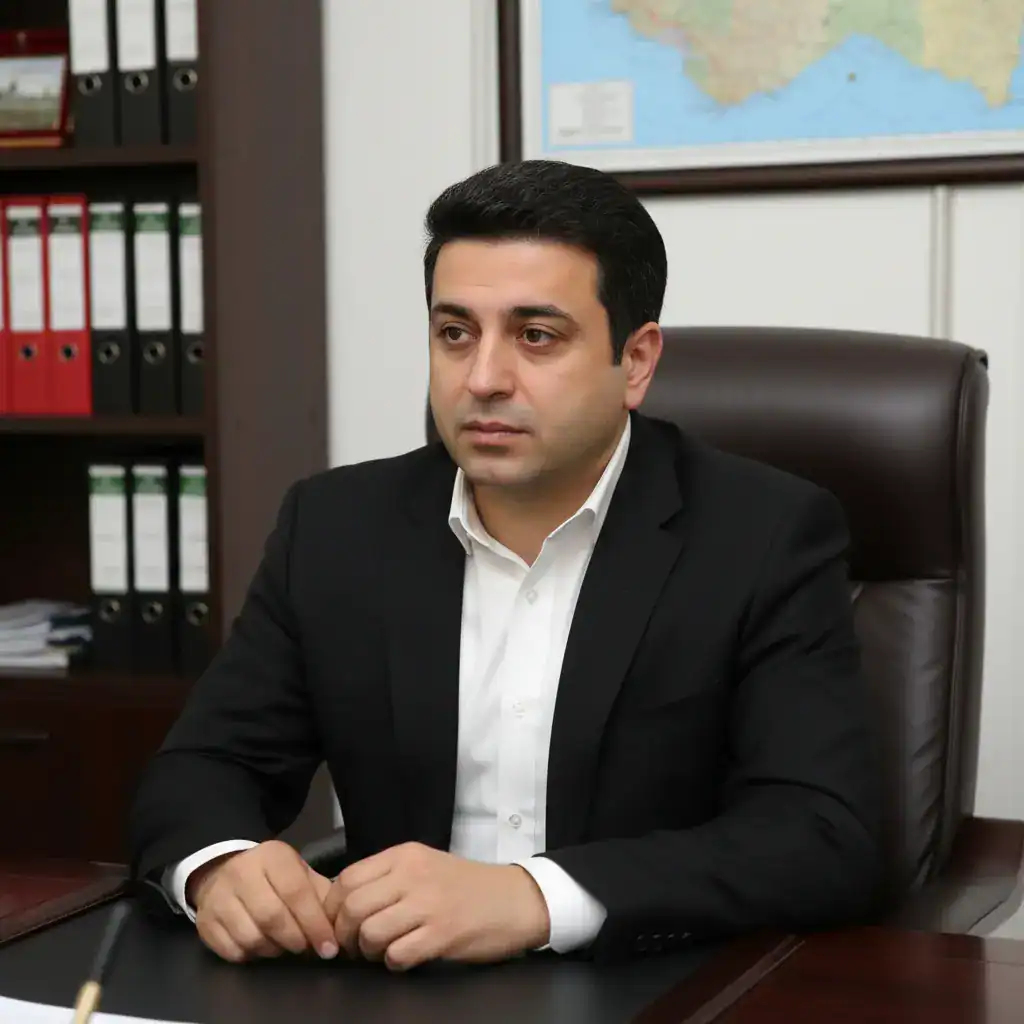
Yerevan, February 15, 2026 – Alen Simonyan, Speaker of the Armenian Parliament, has publicly accused high-ranking officials of the Armenian Apostolic Church (AAC) of serving Russian intelligence interests. The accusations were made during an interview with Ekaterina Kotrikadze, head of the news service of the exiled Russian TV channel Dozhd.
Simonyan’s Dual Scenario for Accusations
Simonyan presented two scenarios to justify criminal prosecution against the Catholicos of All Armenians and other church leaders. He stated, “There is no conflict with the church; there is a conflict with people who serve interests often outside the Republic of Armenia and serve their personal financial and ‘intimate’ interests.”
He drew a parallel to pedophilia cases within the Catholic Church, asking, “If in any country it turns out that a high-ranking church official is a pedophile, and law enforcement agencies respond to it, or if a politician criticizes pedophilia, can this be considered an attack on the church?”
Allegations of Pedophilia and Russian Intelligence Ties
Simonyan asserted, “You cannot hide behind a black scarf and think that it is a pleasure and that you can do what you want. There are four or five people, high-ranking church officials, who have found themselves in such situations, and there is also a document confirming that the current person presenting himself as Catholicos’s brother works for Russian foreign intelligence, which is confirmed by a corresponding certificate signed by him.”
He explicitly linked these claims to Moscow, stating, “Yes, I mean Moscow. The example I gave says a lot.”
Internal Church Disputes and a Disputed Document
Simonyan further claimed that other church officials who spoke out against these individuals were defrocked by the Catholicos. “These are the highest-ranking representatives of the AAC. He and some of his associates have seized power and cannot even hold their regular hearings or meetings where issues are resolved because they do not have a quorum,” Simonyan declared.
The Speaker’s accusations of working for Russian intelligence services are reportedly based on a “document” circulated online by pro-government bloggers. This document purportedly indicates that the Catholicos’s brother, Ezras Nersisyan, head of the Russian and New Nakhichevan Diocese of the Armenian Apostolic Church, signed for his work for the USSR KGB (not the Russian Security Service or FSB) allegedly in 1986-1987.
Denials and Expert Discrepancies
Ezras Nersisyan has vehemently denied the allegations, calling the published document a fake. Veterans of intelligence services have also dismissed the “document” as a forgery, primarily because all KGB documents were exclusively kept in Russian. The alleged “forgery” was in Armenian and did not fully conform to the standards of the time.
This development adds to a series of recent political and social discussions in Armenia, including parliamentary debates on land rights for the AAC, the modernization of seismic protection systems, and ongoing discussions about the country’s foreign policy alignments.
The Armenian government is currently engaged in various diplomatic efforts, including discussions with Kazakhstan on digital solutions for sustainable development, and ongoing negotiations with Iran regarding a strategic cooperation document. These internal and external pressures highlight a complex period for Armenia as it navigates its geopolitical landscape and internal reforms.
The accusations against the Armenian Apostolic Church leadership are likely to spark further debate and scrutiny, both within Armenia and internationally, given the historical and cultural significance of the church in Armenian society.
Source: Arminfo.info