


Armenian Politician Warns Against Political Retribution Amidst Ararat Cement Plant Controversy
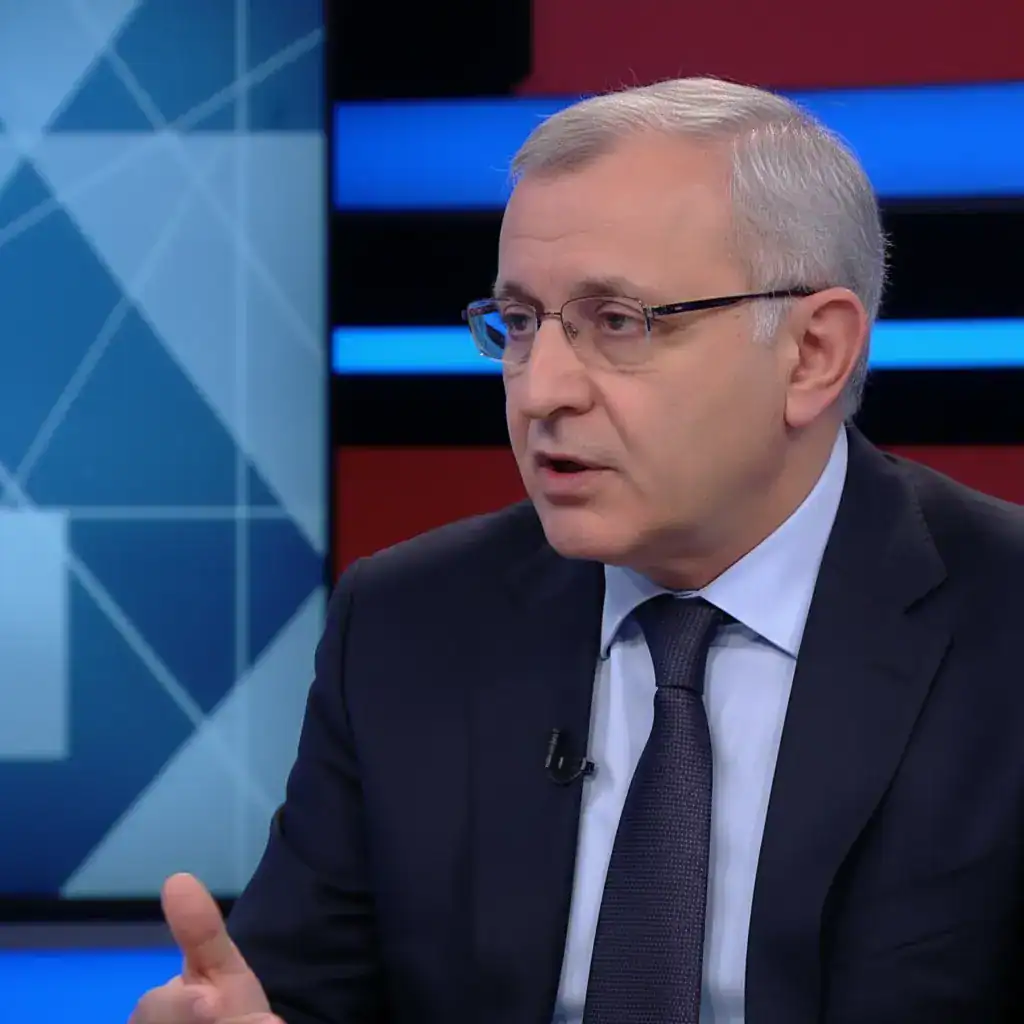
Yerevan, May 21 – Politician Suren Surenian츠 has issued a stark warning regarding Prime Minister Nikol Pashinyan’s recent statements concerning the Ararat Cement Plant, suggesting that the state is gradually transforming into a tool for political retribution. Surenian츠’s remarks, made via a Facebook post yesterday, highlight concerns about the rule of law, economic stability, and the investment climate in Armenia.
PM’s Statements Raise Alarm
According to Surenian츠, Prime Minister Pashinyan’s public declarations that a private factory “will be state-owned” and his congratulations to its employees on their “liberation” send a clear message: the government is prepared to interfere in property relations for political ends and predetermine the fate of private businesses. Surenian츠 emphasizes that any legal issues related to a company’s activities should be resolved within the framework of the law, through courts and legal procedures, based on the principle of the rule of law.
“When the Prime Minister personally announces what will happen to a specific enterprise, it creates the impression that a political decision has already been made, and the legal process is merely a formality,” Surenian츠 stated.
Political Vendetta, Not Economic Policy
Surenian츠 argues that Pashinyan’s use of terms like “mafia,” “retribution,” and “business backbone” clearly indicates a focus on political vendetta rather than economic policy. He points out that Gagik Tsarukyan, the owner of the Ararat Cement Plant, has long been a key political opponent of the government and a leading figure among the favored forces in the current electoral process. Surenian츠 believes that an attempt is being made to undermine not only Tsarukyan’s political influence but also his economic foundations.
Impact on Armenia’s Industrial System and Economic Sovereignty
The Ararat Cement Plant is a crucial component of Armenia’s industrial system, providing thousands of jobs and contributing to the country’s construction and economic stability. It plays a vital role in economic self-sufficiency. Surenian츠 warns that creating an atmosphere of political pressure, redistribution of property, and instability around such an enterprise is a blow to Armenia’s economic resilience.
“All this is happening at a time when Armenia is facing serious security and geopolitical challenges. In such circumstances, any step that weakens the country’s industrial potential objectively harms Armenia’s economic sovereignty,” Surenian츠 asserted.
Whose Interests Are Served?
Surenian츠 raises a critical question: whose interests are served by the weakening of Armenia’s industrial system? He suggests that regional states, such as Azerbaijan and Turkey, are interested in a weak, dependent, and economically vulnerable Armenia. He argues that processes of political pressure, property redistribution, and economic destabilization around Armenia’s large industrial systems cannot but align with these interests.
Pre-election Calculations and Damaged Investment Climate
Surenian츠 also highlights the pre-election calculations at play. He believes Pashinyan is attempting to revive the old manipulative dichotomy of “people versus oligarchy” before the elections, presenting to society that “property is being returned to the people.” However, Surenian츠 contends that this is not a policy of social justice but a political technology aimed at mobilizing his electorate and diverting public attention from accumulated problems.
The most dangerous consequence of this process, according to Surenian츠, is the destruction of the investment climate. He questions which investor would invest capital in a country where the level of property protection depends not on law but on the political sentiments of the authorities, on the whim of one person.
“In a legal state, property issues are resolved in courts, not in political speeches. The fate of a businessman is determined by law, not by the political expediency of the authorities or the whim of one person. The state cannot become a tool of pressure and punishment against political opponents,” Surenian츠 concluded.
What is happening around the Ararat Cement Plant today, Surenian츠 warns, is a dangerous precedent for all of Armenia. He states that when the government begins to decide whose business is “liberated,” whose property is “returned to the people,” and who should face “retribution,” not only the fate of one factory but also the foundations of Armenia’s legal and state system are jeopardized.
Source: Suren Surenian츠