

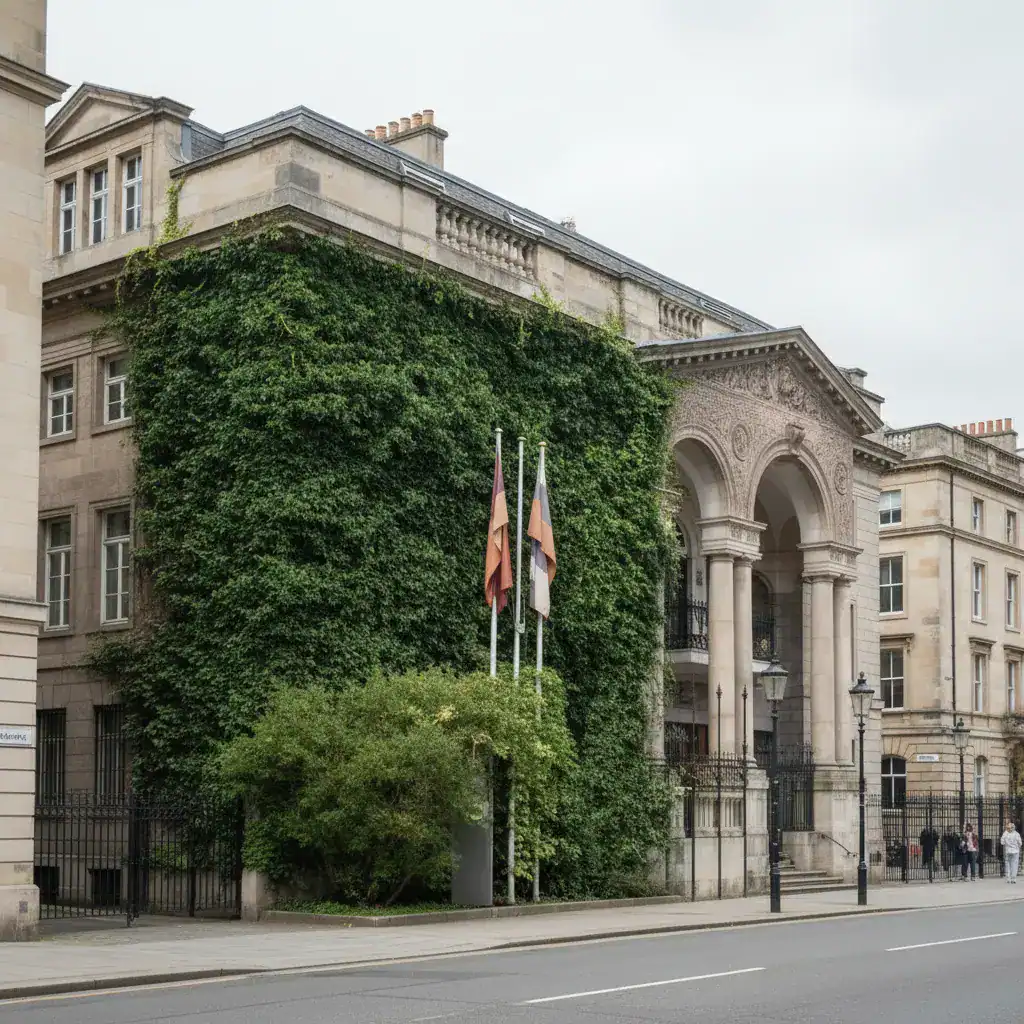
YEREVAN, May 30 – The building of the Artsakh Representation in Yerevan is being targeted by a Baku-based Azerbaijani theater, according to Narek Karapetyan, who leads the electoral list of the “Strong Armenia” alliance. Karapetyan made this announcement during an urgent press conference today, highlighting a concerning development amidst an ongoing legal battle over the building’s ownership.
Azerbaijani Theater’s Recent Reconstruction and Alleged Political Motives
According to Karapetyan, the “Yerevan Azerbaijani Theater” has recently undergone reconstruction, with one of its new sections having opened just four months ago. He stated that Azerbaijani President Ilham Aliyev has instructed the creation of a cultural justification for the “return” of Azerbaijanis to Armenia, and this theater was opened precisely for that purpose.
“The funding is provided by the Ministry of Culture of Azerbaijan, and the Minister of Culture of Azerbaijan was present at the opening,” Karapetyan declared, emphasizing the political implications behind the theater’s activities.
Artsakh Representation Building: A Symbol of Homeland for Displaced Artsakh Residents
Karapetyan stressed that the Artsakh Representation building is a piece of homeland for Artsakh residents living in Armenia. He drew a stark parallel, stating that at a time when the “Yerevan Azerbaijani Theater” is opening in Baku, a process to seize the Artsakh Representation in Armenia is simultaneously beginning.
Legal Battle Over Ownership: Invalidation of Artsakh’s Rights
This development follows a series of legal actions concerning the building. In July 2025, it became known that the Prosecutor General’s Office of the Republic of Armenia demanded the invalidation of the ownership rights of the Artsakh Permanent Representation building. Armenian Prime Minister Nikol Pashinyan had previously stated that he could not allow a second state to exist within the Republic of Armenia.
On May 26, Artsakh lawyer Roman Yeritsyan announced that the state registration of the Republic of Artsakh’s ownership rights over the Artsakh Representation building in Yerevan had been invalidated. Yeritsyan added that they are preparing to appeal the administrative court’s decision, indicating a continued legal struggle.
Context of Broader Azerbaijani Claims and Concepts of “Return”
Karapetyan’s statements also touched upon broader Azerbaijani foreign policy priorities. He noted that Azerbaijan’s foreign policy priorities have shifted towards the “return of Azerbaijanis to Armenia.” He further revealed that Azerbaijan has developed a concept for their return to Armenia, outlining their rights, and that this concept has been presented to the United Nations.
This information was also highlighted in other news reports, including one from May 30, 2026, at 12:53, which stated, “Azerbaijan has developed a concept for returning to Armenia, it has been presented to the UN. Narek Karapetyan published data (VIDEO).” Another report from May 30, 2026, at 09:35, mentioned, “Narek Karapetyan: Azerbaijan has already published an official document – the ‘Concept of Return of Western Azerbaijanis’ (VIDEO).”
Political and Social Implications for Artsakh Armenians
The potential seizure of the Artsakh Representation building and the broader context of Azerbaijani claims raise significant concerns for the Artsakh Armenian community. The building serves not only as an official representation but also as a symbolic center for a displaced population, representing their connection to their homeland.
The ongoing legal and political maneuvers underscore the complex and often contentious relationship between Armenia and Azerbaijan, particularly in the aftermath of recent conflicts. The “Strong Armenia” alliance, through Karapetyan’s statements, appears to be positioning itself as a defender of Artsakh’s interests and the rights of its people.
The situation remains fluid, with the appeal process for the building’s ownership rights yet to unfold. The political rhetoric surrounding the “return of Azerbaijanis” and the cultural justifications being developed by Baku add layers of complexity to an already sensitive issue, impacting the lives and future of Artsakh Armenians.