


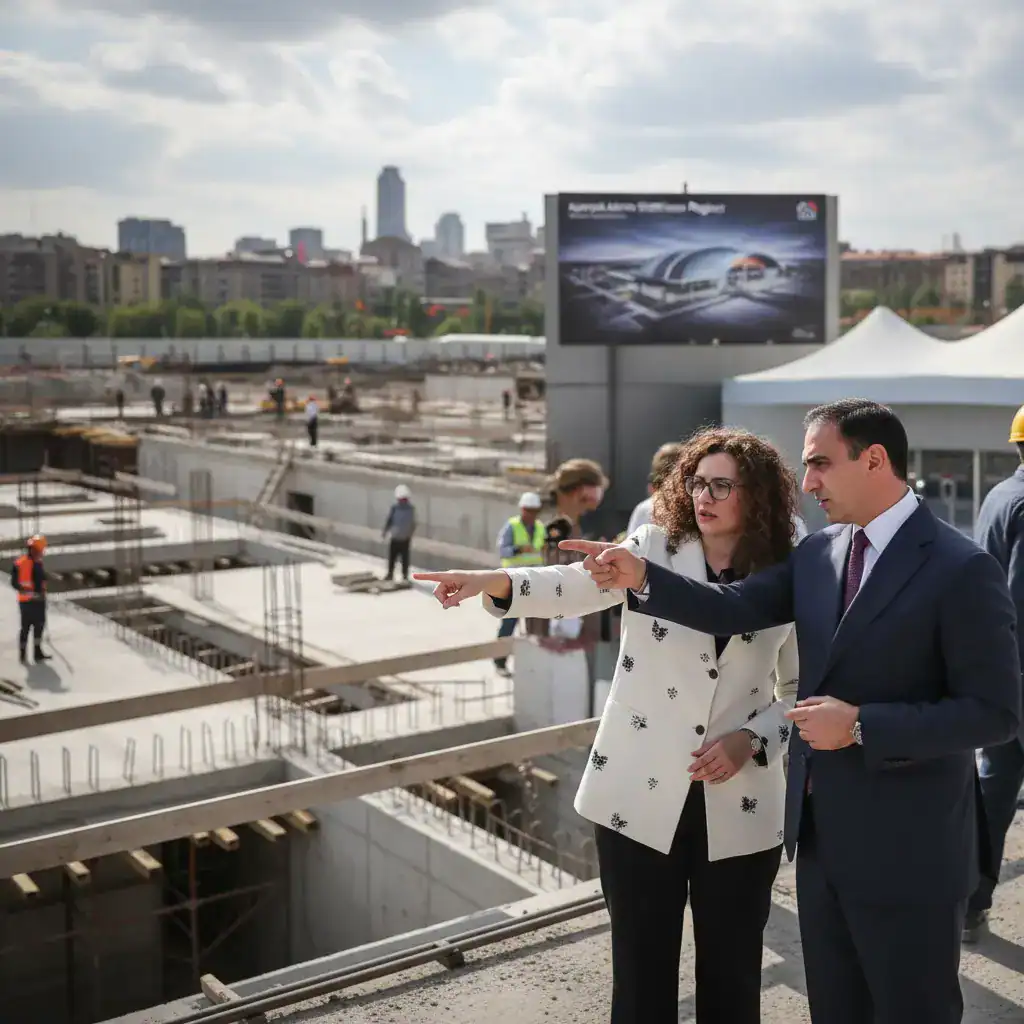
Yerevan, February 14 – Criminal proceedings have been initiated concerning a potential crime during the ordering and acquisition of the Ajapnyak metro station project. The case, being investigated by the Investigative Committee, has been initiated on the grounds of official negligence (Article 446, Part 1 of the Criminal Code).
Investigation into Irregularities in Metro Project
The Public Relations Department of the General Prosecutor’s Office did not provide further details in response to a written inquiry from “Hetq” news outlet.
Earlier, “Hetq” had reported that Tigran Musheghyan, head of transport and metro programs at the Yerevan Municipality’s Investment Programs Implementation Office, discovered that the metro design documents were incomplete and that the company that prepared the project had been paid more than necessary. Subsequently, changes were made to the procurement contract, reducing the scope of work, but the price of 1.8 billion drams was not reduced. As a result, the Yerevan community suffered damages amounting to millions of drams.
Official Appeals to Law Enforcement
The official appealed to law enforcement, after which the Criminal Police, at the instruction of the Prosecutor’s Office, launched operational activities at the Municipality’s PIO.
As early as November 2025, the Municipality had been asked in writing to provide information regarding the procurement procedure for the Ajapnyak station project, but no response was received. Given that the inquiry sent to the official email of the Municipality’s press service, [email protected], was not processed in violation of the law, this time an electronic inquiry was sent to Yerevan Mayor Tigran Avinyan via the unified electronic inquiry platform (e-request.am).
Ongoing Legal Scrutiny and Future Implications
The initiation of criminal proceedings underscores the authorities’ commitment to investigate allegations of financial misconduct and ensure accountability in public procurement processes. The outcome of this investigation could have significant implications for future infrastructure projects in Yerevan and may lead to reforms in procurement procedures to prevent similar incidents.
The case highlights the importance of transparency and thorough oversight in large-scale public projects to safeguard public funds and maintain trust in governmental institutions. Further developments in the investigation are expected as the Investigative Committee continues its work.