
Macron’s ‘Dangerous Cynicism’ in Yerevan: Surenyants on French Interference in Armenian Politics
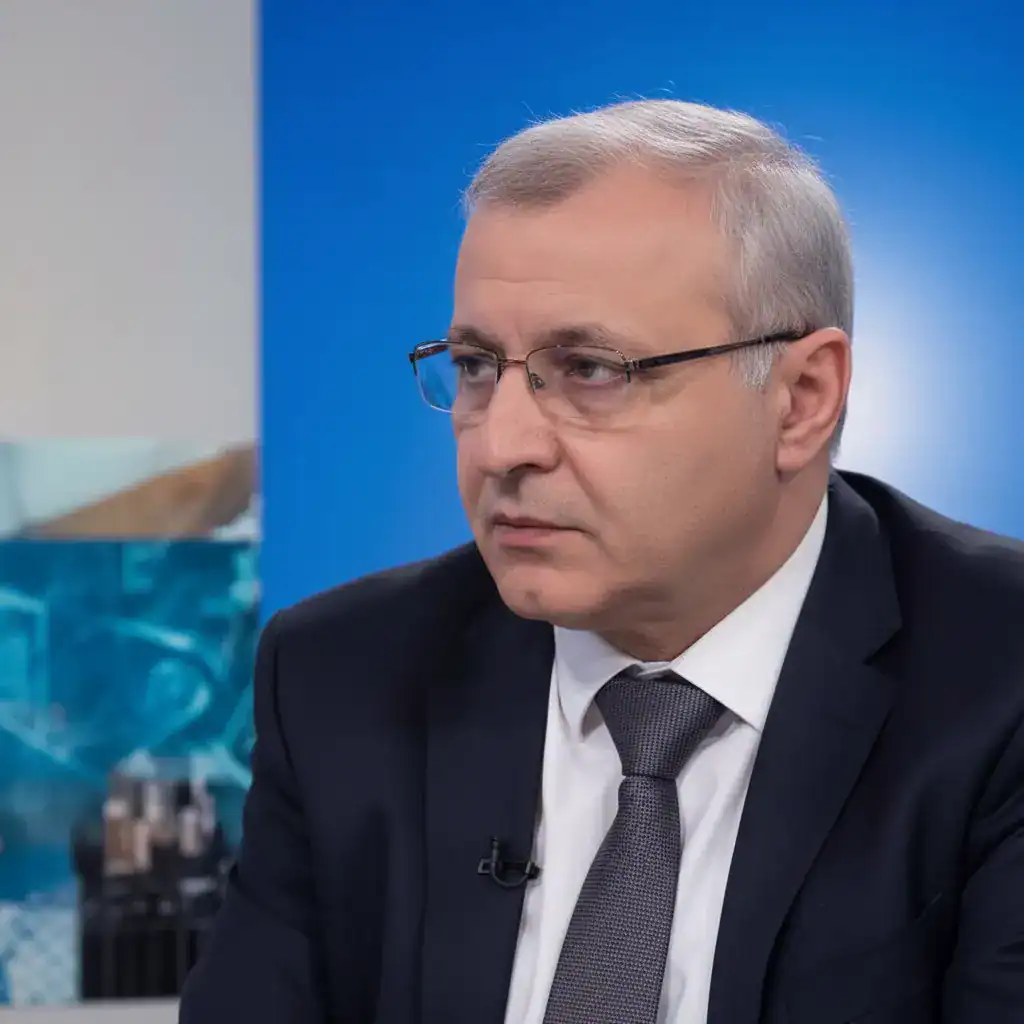
Yerevan, May 7, 2026 – Political scientist Suren Surenyants has sharply criticized French President Emmanuel Macron’s recent statement in Yerevan, calling it ‘dangerous cynicism’ and a blatant interference in Armenia’s internal affairs. Surenyants’ comments, posted on his Facebook page yesterday, highlight concerns about external influence in the run-up to Armenia’s elections.
Macron’s statement, where he declared, ‘I have undertaken the obligation to support Pashinyan,’ and mentioned Moldovan President Maia Sandu in the same context, has drawn significant attention. Surenyants argues that such a declaration from the leader of a major power, made just one month before elections, is a clear manifestation of interference in a country’s internal life.
Double Standards and Geopolitical Interests
Surenyants points out Macron’s attempt to differentiate between ‘permissible’ and ‘unacceptable’ forms of external influence. According to Surenyants, Macron suggests that if the West supports, it is ‘participation in democracy,’ but if Russia attempts to exert influence, it is ‘falsification of democracy.’ This, Surenyants asserts, is where political cynicism begins.
The political scientist emphasizes that overt support from an external actor in the internal political life of a sovereign state does not cease to be interference simply because it is presented as ‘protection of values’ or ‘support for democracy.’ He argues that the issue is not merely the fact of external influence, but rather who is exerting that influence and for whose benefit.
Surenyants states that international relations have never been built on values alone. Great powers, he contends, operate primarily based on their own interests, regardless of the moral or ideological justifications presented for their actions. In this context, France is not pursuing an abstract ‘democratic mission’ in Armenia. Paris, according to Surenyants, has clear geopolitical interests: expanding its influence in the South Caucasus, weakening Russia’s position, and deepening European political presence. Pashinyan’s government is viewed as a partner and carrier of this political line.
Armenian Elections as a Geopolitical Battleground
Surenyants warns that the Armenian elections are gradually transforming into a field of geopolitical competition, where various centers of power are openly supporting their preferred actors. He poses the critical question: ‘Where does ‘support’ end and ‘interference’ begin?’
Macron, in Surenyants’ view, did not answer this question but merely attempted to justify that Western intervention has a ‘different nature.’ However, Surenyants argues that this thesis of ‘exceptionalism’ in international relations has consistently led to double standards, political cynicism, and the devaluation of the sovereignty of smaller states.
‘Pashinyan’s ‘democracy’ has become not an independent state system, but a tool in the struggle of external influences,’ Surenyants writes. He concludes by stating that the elections will be the decision of the Armenian people, not of Paris, Moscow, or Brussels. ‘This is the clear conviction of our electoral team,’ he adds.