
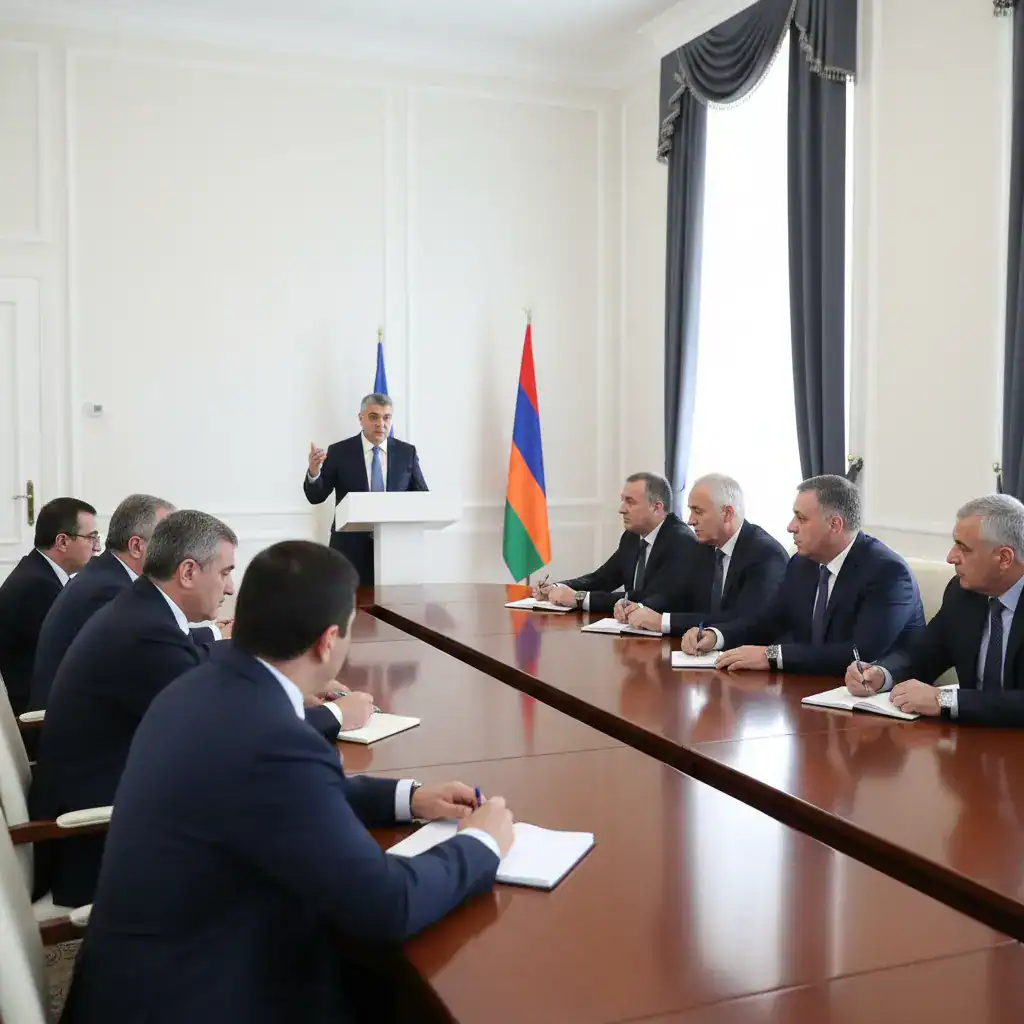
GYUMRI, Armenia, February 15 – The Shirak Province Prosecutor’s Office has released its comprehensive activity report for 2025, detailing a significant number of criminal proceedings and substantial financial recoveries for the state. The report was presented on February 13, 2026, under the leadership of Aram Aramyan, Deputy Prosecutor General of the Republic of Armenia, in a meeting attended by Shirak Governor Davit Arushanyan, Shirak Prosecutor Armen Chichoyan, and heads of regional structures of the Ministry of Internal Affairs, National Security Service, and Investigative Committee.
Overview of Criminal Proceedings in Shirak Province
Prosecutor Armen Chichoyan presented the key findings of the 2025 report, noting that 2,763 criminal proceedings were initiated during the reporting period. This marks a decrease compared to 3,297 criminal proceedings in 2024, indicating a potential shift in the nature or volume of reported crimes or investigative priorities within the province.
A total of 768 criminal proceedings, involving 807 individuals, were submitted to court with confirmed indictments by prosecutors in 2025. This represents a notable increase from 520 criminal proceedings involving 591 individuals in 2024, suggesting a higher rate of cases reaching the judicial phase.
In 2025, 735 criminal cases involving 824 individuals were concluded in the courts, compared to 522 criminal cases involving 578 individuals in 2024. This data points to an increased efficiency in the judicial system in processing and resolving criminal cases within Shirak Province.
Financial Recoveries and Asset Protection
The report highlighted significant efforts in recovering damages and protecting state and community interests. The total damage caused to the state through criminal proceedings amounted to 77.16 million AMD. Of this amount, 21.97 million AMD was recovered in 2025.
Furthermore, in the sphere of state (community) interest protection, 32.67 million AMD was returned to the Republic of Armenia in 2025. This demonstrates a proactive approach by the Shirak Prosecutor’s Office in safeguarding public funds and assets.
In addition to financial recoveries, three lawsuits were filed and accepted for proceedings by the Anti-Corruption Civil and Administrative Courts. These lawsuits were initiated based on studies conducted in the field of state (community) interest protection. The Prosecutor’s Office demanded the restoration of ownership rights for properties in Gyumri, Artik, and Amasia communities. Specifically, these included property in Aragats 6 district of Gyumri community, a 964.20 square meter building of a former nursery-kindergarten at Shinhararneri Street 7 in Artik community, and 2.5813 hectares of agricultural land in Hoghmik settlement of Amasia community.
Broader Context and Future Implications
The report underscores the ongoing commitment of the Shirak Prosecutor’s Office to upholding the rule of law and ensuring accountability. The increased number of cases brought to court and concluded, coupled with significant financial recoveries, reflects a robust judicial and prosecutorial effort in the region.
The focus on anti-corruption measures and the protection of community assets aligns with broader national efforts to combat corruption and ensure transparent governance. The collaboration between various law enforcement and governmental bodies, as evidenced by the attendance at the report presentation, is crucial for these efforts.
While the decrease in initiated criminal proceedings could be interpreted in various ways, the overall trend suggests a more effective prosecution and resolution of cases that do proceed. This could contribute to a stronger sense of justice and security within the Shirak Province.
The efforts to recover state and community assets, particularly through civil and administrative courts, highlight a multifaceted approach to addressing financial crimes and irregularities. This not only aims to compensate for past damages but also to deter future illicit activities.
The detailed reporting and public presentation of these findings are essential for transparency and public trust in the judicial system. As Armenia continues its reforms, such reports provide valuable insights into the progress and challenges in maintaining law and order and protecting public interests at the regional level.