
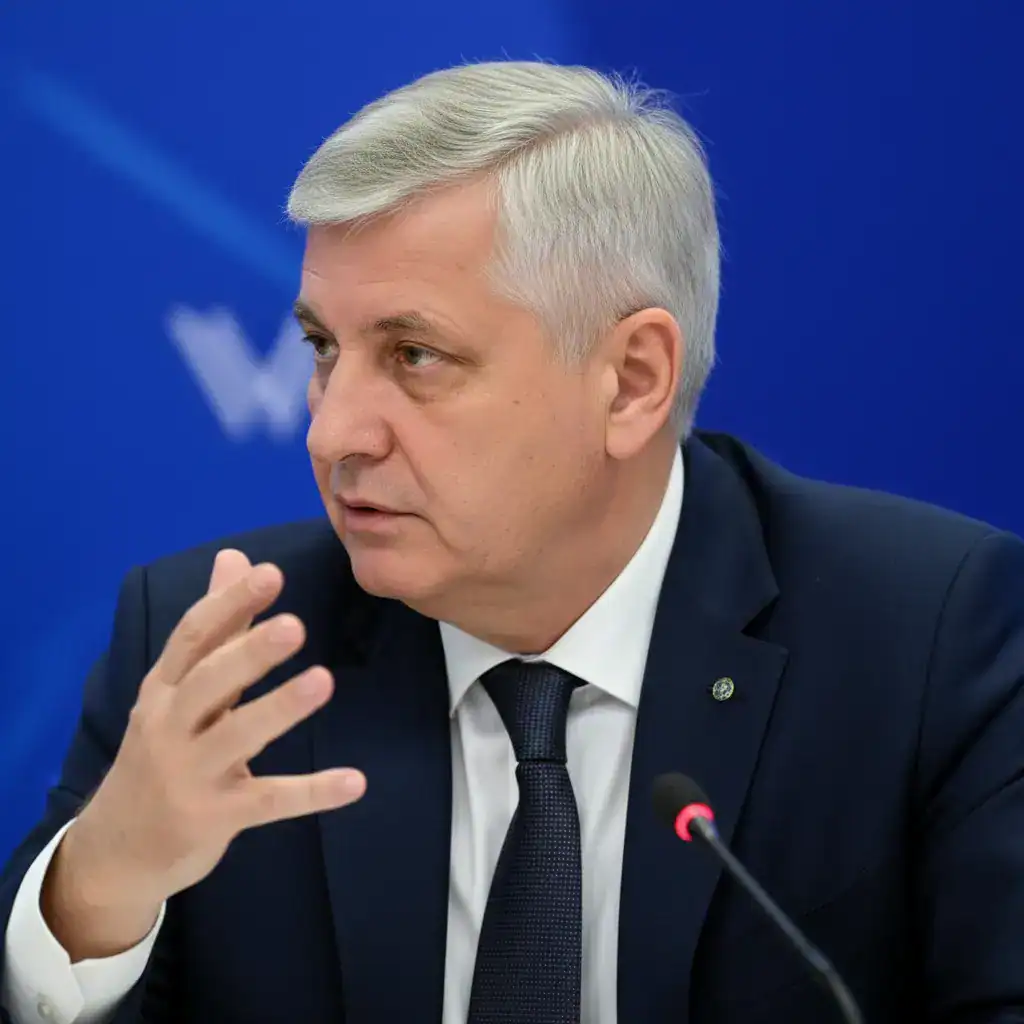
During the presentation of the “Eurasian Dialogue-Armenia” international analytical program organized by the Gorchakov Fund in Yerevan on February 26, Russian political scientist Sergey Markedonov declared that the West is not prepared to take responsibility for the full normalization of Armenian-Azerbaijani relations. This statement sheds light on the complex geopolitical dynamics at play in the South Caucasus, a region frequently caught between the strategic interests of major global powers.
The West’s Reluctance: A Strategic Calculation?
Markedonov confessed that, prior to 2022, the positions of Russia and the West on the Armenian-Azerbaijani settlement did not carry a fundamentally contradictory nature. He asserted, and further emphasized, that “the West did not want, and I can say in advance, that it still does not really want to interfere in your problems and take responsibility for the reconstruction of the region and the consequences of that reconstruction.” For the West, he argues, this is merely a segment of larger connections involving Iran, Turkey, and the Middle East. “These are different perspectives on the perception of the region,” Markedonov assured, as reported by News.am.
This perspective suggests that Western powers, rather than seeking direct engagement and accountability in the intricate peace process, prefer to maintain a more distanced, albeit influential, role. This approach allows them to avoid potential pitfalls and allocate resources to what they perceive as more strategically vital areas within their broader foreign policy objectives.
Moscow’s Former Leading Role and Shifting Dynamics
According to Markedonov, it was precisely for this reason that Western countries effectively allowed Moscow to play a leading role in the negotiation process. They considered that this direction would not bring serious political dividends. Simultaneously, in the event of failures, responsibility could be shifted onto Russia. This arrangement suited both sides to a degree, with Russia taking the lead on a complex issue, and the West reserving the right to criticize or disengage if outcomes were unfavorable.
However, the situation drastically changed in 2022. Markedonov highlighted that if, before this period, relations between Russia and the West were built on a model of selective competition and cooperation in individual regions, then after 2022, Moscow began to be perceived as a systemic adversary. “The Ukrainian story mobilized and, in many respects, consolidated the West. It is perhaps too early to speak of complete unity, but the degree of consolidation is significantly higher than before. And in the Caucasus, including in the sphere of Armenian-Azerbaijani settlement, the West has become both a competitor and an adversary for us,” the Russian political scientist noted.
This shift underscores a broader realignment of global power dynamics, where regional conflicts are increasingly viewed through the lens of a larger confrontation between Russia and the West. The South Caucasus, with its strategic location and complex ethnic and political landscape, has become another arena for this intensified competition.
The Diminished Role of Russia and Armenian Divergence
In Markedonov’s estimation, one of the problems is the reduction of Russia’s role in the region. In this context, the expert hastened to mention the decision of the Armenian leadership in 2022, namely, the official recognition of Nagorno-Karabakh as part of Azerbaijan. He concurrently assured that Armenia was actively encouraged to take this step by Western countries and partners, particularly France. This assertion, if true, suggests a deliberate effort by Western powers to influence Armenia’s foreign policy orientation and potentially diminish Russia’s traditional influence in the region.
As an additional factor, Sergey Markedonov pointed to the difficult situation in the Ukrainian direction. “Against this background, ideas of foreign policy diversification have intensified in Yerevan,” the political scientist emphasized. This diversification reflects Armenia’s strategic imperative to seek alternative security guarantees and economic partnerships in response to both the evolving regional landscape and the perceived limitations of its traditional alliances.
The Path Forward: A Question of Responsibility and Strategy
The core of Markedonov’s analysis lies in the question of responsibility. Who will ultimately bear the burden of ensuring a lasting peace between Armenia and Azerbaijan? If the West is unwilling to commit fully, and Russia’s role is increasingly contested, the path to a comprehensive settlement remains fraught with uncertainty. The implication is that without a clear and committed external guarantor, the region risks prolonged instability.
The Armenian leadership’s moves towards foreign policy diversification, while understandable given the circumstances, also carry risks. Balancing relations with various global powers while navigating a volatile regional environment requires astute diplomacy and a clear strategic vision. The challenge for Armenia will be to leverage these new relationships without alienating traditional partners or inadvertently exacerbating existing tensions.
Ultimately, Markedonov’s commentary serves as a stark reminder that the Armenian-Azerbaijani conflict is not merely a bilateral dispute but a microcosm of broader geopolitical struggles. The willingness, or unwillingness, of external actors to assume responsibility for its resolution will profoundly shape the future of the South Caucasus.
Source: https://verelq.am/hy/node/170237