


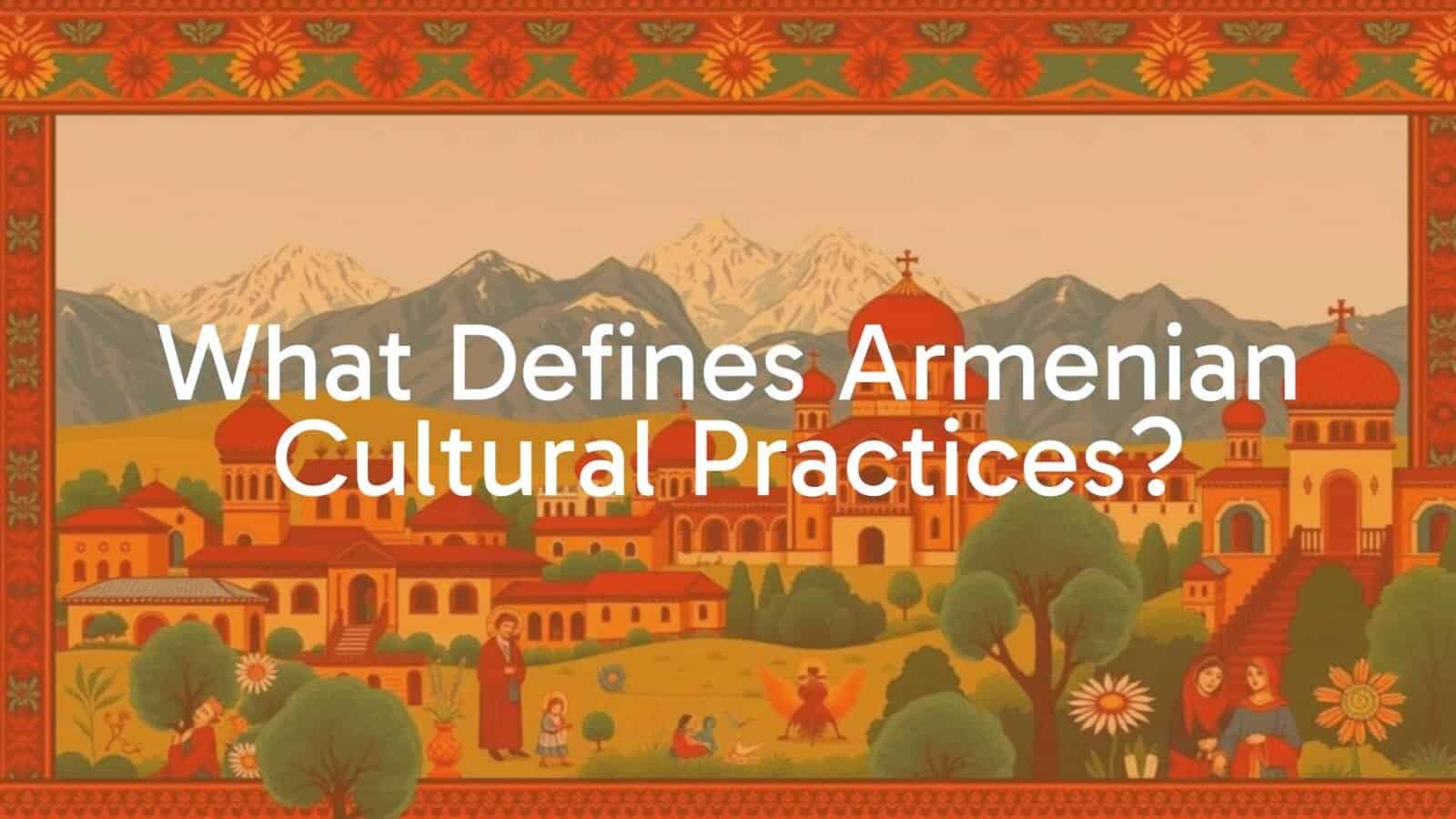
Armenian cultural practices are like a colorful cloth made from many centuries of history, geography, and a strong sense of identity. Armenia’s place on the Great Silk Road, its location in the rough Caucasus Mountains, and its role as the first country to adopt Christianity as a state religion have all shaped its unique culture. These customs are not just memories from the past; they are active parts of daily life that still shape Armenians today, both in Armenia and across the diaspora.
The core of Armenian culture is pride in its roots, strength built through many hard times, and a steady desire to keep its customs alive. From ancient rituals to modern habits, Armenian cultural practices offer a clear view into the character of a people who have protected their identity through many changes in history.
Core Values and Social Foundations in Armenian Culture
The main values in Armenian culture focus on family, community, and a strong link to heritage. Generosity and kindness are not just nice qualities, but basic parts of Armenian life. Guests are seen as a “gift from God” and are greeted warmly, often called ‘jan’ (dear). Hospitality is more than simple politeness; it shows in the way hosts prepare big meals full of food, drinks, and laughter.
Family loyalty and wide family networks are central to Armenian society. These close family ties create a strong feeling of belonging and support that passes from one generation to the next. Keeping family values, traditions, religion, and hospitality has always been a major aim for Armenians. Many people believe that these values are a key reason why Armenian culture and the Armenian people have survived and stayed strong.
Historical Influences on Armenian Traditions
Armenian traditions mix old pagan beliefs, early Christian teachings, and later effects from different empires and historical events. Because Armenia sits at a crossroads between empires, Armenians have long interacted with many cultures, yet they have kept their own distinct identity. Many favorite Armenian festivals began as pagan celebrations and later took on Christian meanings, showing how older customs were blended with newer beliefs.
The decision to make Christianity the state religion in 301 A.D. was a turning point that deeply shaped daily life and culture. You can see this in church buildings, religious art, and holiday customs. Periods of invasion and foreign rule also left marks, such as changes in language and the shaping of a strong and stubborn national spirit. Despite pressure from outside powers over the centuries, Armenians have shown a strong ability to adjust while still holding on tightly to the key parts of their heritage.

Language and Religious Practices in Armenia
Language and religion are two main supports of Armenian identity. They hold Armenians together across countries and continents and are the main ways through which culture is passed on, celebrated, and kept alive.
Armenian Language and Its Role in Cultural Identity
The Armenian language is a separate branch of the Indo-European language family and is a major source of pride. Its roots go back about 5,000 years, and some studies push this date even further to around 7,800 years. The creation of the Armenian alphabet in 405 A.D. by Mesrop Mashtots changed Armenian life. It started Armenian written literature and made the language a key part of national identity. The alphabet, likely influenced by Pahlavi and Greek scripts, allowed Armenian books and texts to appear from the 4th century onward.

Classical Armenian, or Grabar, the written language of the 4th century, stayed the main literary language until the 19th century, slowly changing over time. Spoken Armenian, meanwhile, grew in different directions, creating many dialects. Some of these dialects are so different that speakers cannot easily understand each other. Today, there are two main standard forms: Western Armenian, widely used in the diaspora and based on 19th-century Istanbul Armenian, and Eastern Armenian, used in Armenia and former Soviet republics, based on the Yerevan dialect. English is also becoming more common in business in Armenia. Armenian is more than a tool for speaking; it carries the history and feelings of the people. Phrases such as “Tsavd Tanem” (“I will take away your pain”) show the emotional depth built into the language.
Religion and Spiritual Practices across Armenia
Armenia was the first country to make Christianity its state religion in 301 A.D., and religion still plays a major role in society. The Armenian Apostolic Church is followed by about 94.7% of the population and is the national church. It is closely linked to the country’s identity and history and often served as a symbol of unity and a protector of Armenian culture, especially in times when foreign rulers restricted religious practice.
Other Christian groups, including Catholic, Evangelical, and Protestant communities, are also present. Church services in the Armenian Apostolic Church are held in Grabar, connecting faith directly to old forms of the language. Even during the Soviet period, when religion was strongly discouraged, many Armenians still went to church for important life events such as baptisms, weddings, and funerals. The church puts strong focus on remembering the dead. There is no idea of purgatory, and sin and redemption are discussed differently from some other Christian churches. Memorial services are held after every mass, and special days are marked on the seventh day, fortieth day, and each year after a death. Cemeteries are carefully cared for, and people often visit graves with food and brandy to share, showing a living bond between the dead and the living.
Armenian Family Structure and Social Roles
Family is the main unit of Armenian society and shapes most parts of social life. This strong family-centered way of living affects social roles, expectations, and daily routines, keeping alive close ties between generations and the idea that the family as a whole comes before the individual.
Traditional Roles of Women and Men
In traditional Armenian life, women and men had clearly different but connected roles. Women were seen as the main caregivers and the ones who passed traditions, language, and customs to children. The home was considered the woman’s space, often overseen by the grandmother or mother-in-law. Women handled housework and raising children, keeping the culture alive inside the home.
Men were viewed as heads of the household and protectors. They were usually responsible for earning money and supporting the family. Military service is still mandatory for men, reinforcing the idea of protection. While roles were formally separate, both men and women often worked outside the home, especially in Soviet times. Today, gender roles are changing. Many responsibilities are now shared, and more Armenian women build successful careers while still keeping strong cultural ties and family connections.
Kinship, Family Bonds, and Generational Ties
In Armenia, relatives are important on both the mother’s and father’s sides, but family lines are mostly traced through the father. Extended families act as a main support network. Adult children often stay with their parents until they marry, and many new couples live with the husband’s parents, which follows a patrilocal pattern. Over time, people have also valued setting up a separate household, where the couple lives on their own.
Links between generations are very strong. Children are treasured and get a lot of attention during their early years. After puberty, they are expected to behave more responsibly and help at home. Family gatherings happen often, and many families choose a fixed day, like Sunday, for everyone-parents, grandparents, and grandchildren-to meet. These regular visits keep stories, values, and family history alive. This mindset makes Armenians feel that they are part of one large extended family.
Socialization and Etiquette in Armenian Households
Children in Armenian homes learn early about respect, hospitality, and the importance of family. Education holds a high place and has long been free and open to all, so schools also play a big part in teaching social skills and cultural values. Children learn Armenian language and traditions from their parents and grandparents.
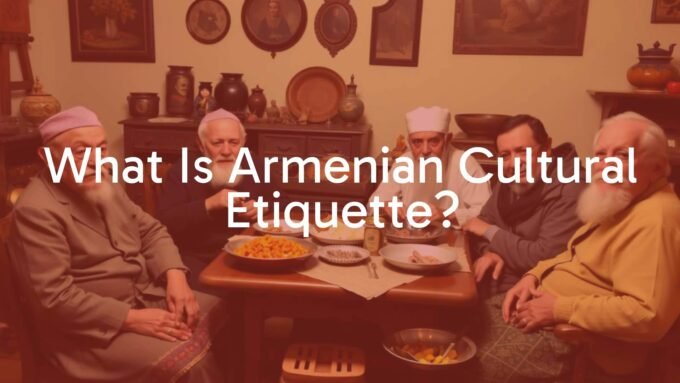
Home etiquette reflects the strong value placed on hospitality. Armenian homes are known for their welcoming mood. If a friend drops by, the host will quickly prepare or buy coffee, fruit, sweets, and pastries. Even if a guest says “no, thank you,” the host will continue to offer food and drink, as it is seen as a sign of care and respect. Hosts often ask about a visitor’s family life, marriage, or children, which can feel personal to outsiders, but it comes from true concern and interest. In villages, this hospitality extends to strangers, who may be invited inside for dinner or a drink soon after meeting.
Rituals and Major Life Events in Armenian Culture
Armenian life is marked by ceremonies and celebrations that highlight key stages from birth to marriage and death. These events show the mix of Christian belief, older customs, and long-held cultural values.
Marriage Customs and Armenian Wedding Traditions
Weddings are among the happiest and most detailed events in Armenian culture. The path to marriage usually starts with “Khosk-kap,” when the groom’s family formally asks the bride’s parents for her hand. Next comes “Nshandreq,” the engagement ceremony, which confirms the couple’s promise to marry.
Armenian weddings are known for joy, jokes, dancing, and food. One playful custom is paying a “ransom” for the bride before she is brought to the groom. During the church ceremony in the Armenian Apostolic Church, the Crowning ritual is a key part, symbolizing the new union. When the couple arrives at their new home, often the groom’s parents’ house, they smash plates at the door to bring good luck. The groom’s mother places lavash on their shoulders and offers them honey, wishing them a sweet and happy life together. While families may follow these customs in different ways, they remain central parts of Armenian wedding culture.

Childbirth and Naming Ceremonies
The birth of a child is one of the happiest events in Armenian family life and is seen as a sign of blessing and continuity. Many Armenian names carry special meaning, such as Pargev (Reward) or Nver (Gift), showing the family’s joy and thankfulness. In the past, some newborns were wrapped in sifted dirt, which people believed helped keep the baby warm.
A new father might share his joy by placing his hand on guests’ heads and saying “Tarose kes!” (“May it come to you next!”), passing on his good fortune. Another old tradition is that the newborn is kept at home and seen only by close family for 40 days after birth, both to protect the baby and to allow quiet bonding. The arrival of a child confirms how highly Armenians value family and adds new strength to the family line and culture.
Funeral Practices and Mourning Rituals
Armenian funeral customs combine religious belief and respect for the dead. Many Armenians say that each person has a fixed destiny, or ‘tchakatagi,’ written on their forehead, guiding their life.
When someone dies, the family and community follow several rituals. Before carrying the coffin out of the home, it is struck three times against the front door. This act is believed to signal to the Apostle Peter to open heaven’s gates for the person’s soul. Placing a coffin lid near a neighbor’s door lets others know there has been a death and asks for quiet and respect. After each mass (badarak), a memorial rite is held, and special remembrance days-on the seventh day, the fortieth day, and each year-are observed. Cemeteries are kept in good condition, and people visit graves often, bringing food and brandy. Sharing these items at the grave shows that the bond between the living and dead remains strong and that ancestors hold an honored place in Armenian life.
Festivals and Celebrations Unique to Armenia
Armenian holidays and festivals are lively displays of cultural identity, often mixing ancient pagan customs with Christian belief. They show the Armenian love of community, joy, and memory of the past.
National Holidays and Secular Observances
Armenian national holidays reflect different parts of the country’s history. New Year’s Eve (Amanor, Nor Dari, or Gaghant/Kaghand) is a non-religious celebration marked by family gatherings and large meals. International days such as International Women’s Day are also marked. A very serious public day is April 24th, when Armenians remember the victims of the 1915 genocide.
Independence is celebrated on two days: May 28th marks the first Armenian Republic of 1918, and September 21st marks independence in 1991 for the current Republic of Armenia. These holidays give people a chance to show pride, remember struggles, and feel unity as a nation.
Religious Festivals and Their Meanings
Because Armenia was the first Christian state, religious festivals play a large role in public and family life. Tsaghkazard (Palm Sunday), Easter, and Ascension are key dates, celebrated with church services and home gatherings. On Tsaghkazard, meaning “decorated with flowers,” churches are filled with blossoms and willow branches. Many families keep these blessed branches and wheat spikes at home for a year, believing they bring happiness and a good harvest. Some families also throw old household items into a fire on this day to mark a fresh start.
Some church holidays still carry signs of pre-Christian customs. Trndez (Tyarnndarach), held 40 days after the birth of Christ, centers around large bonfires. People see the fire as a symbol of light, warmth, joy, and the quick end of winter. Couples and newlyweds jump over the flames to predict good luck in marriage and fertility; if the flames touch them, it is seen as a good sign. St. Sargis (Surb Sarkis), praised as a protector of love and youth, is linked with a custom where single people eat a salty biscuit (aghiblit) the night before February 14th and do not drink water, hoping to dream of the person who will bring them water-and become their future partner.
Popular Seasonal Events: Vardavar, Blessing of the Grapes, and More
Several seasonal festivals have a special place in Armenian life. Vardavar is perhaps the most famous. It is a summer water festival with roots in pagan times and has been linked to Astghik, the goddess of water and purity. On this day in July, people freely pour water over each other in the streets, from buckets, bottles, and hoses, turning towns and cities into giant water parties.

In mid-August, Armenians celebrate the Blessing of the Grapes. Many people avoid eating grapes before this ceremony. Once the grapes are blessed in church, families start to eat them and begin wine production, underlining how important grape growing and wine are to Armenia’s history. Other festivals include Navasard, an old-style New Year celebration, and the Daredevils of Sassoun Epic Festival, which honors one of Armenia’s main epic stories. The Areni Wine Festival highlights more than 6,000 years of winemaking tradition and attracts many visitors each year.
Hospitality in Armenian Cultural Practices
Hospitality in Armenia is a deep value that shapes everyday life and is well-known beyond the country’s borders. Armenians truly believe guests are a “gift from God” and treat them with warmth and respect.
Armenian Customs of Welcoming Guests
Armenians are famous for being warm hosts. They greet visitors with “bari galust” (welcome) and quickly make them feel at home. When someone visits, especially at home, the host will do everything possible to show care. Coffee, fruit, sweets, and pastries are quickly put on the table, or the host may rush to the store to get them.
Even if a guest politely refuses food or drink, the host will insist. This is not seen as pressure but as an important duty and a way to show respect. Guests are often called ‘jan’ (dear), which adds a personal and loving tone. In villages, even people who have just met may soon be invited to someone’s home for a meal or drinks, showing how widely this spirit of welcome extends.
The Significance of Food and Drink in Hospitality
Food and drink are central to the Armenian idea of hospitality. A visit can quickly turn into a full meal, and even simple meetings often come with snacks and drinks. Tables are filled with many dishes and generous servings, reflecting the wish to see guests happy and full.
Shared meals give people time to talk, joke, and bond. Typical Armenian dishes like lavash, grilled meats, tolma, fresh herbs, and salads are common. Symbolic foods, such as pomegranates and apricots, and drinks like Armenian wine and brandy add to the feeling of celebration. These customs are less about showing wealth and more about making emotional connections and honoring guests.
Traditional Armenian Cuisine and Culinary Customs
Armenian food tradition is old and rich and shares traits with Eastern European and Mediterranean kitchens while keeping a distinct style. Dishes often mix herbs, spices, vegetables, grains, and fruits to create strong flavors and simple, satisfying meals.
Signature Dishes and Shared Dining Practices
Many Armenian dishes have been cooked and passed down for hundreds of years. Lavash, a thin, rollable bread, is so important that its preparation and meaning were added to UNESCO’s list of Intangible Cultural Heritage in 2014. Lavash appears at almost every meal.
Other key dishes include tolma (or dolma), made by stuffing grape leaves or vegetables with meat and rice, and khorovats, Armenian grilled meat, often compared to barbecue. Khash, a rich soup made from boiled cattle legs and served with garlic and herbs, is a traditional winter dish often eaten early in the morning with friends and brandy. Ghapama, a pumpkin stuffed with rice, dried fruits, and nuts, is served at festive tables. Versions of dolma using lamb, beef, tomatoes, eggplants, and peppers show the variety of the kitchen. Rice pilaf and many fresh salads are also typical. Meals are often shared with extended family or big groups of friends and can last for hours.
Symbolic Foods and Their Cultural Meanings
Some foods hold special meaning beyond taste. The pomegranate is one of Armenia’s strongest symbols, linked with fertility, plenty, and good luck. Its many seeds are seen as signs of many children and wealth. It appears in art, weddings, and New Year customs.
The apricot, called “Armenian plum” (Prunus Armeniaca), is the national fruit and has grown in the region since Roman times. Grapes, peaches, figs, and melons are also important. Bread and salt, often offered to honored guests, represent friendship and trust. When Armenians say “we have bread and salt among us,” they mean they share a deep bond.
Traditional Armenian Brandy and Wine
Armenia is proud of its wine and brandy production. Archaeologists have found the world’s oldest known winery in Areni village, supporting the claim that winemaking began here. Old carvings in monasteries and churches show vines and winemaking scenes, proving that this craft has very deep roots. Traditional methods developed in the ancient kingdom of Urartu are still used today in some areas. Visitors can explore this history through winery tours and festivals like the Areni Wine Festival.
Armenian brandy began its modern development in the 19th century and has since become a national symbol. The Yerevan Brandy Company, once known as Shustov and Sons, now exports brandy worldwide. It uses local grape varieties from the Ararat Valley, double distillation, and aging in special Caucasian oak barrels. This careful process produces a drink known for its sweet smell, caramel color, and strong grape taste. Armenian brandy-often called cognac-has received many international awards and was famously favored by Winston Churchill.
Artistic and Creative Expression in Armenian Culture
Art is a key part of Armenian identity. From ancient carvings and church art to modern music and film, creative works reflect the country’s history, beliefs, and responses to joy and suffering.
Armenian Music and Dance Traditions
Music is closely tied to everyday Armenian life. Traditional songs often carry a serious or emotional tone and have strongly influenced later styles. The best-known Armenian instrument is the duduk (ծիրանափող), a woodwind made from apricot tree wood, which UNESCO has recognized as part of the world’s cultural heritage. Other instruments, such as the kanun and oud, add to the special sound of Armenian music.
Classical music is represented by groups like the Armenian Philharmonic Orchestra, which plays at the Aram Khachaturian Concert Hall, and chamber ensembles like the Komitas Quartet and Hover Chamber Choir. Jazz is widely enjoyed, especially in summer, when open-air concerts are common. Armenian rock bands and modern singers mix Western styles with Armenian folk elements. Artists like Inga and Anush Arshakyans use traditional melodies in modern arrangements, while singers like Armenchik serve large Armenian communities abroad. Traditional dances such as Yarkhushta, a powerful men’s dance once performed before battle, and Kochari, a circle dance added to UNESCO’s list of Intangible Cultural Heritage, are performed at weddings and public festivals.
Literature and Storytelling Customs
Armenian literature stretches back to the early 5th century, soon after the alphabet was created by Mesrop Mashtots in 405 A.D. That period, often called the “golden age” (vosgetar), saw important works and translations, including the Bible. Writers like Movses Khorenatsi, who wrote “History of the Armenians,” and Grigor Magistros left a lasting mark. Church leaders also wrote key texts, such as Gregory of Narek’s “Lamentations.”
Later, folk tales and poems grew more popular, and the 19th century brought a literary revival, with writers like Mikael Nalbandian helping shape modern Armenian literature. Many works reflect the country’s difficult history, particularly the 1915 genocide, which killed many writers and created a long silence. Over time, new voices rose in the diaspora, building a strong body of writing that deals with memory, loss, and identity. Storytelling-through epic poems, legends, and modern novels-remains a main way for Armenians to keep their past alive.
Architecture, Carpets, and Decorative Arts
Armenia’s artistic skills are easy to see in its churches, monasteries, carpets, and other crafts. Classical Armenian church architecture, from the 4th to 7th centuries, often uses local tufa stone and simple but striking forms, such as conical domes and centrally planned churches. Early churches were plain basilicas, but by the 7th century designs had become more complex. Many basic forms were already established before the Arab invasions. Famous examples include Tatev Monastery, Geghard Monastery, and Echmiadzin Cathedral, known as the oldest church built by a state.
Carpet weaving has long been practiced in Armenia. Old rug pieces dating to the 7th century BC have been discovered, and the Pazyryk carpet-considered the oldest known knotted carpet-is believed by many experts to be Armenian in origin, made with an Armenian double knot and colored with Armenian cochineal dye. Carpets, called “karpet” (flat-woven) or “gorg” (pile), traditionally decorated floors, walls, and furniture and often include symbols such as eagles and dragons. Other arts include the carving of khachkars (stone crosses), which UNESCO has recognized; illuminated manuscripts; and Armenian needlelace, used to decorate clothing, scarves, and household items.
Traditional Armenian Clothing and Dress
Traditional Armenian clothes reflect local climate, available materials, and contacts with neighbors. The general outfit is called “Taraz.” Colors, fabrics, and decorations varied from region to region. Western Armenian styles were often bright and heavily embroidered, while Eastern Armenian clothes were usually more simple and practical. Cilician Armenian dress shows strong Mediterranean influence, and clothing worn by Armenians in Constantinople had a more urban, refined look.
Men often wore a fitted wool coat known as a “chokha,” while women wore shoes called “poshti,” along with long dresses and headscarves (“mendil”). Many garments were made of silk or cotton and decorated with detailed stitching and metal buttons. Today, people mostly wear Taraz during folk performances, weddings, and national holidays, but modern designers sometimes add traditional patterns to contemporary clothing.
Symbols and Iconography in Armenian Cultural Practices
Visual symbols carry strong meaning in Armenian culture. They appear in art, architecture, jewelry, and rituals and help express shared beliefs, hopes, and memories.
The Pomegranate and Other National Symbols
The pomegranate is one of Armenia’s most recognizable symbols. Besides being tasty, the fruit stands for fertility, plenty, and success. Its many seeds point to many children and a full life. Pomegranates appear in frescoes, church carvings, and wedding customs. In some weddings, a bride may throw a pomegranate to the ground, scattering seeds as a sign of future children.
Other symbols are equally important. Mount Ararat, now on the Turkish side of the border but visible from Yerevan, is seen by many Armenians as a sacred mountain and a symbol of their historic homeland. Khachkars, or cross stones, are carved memorial stones that combine crosses with floral and geometric designs. The Armenian Eternity sign, a spiral pattern, expresses the idea of ongoing life and continuity. The Armenian alphabet, with its unique letters, is also a symbol of survival and cultural strength.
Efforts and Challenges in Preserving Armenian Cultural Heritage
Keeping Armenian heritage alive takes continuous work. This is especially true because many Armenians live outside Armenia, and globalization can weaken traditional practices. At the same time, many people and organizations are actively working to protect language, arts, and customs.
Language and Arts Preservation Initiatives
Protecting the Armenian language is a central concern. Weekend Armenian schools in diaspora communities teach children reading, writing, and cultural history. Trips to Armenia give young people a chance to practice their language skills and see historic sites firsthand. Online archives collect books, photos, and recordings so that people everywhere can access them. Translating Armenian literature into other languages also helps spread awareness of Armenian thought and history.
Arts groups such as the Armenian Cultural Foundation support music, dance, and visual arts. The Armenian General Benevolent Union (AGBU) runs programs and events worldwide, while the Armenian Heritage Foundation backs specific projects, such as monuments and museums. Community centers in diaspora cities host language classes, dance groups, and music lessons. In Armenia itself, state funding for the arts has decreased in recent years because of economic pressures and privatization, so more support now comes from diaspora donors and international cultural funds.
Modern Influences and Adaptations of Tradition
Armenian culture changes as society changes. Traditional gender roles have softened, and many women now work in fields such as science, business, and government. Young people often seek partners with similar education and career goals, even if family opinions remain important. Diaspora communities organize social events and camps for youth to help them meet others with Armenian roots. Views on intermarriage differ between families and regions, reflecting a mix of old expectations and new realities.
Artists update traditions in creative ways. Musicians blend folk songs and instruments with rock, jazz, and electronic music. Directors such as Atom Egoyan explore Armenian themes in modern films aimed at global audiences. By combining tradition with current influences, Armenians keep their culture recognizable while also allowing it to grow and stay meaningful for new generations.
Practical Insights for Experiencing Armenian Cultural Practices
For visitors, taking part in Armenian cultural life can be a rich and memorable experience. Knowing some basic customs helps build respect and makes interactions smoother and more rewarding.
Tips for Observing Local Etiquette
Armenians are sociable and enjoy conversation. Respect is the starting point for all relationships, whether with locals or foreigners. Warm greetings, eye contact, and a friendly tone are expected, even with people you meet for the first time.
When visiting someone’s home, it is polite to bring a small gift, such as sweets, fruit, or flowers. During meals, expect many dishes and generous hosts who encourage you to eat. Saying “no” too strongly can be taken as a slight, so accepting at least a little is usually best. Questions about whether you are married or have children are common and come from genuine interest, especially from older people. You can answer briefly or steer the talk elsewhere if you prefer, but understanding the family focus behind these questions can help avoid discomfort. Armenians sometimes say that “the distance from stranger to friend is very short,” so be ready for fast-growing closeness.
Participating Respectfully in Traditions and Celebrations
Joining Armenian events with respect and curiosity is one of the best ways to experience the culture. If you are invited to a wedding, expect many rituals, speeches, dancing, and long meals. Watching how others behave can guide you in joining dances or toasts. When lavash and honey are offered to the couple, or plates are broken at the door, paying attention and sharing in the joy shows appreciation.
During church holidays such as Tsaghkazard or Trndez, show quiet behavior in and around churches and treat symbols like candles, icons, and branches with respect. At Vardavar, understand that being splashed with water is part of the fun; wearing clothes that can get wet and joining the play in good spirit will help you enjoy the day. When visiting sites like Echmiadzin or old monasteries, dress modestly and keep noise low.
Awareness of Armenia’s painful history, including the genocide, and respect for the Armenian Apostolic Church also help build trust. Recognizing the deep respect Armenians have for their families, language, and traditions will make your stay more meaningful and turn everyday experiences-sharing a meal, visiting a church, or joining a festival-into a memorable cultural journey.








Leave a comment