
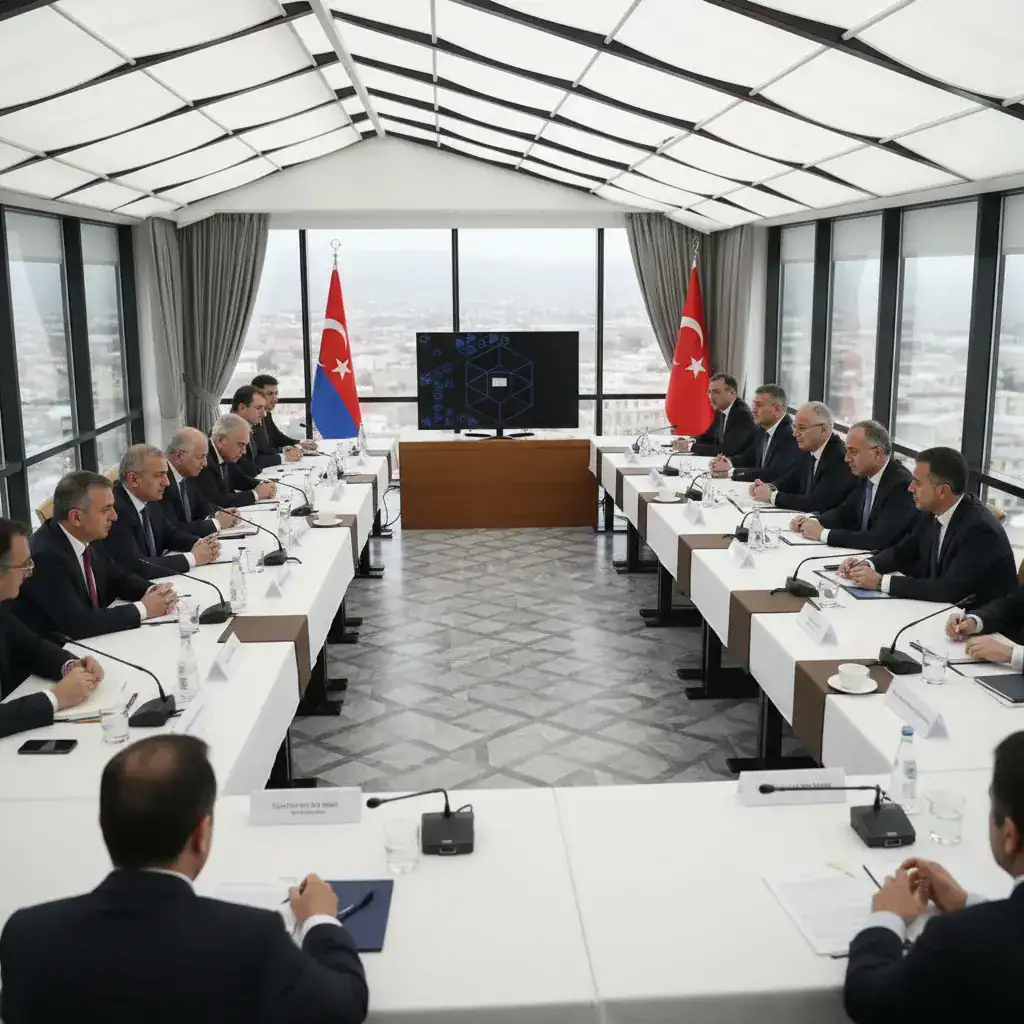
Kars, April 28 – In a significant development towards normalizing Armenia-Turkey relations, a joint working group met in Kars yesterday to discuss the reactivation of the Gyumri-Kars railway. This meeting, held on April 28, focused on the restoration and operationalization of the railway line, a crucial step in expanding regional transport communications.
Discussions on Regional Transport Connectivity
According to the Armenian Ministry of Foreign Affairs (MFA), the discussions underscored the importance of the swift launch of the Gyumri-Kars railway within the broader context of expanding transport communications in the region. The railway’s reactivation is seen as a key component in fostering economic cooperation and improving connectivity between the two countries.
The Gyumri-Kars railway, historically a vital link, has been non-operational for decades. Its potential reopening has been a recurring topic in diplomatic exchanges aimed at mending strained relations between Armenia and Turkey. The current discussions represent a concrete step towards achieving this long-sought goal.
Implications for Armenia and Turkey
For Armenia, the railway’s reactivation could provide an alternative trade route, potentially boosting its economy by facilitating easier access to international markets. For Turkey, it could enhance its role as a regional transit hub, connecting the South Caucasus with its western territories and beyond.
The meeting highlights a continued commitment from both sides to pursue a path of normalization, despite various political complexities. The focus on infrastructure projects like the Gyumri-Kars railway suggests a pragmatic approach to building trust and mutual benefit.
Broader Context of Bilateral Relations
This development comes amidst ongoing efforts to improve Armenia-Turkey relations, which have seen several cautious steps forward in recent years. While significant challenges remain, the emphasis on practical cooperation, such as the railway project, indicates a desire to find common ground.
The joint working group’s meeting in Kars is a tangible outcome of these diplomatic endeavors. The swift operationalization of the railway could serve as a positive precedent for future collaborative projects and further contribute to regional stability and economic integration.
Further details regarding the timeline for the railway’s restoration and operationalization are expected to emerge as the joint working group continues its discussions.