
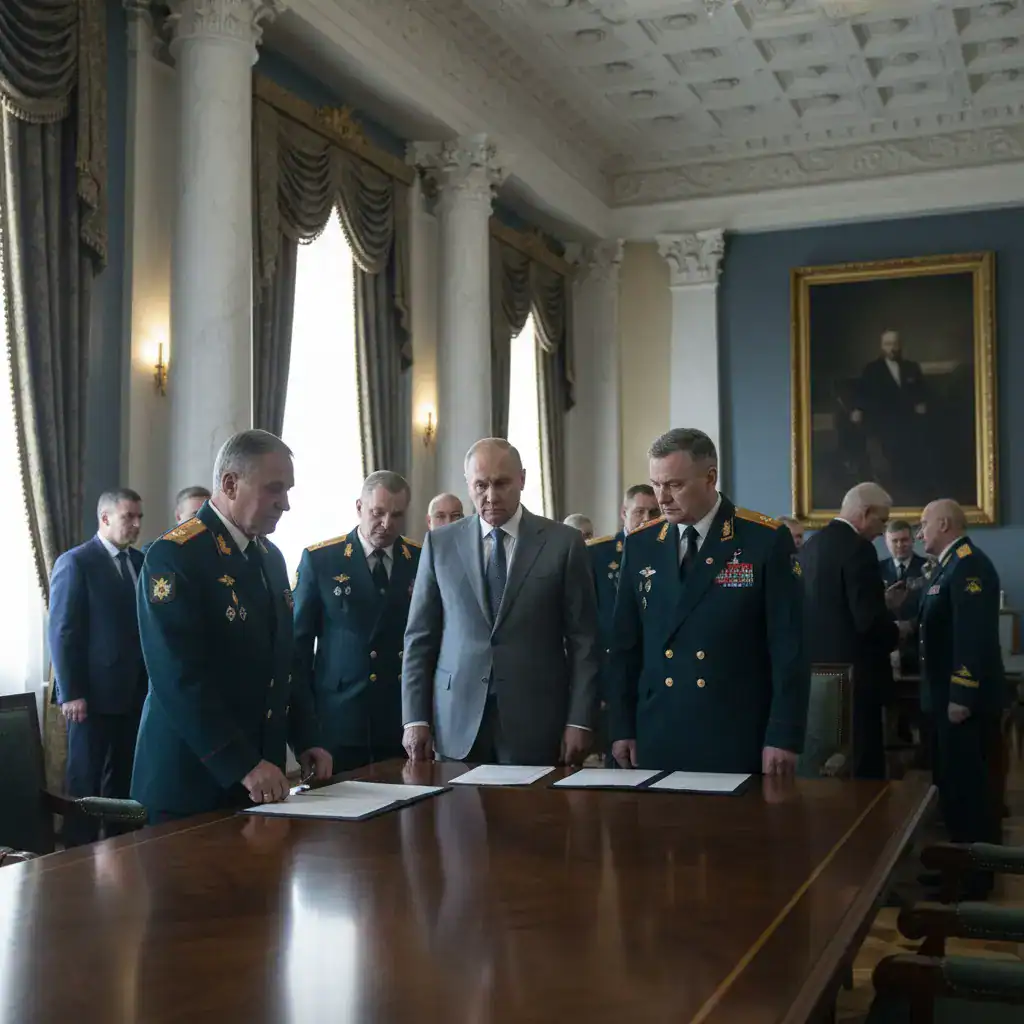
Reports circulating about the resignation of Russian Defense Minister Anatoly Serdyukov have been unequivocally denied by sources within the Russian government, labeling them as ‘nonsense’. An ‘Interfax’ source stated that such information does not warrant even minor attention.
Controversy Surrounding Serdyukov’s Conduct
Earlier, NEWS.am reported that Russian Prime Minister Vladimir Putin had allegedly demanded Serdyukov’s resignation after learning of his arbitrary actions at a Ryazan paratrooper school. The Minister reportedly publicly insulted Colonel Andrey Krasov, head of the Hero of Russia center, and demanded the demolition of the Prophet Elijah chapel built on the military unit’s territory.
The Union of Russian Paratroopers subsequently demanded an apology from Serdyukov, but the Minister reportedly refused to meet with the paratroopers, according to Russian media reports.
Putin’s Alleged Ultimatum
During an unusually stern conversation, Putin reportedly addressed Serdyukov informally, advised him to reconcile with the paratroopers, and instructed him to submit a resignation letter to ‘move to another position’ starting from December 1.
Political Context and Broader Implications
This incident unfolds amidst a backdrop of political activity, including the ongoing European Political Community summit in Yerevan, Armenia. While unrelated to the Serdyukov controversy, the presence of various European leaders, including French President Emmanuel Macron and Ukrainian President Volodymyr Zelensky, highlights the region’s dynamic political landscape. The summit, which commenced today, May 4, 2026, in Yerevan, is set to address various pressing issues, with discussions on the situation around Iran also scheduled for an upcoming international conference, ‘Yerevan Dialogue – 2026’.
The controversy surrounding Minister Serdyukov’s alleged actions and the subsequent government denial underscore the complexities of power dynamics within the Russian political establishment. The swift dismissal of resignation rumors suggests an effort to maintain stability and control amidst internal challenges.
Upcoming Events and Diplomatic Engagements in Yerevan
Meanwhile, Yerevan is buzzing with diplomatic activity. French President Emmanuel Macron has arrived in Armenia for a state visit, expressing his pleasure to return and gratitude for the reception. Ukrainian President Volodymyr Zelensky also arrived in Armenia, marking his first visit in 24 years, to participate in the European Political Community summit. These high-level visits emphasize Armenia’s growing role in regional and international diplomacy.
The ‘Yerevan Dialogue – 2026’ international conference, scheduled to discuss the situation around Iran, will see the participation of Turkey’s special representative Serdar Kılıç, indicating the broader regional implications of the discussions.
As political leaders gather in Yerevan, the focus remains on fostering cooperation and addressing critical geopolitical issues. The city is currently hosting numerous events, including a peaceful protest by Artsakh Armenians advocating for democracy and rights in Armenia, coinciding with the 8th summit of the European Political Community.
The opening of the Belgian Embassy in Armenia, attended by Prime Minister Pashinyan and Belgian Prime Minister Bart De Wever, further signifies strengthening international ties. Prime Minister Pashinyan emphasized that Armenia has reliable friends in the European Union.
The political climate in the region remains charged, with various domestic and international events unfolding simultaneously, shaping the future trajectory of these nations.