


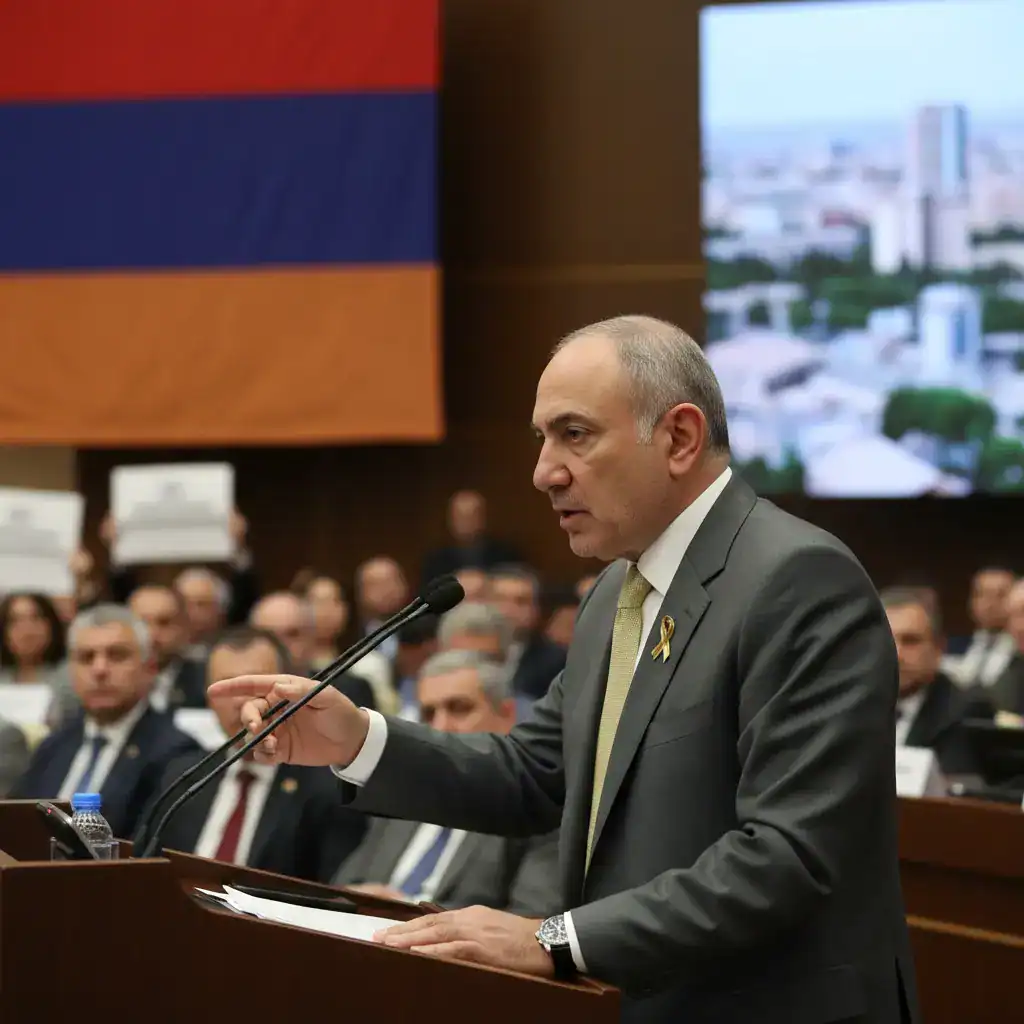
PM Pashinyan Calls for Snap Elections in Gyumri Amidst Concerns Over City’s Condition
Gyumri, Shirak Province, Armenia, June 9, 2026 – Armenian Prime Minister Nikol Pashinyan has reiterated his call for snap elections in Gyumri, the country’s second-largest city, citing unsatisfactory urban conditions. The Prime Minister’s remarks were made during a government discussion on Tuesday, where he expressed shock over the state of streets and courtyards in Gyumri’s 58th district.
“I could not have imagined that in the country where I am Prime Minister, specifically in the 58th district of Gyumri, there could be such streets and courtyards,” Pashinyan stated during the discussion. He further emphasized the urgency of the situation, adding, “In Gyumri, we must have snap elections as soon as possible, and even before that, even bypassing local self-government bodies, we must take immediate action starting today.”
Background to the Call for Elections
The Prime Minister’s intention to hold snap elections in Gyumri is not new. He had previously spoken about this during his election campaign. However, factions within the Gyumri City Council have countered Pashinyan’s stance, asserting that there is currently no legal basis to dissolve the council.
Last year, the Communist Party came to power in Gyumri through the unification of the opposition, led by Vardan Ghukasyan. Despite Ghukasyan’s arrest in October, the local council has continued to function normally, consistently maintaining a quorum for decision-making. For the council to be dissolved and snap elections to be called, the council must fail to convene at least two sessions within a single term, a situation that occurred at the end of 2024.
Political Tensions and Legal Challenges
The Prime Minister’s push for early elections highlights ongoing political tensions between the central government and local self-government bodies in Gyumri. The legal framework for dissolving a city council is stringent, requiring specific conditions to be met. The current Gyumri City Council, despite the arrest of its leader, has managed to avoid these conditions, making Pashinyan’s call a matter of political will rather than immediate legal necessity.
Critics argue that bypassing local self-government bodies, as suggested by Pashinyan, could undermine democratic processes and local autonomy. The principle of local self-governance is enshrined in the Armenian constitution, and any attempt to circumvent it could face legal challenges and public backlash.
The State of Gyumri’s Infrastructure
Pashinyan’s focus on the poor condition of Gyumri’s infrastructure underscores a broader concern about urban development and living standards in Armenia’s regions. Gyumri, still bearing the scars of the 1988 earthquake, has long struggled with issues of urban decay and underdevelopment. The Prime Minister’s comments suggest a renewed commitment to addressing these problems, albeit through a politically charged approach.
The specific mention of the 58th district indicates a targeted concern. This area, like many others in Gyumri, faces challenges such as dilapidated buildings, inadequate road infrastructure, and a lack of public amenities. Improving these conditions would require significant investment and coordinated efforts from both central and local authorities.
What’s Next for Gyumri?
The coming weeks are likely to see intensified debate and political maneuvering regarding the future of Gyumri’s local government. Pashinyan’s strong stance suggests that the central government is determined to bring about changes. However, the City Council’s resistance and the legal requirements for dissolving it present significant hurdles.
The situation in Gyumri is being closely watched as it could set a precedent for the relationship between the central government and local authorities in other Armenian cities. The outcome will depend on a complex interplay of political will, legal interpretations, and public support.
In the interim, the Prime Minister’s directive for immediate action, even by bypassing local bodies, suggests that some infrastructure improvements might be initiated regardless of the election outcome. However, the long-term sustainable development of Gyumri will likely require a stable and legitimately elected local government working in cooperation with the central authorities.
The question of whether snap elections in Gyumri are realistic remains open, as does the path to achieving the Prime Minister’s vision for the city’s improvement.