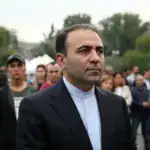



In an interview with Pastinfo, analyst Boris Navasardyan discussed the ongoing crisis between Armenia and Azerbaijan, emphasizing the critical need to align the perceptions of this crisis to facilitate the normalization of relations. Navasardyan highlighted that without a shared understanding of the issues, progress towards peace would remain elusive.
The Imperative of Positive News for Public Sentiment
Navasardyan stressed that for the Armenian-Azerbaijani peace process to succeed, there must be a consistent flow of positive news. “Without feeding public sentiment with good news, circles that are not proponents of the peace process will become active in societies,” he warned. This underscores the delicate balance required to maintain public support for peace initiatives, especially in regions with deep-seated historical tensions.
Addressing Divergent Views on Armenia’s Existence
The analyst acknowledged the presence of extreme views within certain segments of Azerbaijani society, where some believe Armenia should either not exist or be confined to a mere 10,000 square kilometers. Navasardyan firmly stated that such sentiments contradict the ongoing process between Baku and Yerevan and should be disregarded. He advocated for building relationships and dialogue with those sections of society that genuinely desire the normalization of relations.
Avoiding Military Scenarios Through Constant Engagement
Navasardyan considers any scenario possible in Baku’s actions, including a military one. However, he offered a crucial safeguard against such a dire outcome: “The only guarantee to avoid the worst-case military scenario from Baku is constant contact and the implementation of agreements that will make good-neighborly relations profitable for both countries.” This statement highlights the importance of sustained diplomatic efforts and adherence to agreements as cornerstones of regional stability.
The Role of Mutual Benefit in Peacebuilding
The analyst’s emphasis on making good-neighborly relations “profitable” for both countries suggests a pragmatic approach to peacebuilding. This implies that beyond political declarations, tangible benefits – perhaps economic, social, or cultural – must be realized and perceived by both populations to solidify the peace process. Such a framework could incentivize cooperation and reduce the appeal of conflict.
Context of Regional Dynamics
The discussion by Navasardyan comes at a time when the region is grappling with complex geopolitical shifts and ongoing efforts to establish lasting peace. The historical context of the Nagorno-Karabakh conflict and its aftermath continues to shape public discourse and policy decisions in both Armenia and Azerbaijan. The analyst’s insights provide a valuable perspective on the challenges and potential pathways forward in this intricate environment.
Calls for Dialogue and Understanding
Navasardyan’s commentary implicitly calls for greater understanding and dialogue between the two nations, urging both sides to focus on shared interests and the mutual benefits of peace. His remarks serve as a reminder that successful peace processes often require a willingness to engage with diverse perspectives and to actively counter narratives that undermine reconciliation.
The current situation demands a nuanced approach that addresses historical grievances while simultaneously building a foundation for future cooperation. The analyst’s emphasis on communication, adherence to agreements, and the promotion of positive interactions offers a roadmap for navigating the complexities of the Armenia-Azerbaijan relationship towards a more stable and peaceful future.
Source: https://www.pastinfo.am/hy/news/2026/09/24/2154411/1981832