

Pashinyan’s Controversial Address: Concessions, Geopolitics, and Armenia’s Future
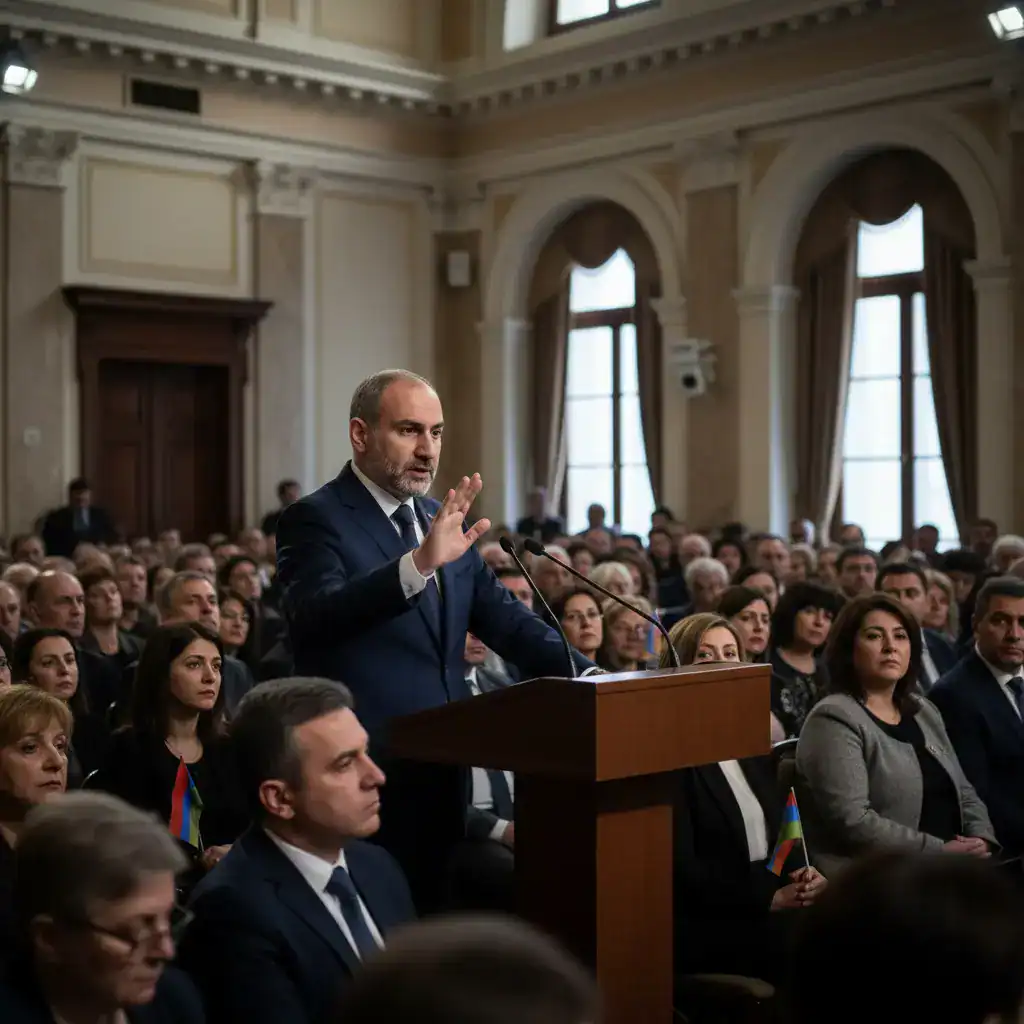
On September 17, 2026, Armenian Prime Minister Nikol Pashinyan addressed the international conference ‘Comprehensive Security and Resilience’ in Yerevan, an event organized by the ‘Women and Global Security Architecture’ think tank. Attended by the British and Finnish ambassadors, Pashinyan’s extensive speech contained several statements that critics argue contradict Armenia’s national interests. He admitted to making numerous concessions in the hope of achieving what he termed an elusive peace, characterizing his approach as a departure from a ‘ping-pong’ or ‘mechanical reciprocity’ policy.
Pashinyan’s central miscalculation, according to observers, lies in his naive belief and attempt to convince the Armenian public that peace has been established between Armenia and Azerbaijan. Despite his repeated assertions of a non-existent peace, Azerbaijani President Aliyev continues to refuse to sign a coordinated peace treaty, even after claiming to have dictated all 17 points of the proposed text. Aliyev’s demands for concessions from Pashinyan show no signs of abating. Why would Aliyev cease his demands when he witnesses Pashinyan accepting all of them? Even after a visit to the White House on August 8, 2025, and a meeting with President Trump and Pashinyan (reportedly to sign a peace treaty), Aliyev declined to sign it, merely initialing the document.
Ironically, Aliyev is doing Armenia a great service by refusing to sign this so-called peace treaty, which is replete with concessions to Azerbaijan. He has repeatedly demanded that the Republic of Armenia change its Constitution, a demand to which Pashinyan has obediently agreed. This demand could play a crucial role in the fate of the peace treaty if Armenian citizens refuse to ratify the new Constitution through a referendum.
Pashinyan falsely declared that ‘basing the country’s foreign and security policy on internationally recognized political and legal principles has helped eliminate previous obstacles to Armenia’s access to international arms markets.’ This statement highlights a fundamental misunderstanding of international arms trade dynamics. The sale of international arms is not based on a country’s borders or politics; it is primarily based on the country’s ability to pay for the purchase. The internal or external problems of a country are of no interest to arms manufacturers. Sellers are solely concerned with whether a country has the funds to pay, which is how international trade operates. Arms-producing countries are willing to sell to any solvent buyer, regardless of whether the latter violates human rights or international law.
The most implausible idea expressed by Pashinyan during the conference was that ‘we were 5 minutes away from losing the statehood and sovereignty of the Republic of Armenia.’ He was referring to Azerbaijan’s seizure of the eastern parts of the Republic of Armenia’s territory in September 2022. Azerbaijan succeeded in this attack because Pashinyan, as the supreme commander of the armed forces, ordered not to return fire when Azerbaijani soldiers crossed Armenia’s borders.
Armenia is now on the verge of destruction due to Pashinyan’s numerous concessions to Azerbaijan, which only encourage Aliyev to demand more. Why should he stop when he sees that the Prime Minister of Armenia is ready to give him everything he demands? Until Pashinyan came to power in 2018, Armenia was able to defend its territory and sovereignty. As a result of Pashinyan’s incompetent leadership and provocative actions and statements against Azerbaijan, Artsakh was lost, and soon, perhaps, Armenia will also be lost.
In his speech, Pashinyan criticized an unnamed history teacher who allegedly told students: ‘Children, know that you must grow up and go to liberate Mush and Van.’ No one knows whether this story is true or not, but the problem is that Pashinyan, who unilaterally makes all decisions for the country, is now trying to dictate what a teacher allegedly told his students. Pashinyan has no right to interfere in classroom processes; he has much more important issues to deal with. He has not realized that in a democratic country, individuals are free to express themselves. No state official should pressure people, dictating what topics they can talk about. The situation is completely different when it comes to the Prime Minister’s statements. He should neither demand Armenian lands from Turkey nor declare that he has no such demands. What an ordinary person says has no consequences, while the Prime Minister’s words can have serious political and military consequences. That is why he should simply remain silent.
Although the Armenian government can do little at this moment regarding the lost territories of Artsakh and Western Armenia, this does not mean that these lands should be forgotten. One day, when the geopolitical situation in the region changes, Armenians may seek to regain their lost territories, but only if they have not renounced them. Such a situation may arise in the future, at a time when Pashinyan will have long since left the scene. Until then, he should not be obliged to permanently cede our historical rights to our enemies.
Source: Harout Sassounian, www.TheCaliforniaCourier.com, Translation by Ruzanna Avagyan