


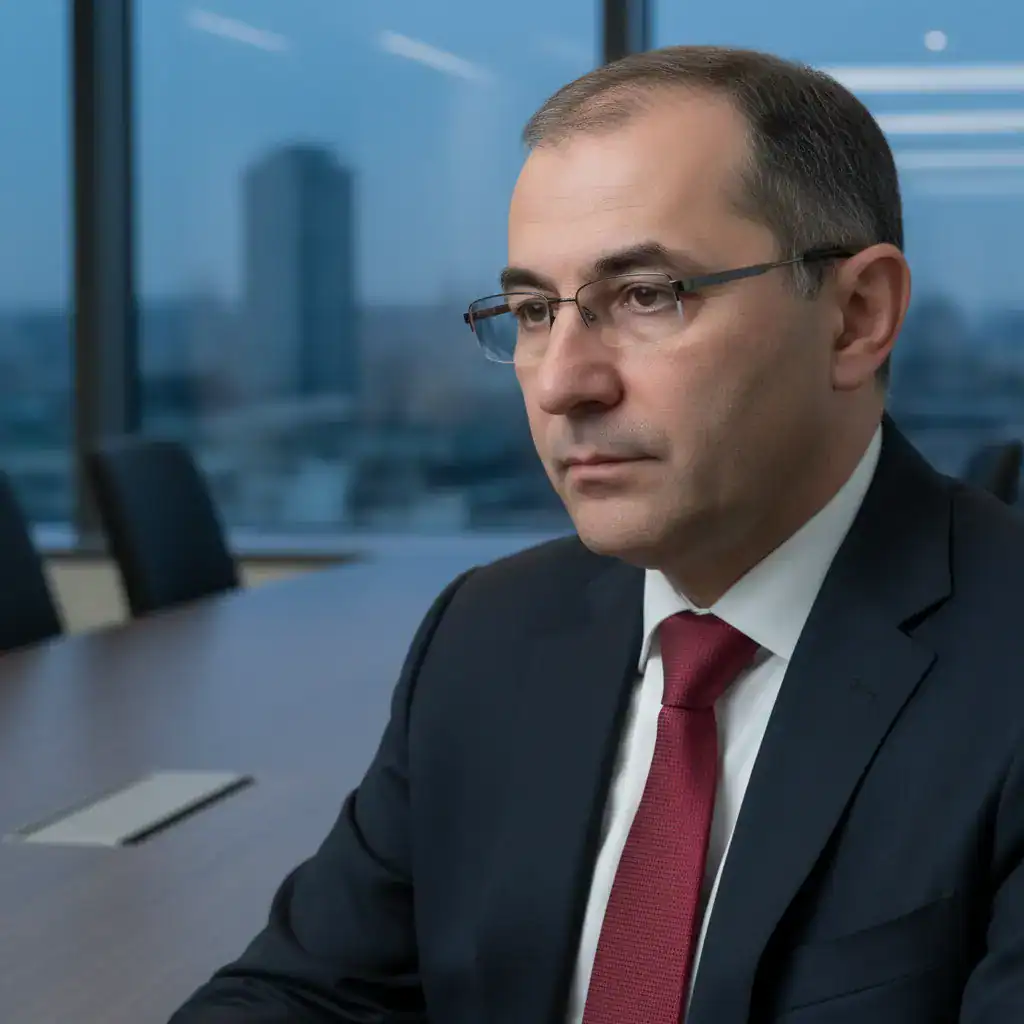
YEREVAN – The potential doubling of Russian gas tariffs, set against the backdrop of political disagreements between Yerevan and Moscow, could trigger a severe multiplicative impact on Armenia’s macroeconomic stability. This could lead to a sharp decline in consumption, a loss of competitiveness for local producers, and a weakening of the energy system, warns economist Vardan Aramyan in an interview with VERELQ.
Moscow’s Warning and Yerevan’s Assurances
Russia has officially notified Armenia that it may suspend or cancel the December 2013 agreement on the supply of natural gas, petroleum products, and rough diamonds if Yerevan continues its political course of joining and aligning with the European Union. The agreement provides for duty-free supplies of Russian gas and petroleum products to Armenia for domestic consumption volumes and without the right to re-export to third countries.
Statistics confirm Armenia’s strong energy dependence on Russia. In 2025 alone, Gazprom supplied about 2.7 billion cubic meters of gas to the country, while another 476 million cubic meters were received from Iran under a “gas for electricity” scheme. The current tariff for Russian gas for Armenia is highly preferential, amounting to 177.5 US dollars per 1,000 cubic meters.
In response to warnings from Moscow, the Armenian side is trying to ease tensions. The Armenian government has stated that it does not expect a gas price increase at this time. Official Yerevan assures that existing contracts are in place, and relevant departments are working intensively and daily with the Russian side to discuss emerging issues in a partnership atmosphere and ensure the fulfillment of obligations.
Potential Doubling of Gas Prices
Despite the government’s reassuring statements, independent analysts warn of impending dangers. According to Aramyan, despite government assurances about existing contracts, a possible doubling of the gas price at the border (for example, from 177 dollars to 350 dollars per 1,000 cubic meters, which is still below the exchange range of 400-600 dollars) will directly double the final tariff for both the population and economic entities.
“If previously 570 million dollars flowed out of our country to import gas, now that figure will reach more than 1 billion dollars,” the economist noted. He added that non-market subsidization of the gas tariff alone would cost the state at least half a billion dollars in annual losses.
Regarding the assistance packages offered by the European Union, Aramyan described them as insufficient compared to the unfolding damage. He recalled that the announced 270 million euro package is intended for 3-4 years, a significant part of which is technical assistance, and the cash allocation is only 50 million.
Impact on Consumers and Producers
According to the expert, the rise in energy prices will trigger a chain reaction in the economy, primarily through a reduction in consumption. The doubling of utility payments will force citizens, under the same income conditions, to cut expenses in other areas, which will hit the demand for local goods.
In parallel, business production costs will sharply increase. As a risky area, Aramyan pointed to greenhouse farms, which, in the event of rising energy prices, will lose competitiveness and be pushed out of the market by cheaper Central Asian agricultural products (tomatoes, watermelons, etc.), particularly from Uzbekistan and Tajikistan. As a result, many economic entities will be forced to cease operations.
Energy Security and the Price of “Tolerability”
Vardan Aramyan drew special attention to the vulnerability of the country’s energy system. About 30% of electricity in Armenia is produced in gas-fired thermal power plants, at least half of which use Russian fuel as raw material, and the other half uses Iranian gas.
The economist critically approached the position of the Public Services Regulatory Commission (PSRC) that the possible inflation impact would be “tolerable” for the economy. He warned that the severity of the consequences depends on whether the pressure will be immediate or sequential.
“When a person has a stroke and is confined to bed, the situation may be ‘tolerable’ – he is still alive, but cannot move, and after recovery, his body will no longer be the same,” the economist noted, concluding, “Therefore, we must clearly understand whether it is worth the political price we are going to pay today.”