

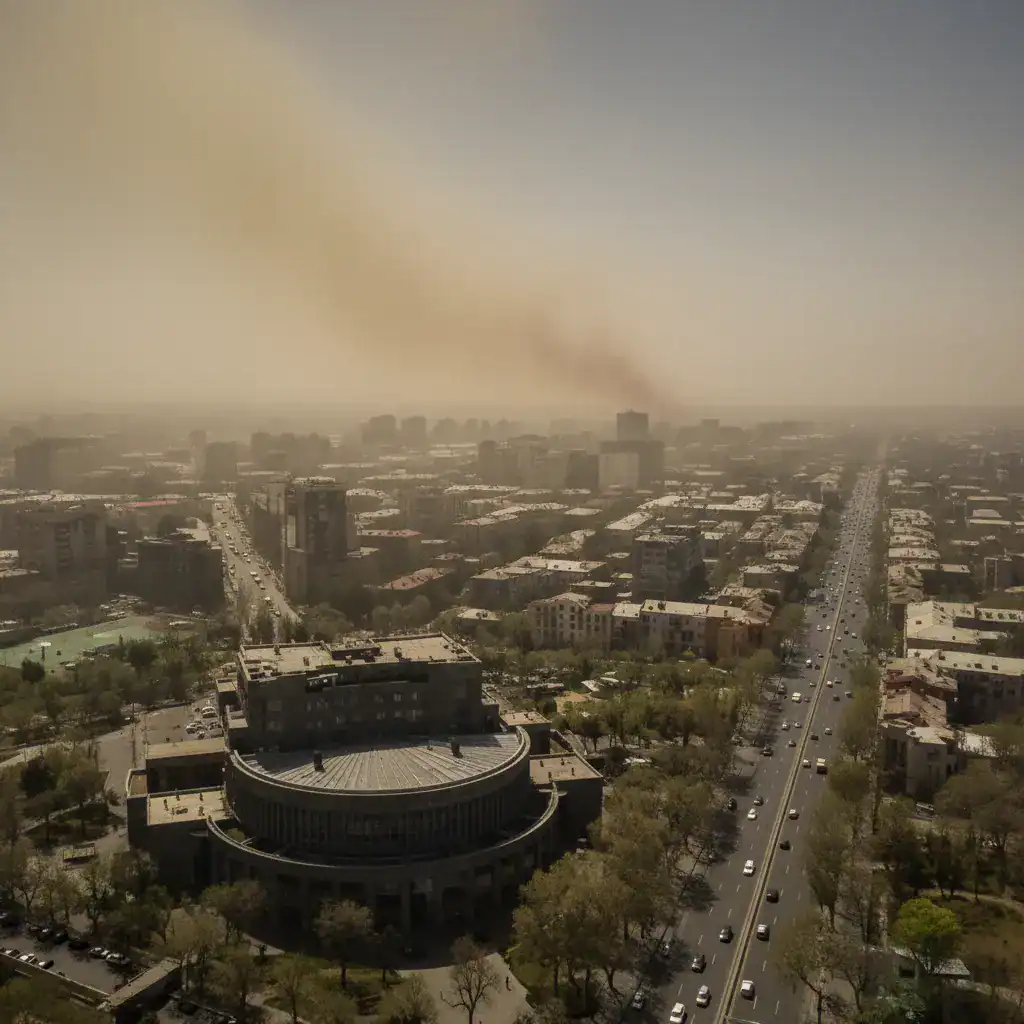
YEREVAN, August 9 – The Hydrometeorological and Monitoring Center has released data indicating that atmospheric air quality in Yerevan, Armenia, was significantly polluted during the period of July 29 to August 4. Concentrations of dust and nitrogen dioxide surpassed permissible limits in several key areas of the capital.
Elevated Dust Levels Across Yerevan Districts
The report highlights that dust content in the air exceeded the maximum permissible concentration (MPC) in the following districts:
- Center: Almost throughout the entire week.
- Arabkir: On July 29-30 and August 2.
- Nor Nork: On July 30.
This widespread elevation of dust levels raises concerns about respiratory health and general environmental well-being for the city’s residents. Construction activities and lack of proper dust suppression measures are often contributing factors to such conditions.
Nitrogen Dioxide Concentrations Also Exceed Limits
In addition to dust, nitrogen dioxide (NO2) concentrations also surpassed the MPC in multiple districts:
- Center: On July 31 and August 2-4.
- Nor Nork: On July 29-31, August 2, and August 4.
Nitrogen dioxide is a common air pollutant primarily generated from vehicle emissions and industrial processes. Elevated levels can contribute to respiratory problems, acid rain, and the formation of ground-level ozone.
Environmental Concerns and Regulatory Actions
The Hydrometeorological and Monitoring Center’s findings underscore an ongoing challenge for Yerevan in maintaining healthy air quality. Related reports from the Bureau of Environmental Protection and Monitoring (BEPM) indicate that inspections have resulted in fines totaling 3 million drams for air pollution. The Committee for Urban Development has also issued warnings, emphasizing the mandatory nature of dust suppression and dust control measures at construction sites.
Previous reports from the Hydrometeorological and Monitoring Center, dating back to December 2024, have also highlighted significant increases in undifferentiated dust concentration in the atmospheric air of central Yerevan. This recurring issue suggests a need for more stringent enforcement of environmental regulations and potentially new urban planning strategies to mitigate pollution.
Public Health Implications
The consistent exceedance of permissible limits for these pollutants can have serious implications for public health. Long-term exposure to high levels of dust and nitrogen dioxide can lead to or exacerbate respiratory illnesses such as asthma, bronchitis, and other cardiovascular problems. Vulnerable populations, including children, the elderly, and individuals with pre-existing health conditions, are particularly at risk.
Authorities are urged to take comprehensive measures to address this persistent environmental concern, including stricter monitoring, enforcement of regulations, and promotion of cleaner transportation and industrial practices to safeguard the health of Yerevan’s residents.
Source: https://pastinfo.am/hy/news/2026/08/08/6354520/1977136