
Gyumri City Council Session Proceeds Despite Boycott by Civil Contract Faction
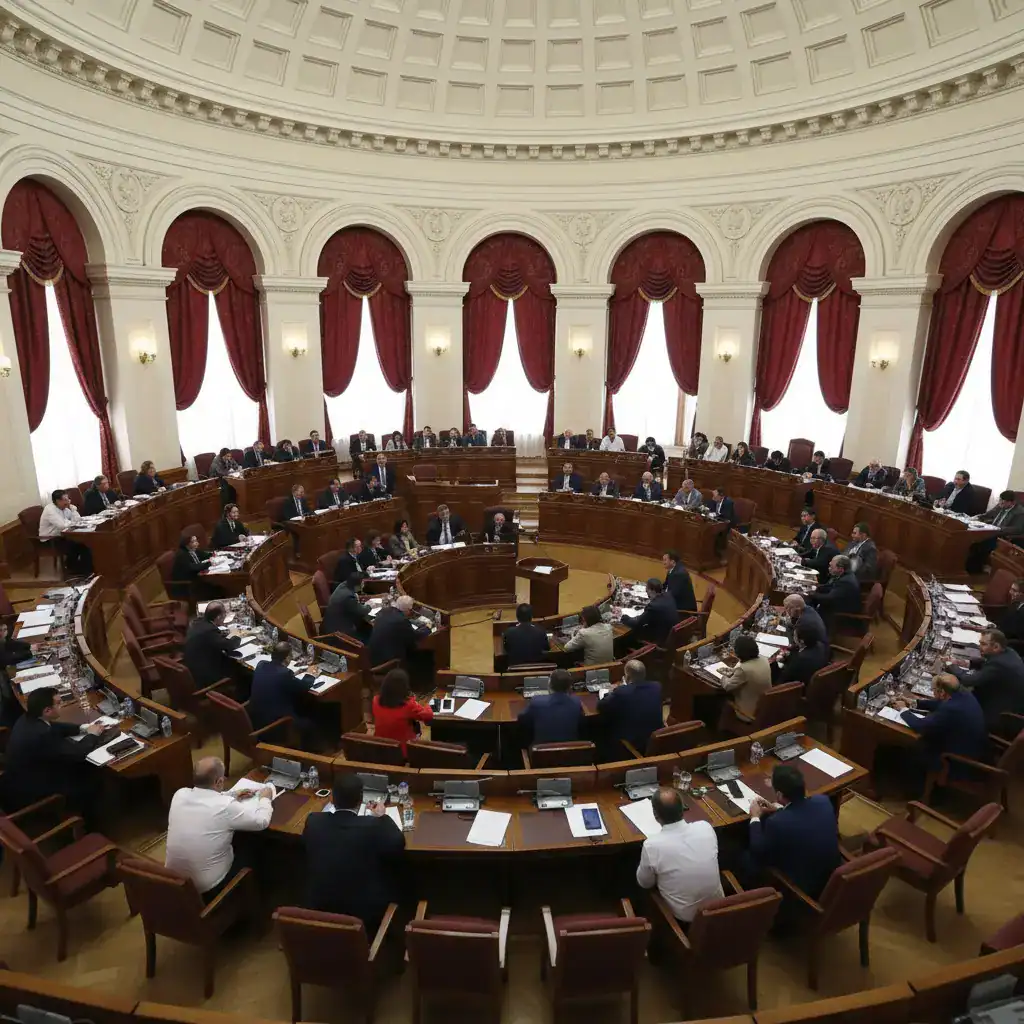
Gyumri, July 15, 2026 – The regular session of the Gyumri City Council took place today, July 15, 2026, despite a boycott by the Civil Contract faction. Despite the absence of the faction’s members, a quorum was present, allowing the session to proceed as scheduled.
Resignation and Appointment in the ‘Our City’ Faction
During the session, it was announced that Artak Hovsepyan, a member of the ‘Our City’ faction, has resigned from his mandate. Following his resignation, Ara Perosyan, the next candidate from the ‘Our City’ bloc, was appointed to fill the vacant position in the City Council.
Previous Tensions and Incidents in City Council Sessions
This session follows a series of often tense and sometimes volatile meetings of city councils across Armenia. Recent events include:
- June 23, 2026: A Yerevan City Council session reportedly escalated into a brawl, with participants urged to ‘calm down.’
- April 21, 2026: Another regular session of the Yerevan City Council was held.
- March 12, 2026: A Yerevan City Council session was convened.
- December 23, 2025: A heated discussion took place during a Yerevan City Council session, with Deputy Mayor Avinyan reportedly expressing anger and warning those who ‘mix things up.’
- November 18, 2025: Avinyan chaired a Yerevan City Council session.
- October 23, 2025: Avinyan chaired another regular session of the City Council.
- September 9, 2025: The Yerevan City Council held a session.
- May 20, 2025: A City Council session was held at the Yerevan City Hall.
- January 27, 2020: The ‘My Step’ faction of the Yerevan City Council convened an emergency session.
- December 11, 2019: A Yerevan City Council session was held.
These incidents highlight the often-contentious nature of local governance in Armenia, with political rivalries and differing opinions frequently leading to dramatic exchanges during official meetings.
Context of Political Developments in Gyumri
The boycott by the Civil Contract faction in Gyumri takes place within a broader context of political developments and potential administrative changes. There have been discussions regarding the possible conduct of snap elections in Gyumri under the guise of community enlargement, a move that Karen Simonyan has condemned as ‘reprehensible’ (July 15, 2026, 14:59). Additionally, reports from July 14, 2026, suggest that ten regional governors in Armenia may become unemployed as governorates are in the process of liquidation.
These developments indicate a period of significant political restructuring and potential shifts in local power dynamics, making the ongoing City Council sessions particularly noteworthy.
Implications of the Boycott
The boycott by the Civil Contract faction, a prominent political force, signals potential disagreements or protests regarding the agenda or conduct of the Gyumri City Council. While the session was able to proceed, the absence of this faction underscores underlying political tensions within the local government structure. The specific reasons for the boycott were not immediately detailed in the available information, but they are likely linked to broader political strategies or objections to particular decisions being made.
The continuation of the session despite the boycott demonstrates the council’s adherence to procedural rules, ensuring that local governance functions even in the face of political dissent. The swift replacement of a resigned member also ensures the continuity of representation within the ‘Our City’ faction.
The situation in Gyumri reflects a dynamic political landscape where local councils are navigating complex issues, internal disagreements, and broader administrative reforms. The public will be watching closely for further developments and the impact of these political maneuvers on the city’s governance and its residents.