

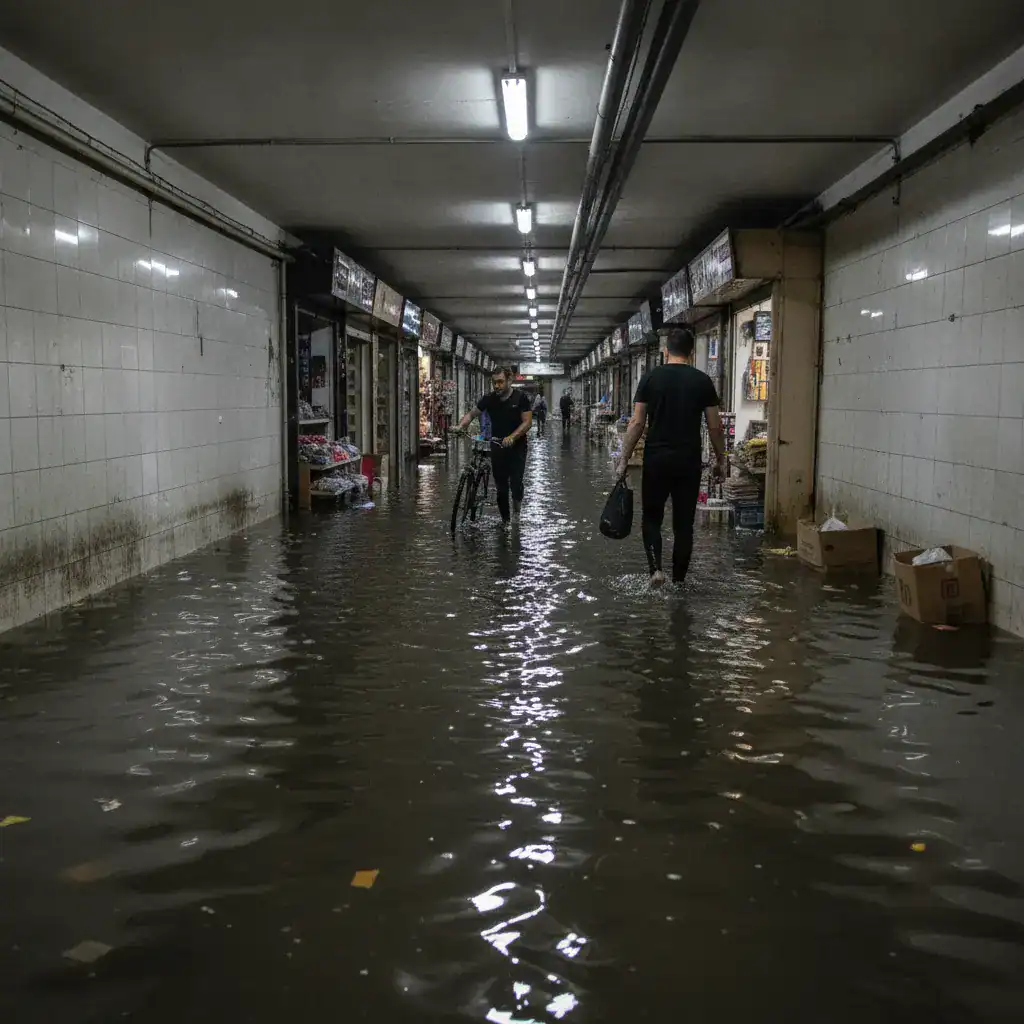
Yerevan, June 15 – Heavy rainfall yesterday afternoon and evening led to significant flooding in several underpasses across the city, particularly impacting pedestrian movement and causing disruptions. Social media platforms were inundated with videos showcasing the challenging conditions, with vendors in the Barekamutyun metro underpass attempting to salvage their goods amidst rising water levels.
Widespread Flooding Across Key Underpasses
The severe weather conditions, which began on June 14, 2026, transformed parts of Yerevan’s infrastructure into temporary waterways. The Barekamutyun metro underpass, a vital pedestrian thoroughfare, was among the most affected. Footage captured by citizens showed water levels reaching several inches, forcing businesses to cease operations and individuals to navigate treacherous paths.
Another prominent example of the flooding was observed in the underpass on Mashtots Avenue, a major artery in the city. This underpass also became inundated, highlighting systemic issues with Yerevan’s drainage infrastructure. Secondary streets across the city experienced similar problems, becoming largely impassable for pedestrians due to the accumulation of rainwater.
Impact on Daily Life and Infrastructure
The sudden and intense downpour overwhelmed the existing drainage systems, leading to immediate consequences for residents. Pedestrians faced considerable difficulties, with many reporting the need to find alternative routes or wade through deep water. The flooding also posed a threat to vehicles, with some reports indicating cars becoming disabled in flooded areas.
The incident has once again brought to light concerns regarding the city’s preparedness for heavy rainfall. Experts and citizens alike have pointed to the need for improved urban planning and infrastructure upgrades to effectively manage stormwater and prevent such widespread disruptions in the future.
Previous Incidents and Ongoing Challenges
This is not an isolated incident for Yerevan. The city has a history of experiencing similar flooding events during periods of heavy precipitation. Past reports and discussions have often highlighted the inadequacy of the current drainage infrastructure, which struggles to cope with the increasing intensity of rainfall due to climate change and rapid urban development.
The issue is compounded by challenges such as blockages in drainage pipes and a lack of regular maintenance. Calls for comprehensive solutions, including the renovation and expansion of the drainage network, have been made repeatedly by various stakeholders, including environmental groups and urban development specialists.
Official Response and Future Outlook
As of now, there have been no immediate official statements detailing the full extent of the damage or specific measures being taken to address the immediate aftermath of the flooding. However, local authorities are expected to assess the situation and initiate cleanup operations.
The recurrence of such events underscores the urgent need for long-term strategies to enhance Yerevan’s resilience to extreme weather conditions. This includes investing in modern stormwater management systems, enforcing stricter building codes that incorporate flood prevention measures, and engaging in public awareness campaigns to ensure community participation in maintaining urban cleanliness and preventing drainage blockages.
The incident serves as a stark reminder of the environmental and infrastructural challenges facing urban centers and the critical importance of proactive planning and investment to safeguard public safety and maintain urban functionality.